 Bug FAQ
Hydrangea Leaftier Moth
Olethreutes ferriferana · Order: Lepidoptera · Family: Tortricidae
Also called: Hydrangea Leaftier
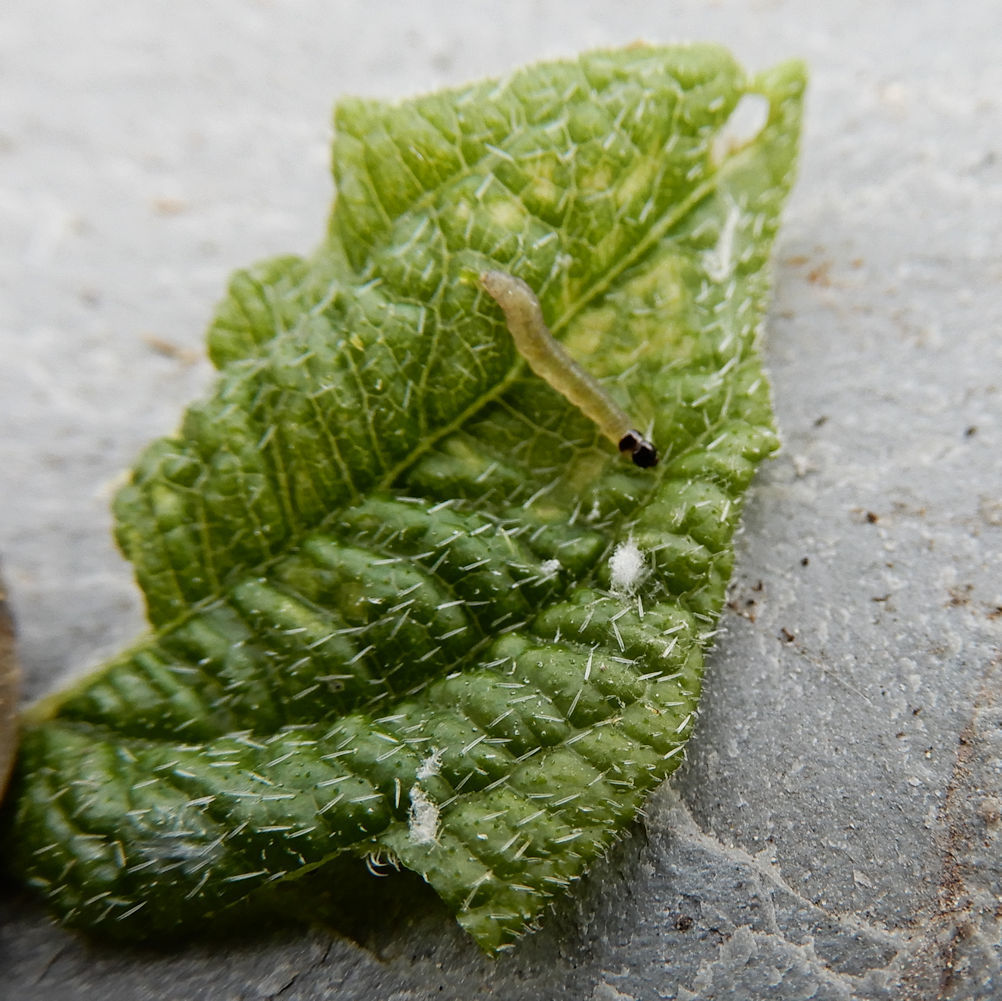
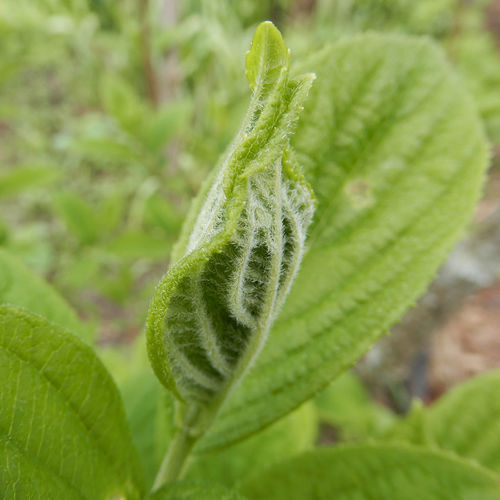
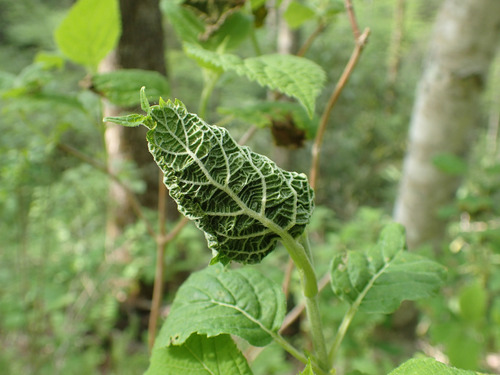
The hydrangea leaftier is a tortricid moth whose green, slightly transparent caterpillars tie hydrangea leaves together with silk, forming a structure that can look like a gall. It is native to the eastern United States, ranging from Maine to North Carolina and west to Kentucky and Texas, and it feeds only on hydrangea leaves. The larvae cause little visible damage, and the best way to manage them is by physically removing the tied leaves rather than using pesticides.
Source: Wikipedia
How to recognize it
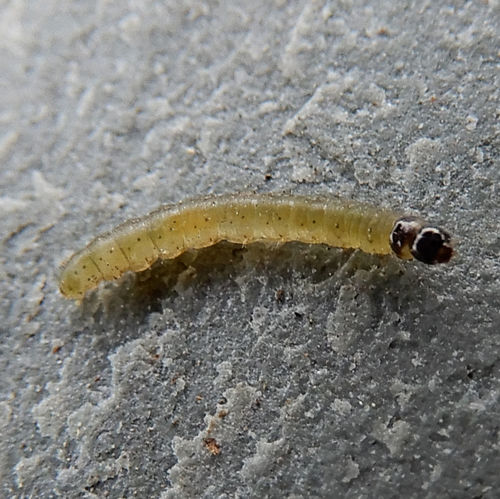
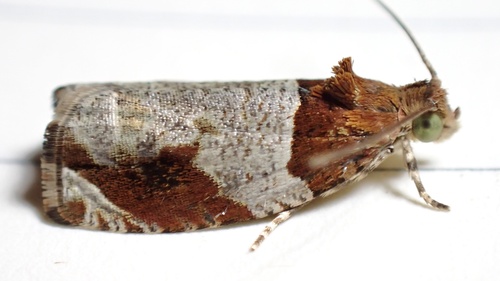
The caterpillars are slightly see-through green and live inside a silk-bound leaf structure that can look like a gall.
Source: Wikipedia
Is it a pest in the house?
The feeding does not cause noticeable damage, though some may remove them for appearance reasons.
Source: Wikipedia
How to get rid of it
Because the caterpillars are hidden inside the leaf tie, physical removal is preferred over chemicals.
Source: Wikipedia
Where it lives
They are found on hydrangea plants, where the larvae tie developing leaves together with silk.
Source: Wikipedia
What it eats
Hydrangea leaves are the only food recorded for the larvae.
Source: Wikipedia
Life cycle
Olethreutes ferriferana belongs to the tortricid moth family Tortricidae.
Source: Wikipedia
Where it comes from
The species is native to the eastern United States, from Maine down to North Carolina and west to Kentucky and Texas.
Source: Wikipedia
Where it is found in the US
Recorded in 26 of 51 states and DC. Most records: Vermont, Massachusetts, Illinois, New York, Michigan, Pennsylvania, Ohio, Minnesota.
Darker = more records. Counts are museum and citizen-science records, not population size.
Source: GBIF
Status: native in North America; native in Canada. Source: iNaturalist
Months it is reported in the US
Source: GBIF
More photos
Questions people ask
How can I get rid of hydrangea leaftier?
Remove the tied leaf structures by hand; chemicals are less effective because the caterpillars are protected inside.
Source: Wikipedia
Do they damage my hydrangea?
They cause little visible damage, though some gardeners remove them for aesthetic reasons.
Source: Wikipedia
Where is this moth found?
It is native to the eastern United States, from Maine to North Carolina and west to Kentucky and Texas.
Source: Wikipedia
Same family (Tortricidae)
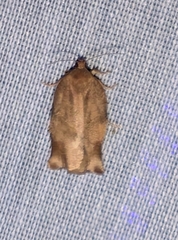 Oblique-banded Leafroller MothChoristoneura rosaceanaDamages trees, gardens or crops
 Garden TortrixClepsis peritanaDamages trees, gardens or crops
 Common MarbleSyricoris lacunanaDamages trees, gardens or crops
 Red-banded Leafroller MothArgyrotaenia velutinanaDamages trees, gardens or crops
 Light Brown Apple MothEpiphyas postvittanaDamages trees, gardens or crops
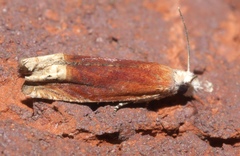 Aster and Reddish Eucosma Moths and AlliesEucosma parmatana
Sources
- Wikipedia: https://en.wikipedia.org/wiki/Olethreutes_ferriferana
Look it up elsewhere: GBIF · iNaturalist · BugGuide · Wikipedia
Text written 2026-10-25 from the sources above and checked sentence by sentence against them. Data fetched 2026-10-25.