 Bug FAQ
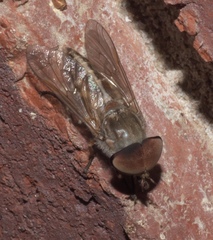
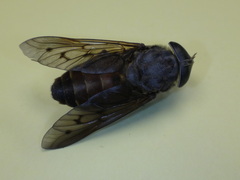
Hybomitra affinis
Hybomitra affinis · Order: Diptera · Family: Tabanidae
Source: Wikipedia
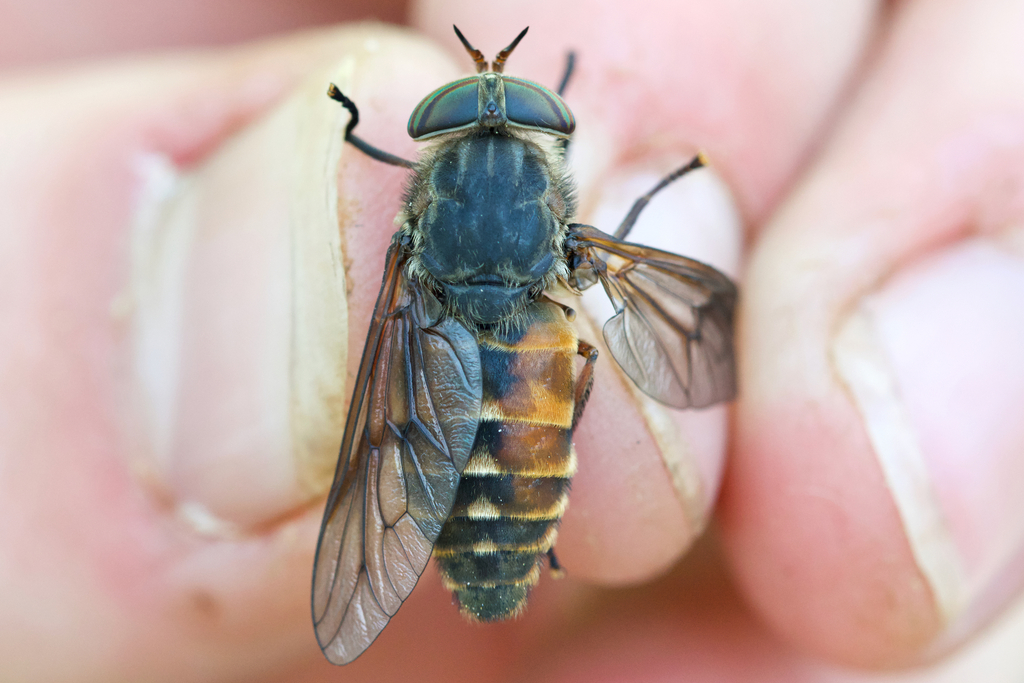
Hybomitra affinis is a horse-fly species in the family Tabanidae. It lives mainly in woodland areas, especially near swampy pools, marshy lake edges, willow swamps and sphagnum bogs. The species ranges across North America from western Alaska to eastern Canada, south to Arizona and New England. Only the female bites, and the bite is generally mild.
Source: Wikipedia
How to recognize it
Hybomitra affinis belongs to the horse-fly family Tabanidae.
Source: Wikipedia
Can it bite, sting or make you sick?
Only the female is known to bite.
Source: Wikipedia
Where it lives
It is an important pest in its mainly woodland habitat. Larvae are found in saturated moss or other organic material around swampy woodland pools, marshy lake shores, willow swamps and sphagnum bogs.
Source: Wikipedia
Where it comes from
It is native to North America. Its distribution extends from western Alaska to eastern Canada, and south to Arizona and New England.
Source: Wikipedia
Where it is found in the US
Recorded in 12 of 51 states and DC. Most records: Wisconsin, Michigan, New Hampshire, Alaska, Wyoming, Maine, Vermont, Idaho.
Darker = more records. Counts are museum and citizen-science records, not population size.
Source: GBIF
Status: native in North America; native in Canada. Source: iNaturalist
Months it is reported in the US
Source: GBIF
More photos
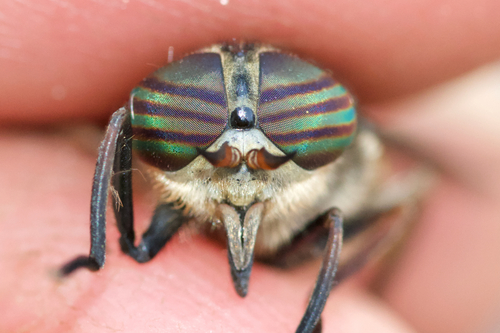
Questions people ask
Where are Hybomitra affinis found?
They occur across North America from western Alaska to eastern Canada, south to Arizona and New England.
Source: Wikipedia
What habitat do they live in?
They prefer woodland areas, especially near swampy pools, marshy lake edges, willow swamps and sphagnum bogs.
Source: Wikipedia
Same family (Tabanidae)


Sources
- Wikipedia: https://en.wikipedia.org/wiki/Hybomitra_affinis
Look it up elsewhere: GBIF · iNaturalist · BugGuide · ITIS · Wikipedia
Text written 2026-10-26 from the sources above and checked sentence by sentence against them. Data fetched 2026-10-26.