 Bug FAQ
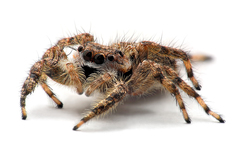
House Jumping Spider
Pseudeuophrys lanigera · Order: Araneae · Family: Salticidae
Also called: Jumping spider
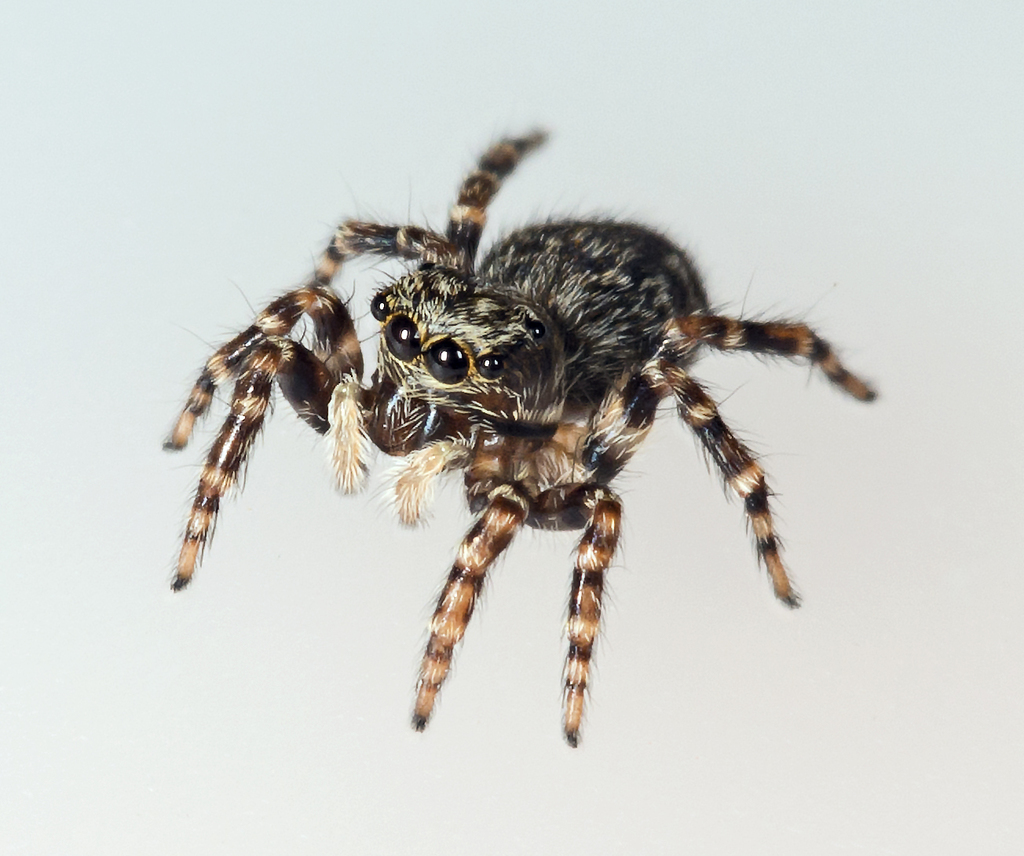
Males are about 3 to 4 mm long and females up to 5 mm. They are most often found inside houses or on building walls and can be seen year-round, even in winter. They feed on tiny booklice such as Liposcelis.
Source: Wikipedia
How to recognize it
It looks very similar to the rarer Pseudeuophrys erratica, which lives under tree bark.
Source: Wikipedia
Size
Males reach 3 to 4 mm in body length, females up to 5 mm.
Source: Wikipedia
Where it lives
Adults are found inside buildings and can be seen even in deep winter. In Germany they are most often observed inside houses or on external walls, showing a close association with human dwellings.
Source: Wikipedia
Life cycle
Adults can be found throughout the whole year.
Source: Wikipedia
When you see it
Adults are present year-round.
Source: Wikipedia
Lookalikes
It is very similar to Pseudeuophrys erratica, which prefers bark on forest edges.
Source: Wikipedia
Where it is found in the US
Recorded in 4 of 51 states and DC. Most records: Washington, Oregon, New York, Utah.
Darker = more records. Counts are museum and citizen-science records, not population size.
Source: GBIF
Status: introduced in United States. Source: iNaturalist
Months it is reported in the US
Source: GBIF
More photos


Questions people ask
Same family (Salticidae)



Sources
- Wikipedia: https://en.wikipedia.org/wiki/Pseudeuophrys_lanigera
Look it up elsewhere: GBIF · iNaturalist · BugGuide · ITIS · Wikipedia
Text written 2026-10-22 from the sources above and checked sentence by sentence against them. Data fetched 2026-10-22.