 Bug FAQ
Horse Botfly
Gasterophilus intestinalis · Order: Diptera · Family: Oestridae
Also called: Horse Bot Fly
Source: Wikipedia
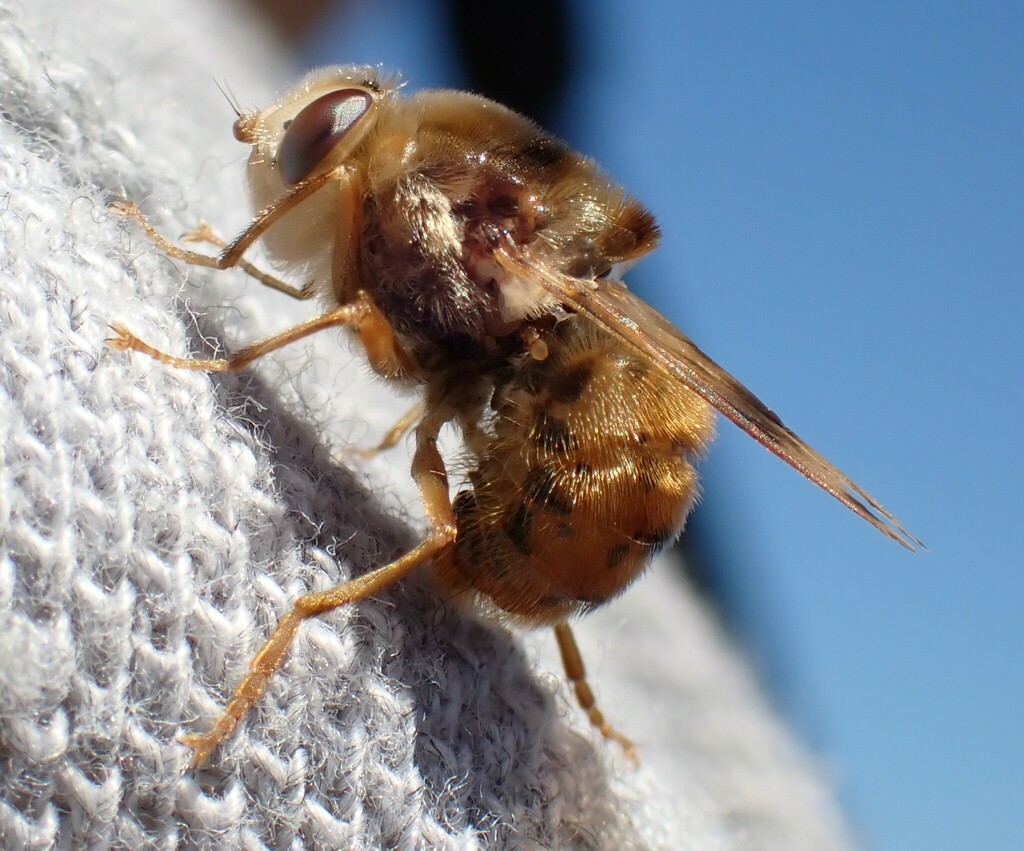
Adult horse botflies look like small, hairy bumblebees about 1 to 1.5 cm long and have a visible ovipositor. Females lay up to 1000 eggs on horse legs; the larvae hatch after the horse licks them, develop in the mouth, tongue and stomach for many months, and are expelled in the feces in spring. Control includes deworming after the first hard frost and manually removing eggs, plus good manure management.
Source: Wikipedia
Is it a pest in the house?
Adults are a nuisance because they repeatedly land on the legs of horses when trying to lay eggs.
Source: Wikipedia
How to get rid of it
- Effective larvicides include macrocyclic insecticides, ivermectin, moxidectin, and organophosphates such as metrifonate and dichlorvos.
- The best time to deworm is after the first hard frost, which kills adult flies and reduces egg ingestion.
- Manual removal of eggs with specialized tools and good manure management (regular removal, composting, rotational grazing) help prevent infestation.
Source: Wikipedia
What it eats
Larvae are usually discovered when a host’s stomach is examined; they may also be seen in the host’s feces.
Source: Wikipedia
Life cycle
Eggs hatch after the host licks them; first-instar larvae migrate to the mouth, then to the tongue where they tunnel just beneath the surface. Third-instar larvae are passed in the feces in spring, pupate in soil for 3 to 5 weeks, and adults emerge for a few weeks in summer.
Source: Wikipedia
When you see it
Adults are most active in the summer.
Source: Wikipedia
Where it comes from
The horse botfly is found worldwide.
Source: Wikipedia
Where it is found in the US
Recorded in 17 of 51 states and DC. Most records: Ohio, Illinois, Kansas, Florida, Michigan, Missouri, Texas, Wisconsin.
Darker = more records. Counts are museum and citizen-science records, not population size.
Source: GBIF
Status: native in North America; native in Canada. Source: iNaturalist
Months it is reported in the US
Source: GBIF
More photos


Questions people ask
How can I prevent horse botfly infestation?
Deworm horses after the first hard frost, remove eggs manually with a bot knife, keep pens clean of manure, and rotate grazing areas.
Source: Wikipedia
What do adult horse botflies look like?
They are 10 to 15 mm long, look like hairy bumblebees, and have a noticeable ovipositor at the abdomen’s end.
Source: Wikipedia
When are horse botflies active?
Adult flies are prominently active during the summer months.
Source: Wikipedia
What is the life cycle of the horse botfly?
Females lay eggs on horse legs; larvae hatch after being licked, develop in the mouth, tongue and stomach for many months, are expelled in feces in spring, pupate in soil, and adults emerge for a few weeks in summer.
Source: Wikipedia
Same family (Oestridae)


Sources
- Wikipedia: https://en.wikipedia.org/wiki/Gasterophilus_intestinalis
Look it up elsewhere: GBIF · iNaturalist · BugGuide · ITIS · Wikipedia
Text written 2026-10-29 from the sources above and checked sentence by sentence against them. Data fetched 2026-10-29.