 Bug FAQ
Squirrel Bot Fly
Cuterebra emasculator · Order: Diptera · Family: Oestridae
Also called: Tree Squirrel Bot Fly
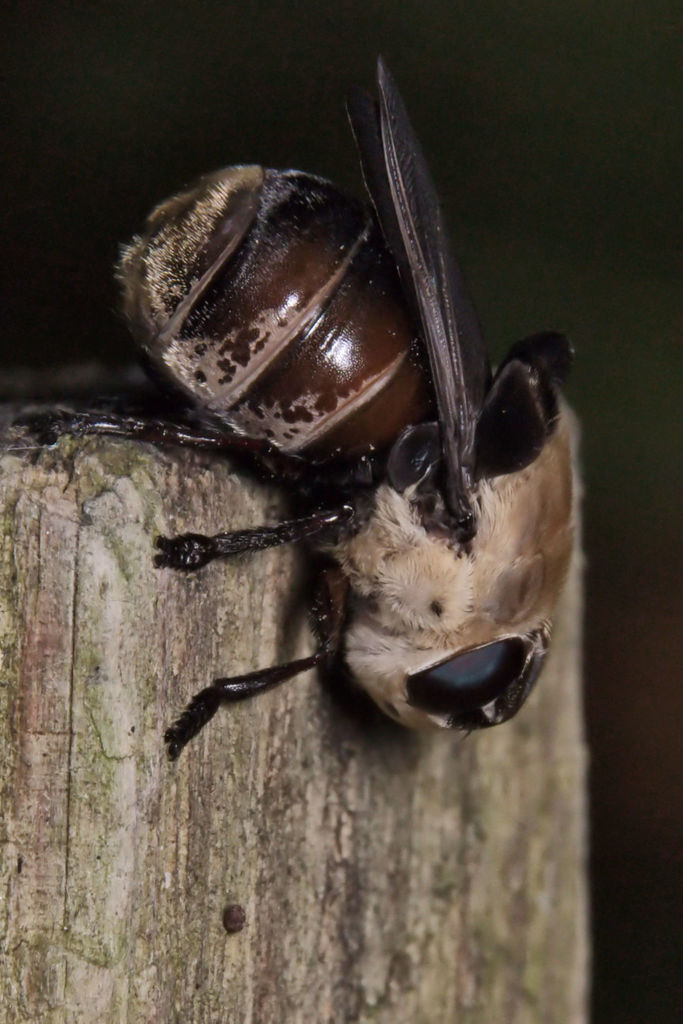
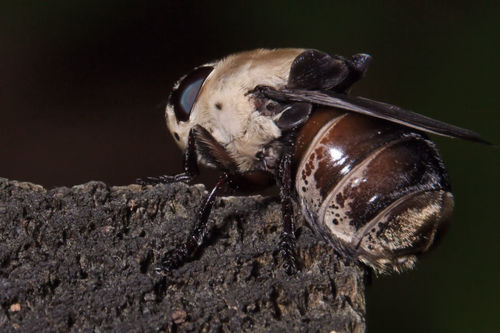
The adult Squirrel Bot Fly resembles a dull-colored bumblebee. After about four weeks the larva leaves the host, pupates in the soil through winter, and the adult emerges in early summer to mate.
Source: Wikipedia
How to recognize it
It can be identified by its bumblebee-like dull coloration.
Source: Wikipedia
Size
The adult is about the size and shape of a dull bumblebee.
Source: Wikipedia
What it eats
First-instar larvae wait inside the egg until they detect heat or carbon dioxide from a passing host, then they exit and seek an opening such as the mouth, nostrils, anus, or a wound. Once inside, the larva moves around for about a week before settling under the host’s fur.
Source: Wikipedia
Life cycle
Eggs are laid on vegetation; the larva develops inside the egg and waits to hatch when it senses a host’s heat or CO₂.
Source: Wikipedia
When you see it
Adults emerge in early summer and immediately look for mates.
Source: Wikipedia
Where it comes from
Its native range is the eastern United States.
Source: Wikipedia
Lookalikes
It is often mistaken for a bumblebee because of its dull, bee-like appearance.
Source: Wikipedia
Where it is found in the US
Recorded in 23 of 51 states and DC. Most records: Maryland, Florida, Virginia, North Carolina, Pennsylvania, Tennessee, Massachusetts, Ohio.
Darker = more records. Counts are museum and citizen-science records, not population size.
Source: GBIF
Status: native in North America; native in Canada. Source: iNaturalist
Months it is reported in the US
Source: GBIF
More photos
Questions people ask
What does the adult Squirrel Bot Fly look like?
The adult resembles a dull-colored bumblebee, which is its main identifying feature.
Source: Wikipedia
Same family (Oestridae)
Sources
- Wikipedia: https://en.wikipedia.org/wiki/Cuterebra_emasculator
Look it up elsewhere: GBIF · iNaturalist · BugGuide · ITIS · Wikipedia
Text written 2026-10-28 from the sources above and checked sentence by sentence against them. Data fetched 2026-10-28.