 Bug FAQ
Hoary Edge
Cecropterus lyciades · Order: Lepidoptera · Family: Hesperiidae
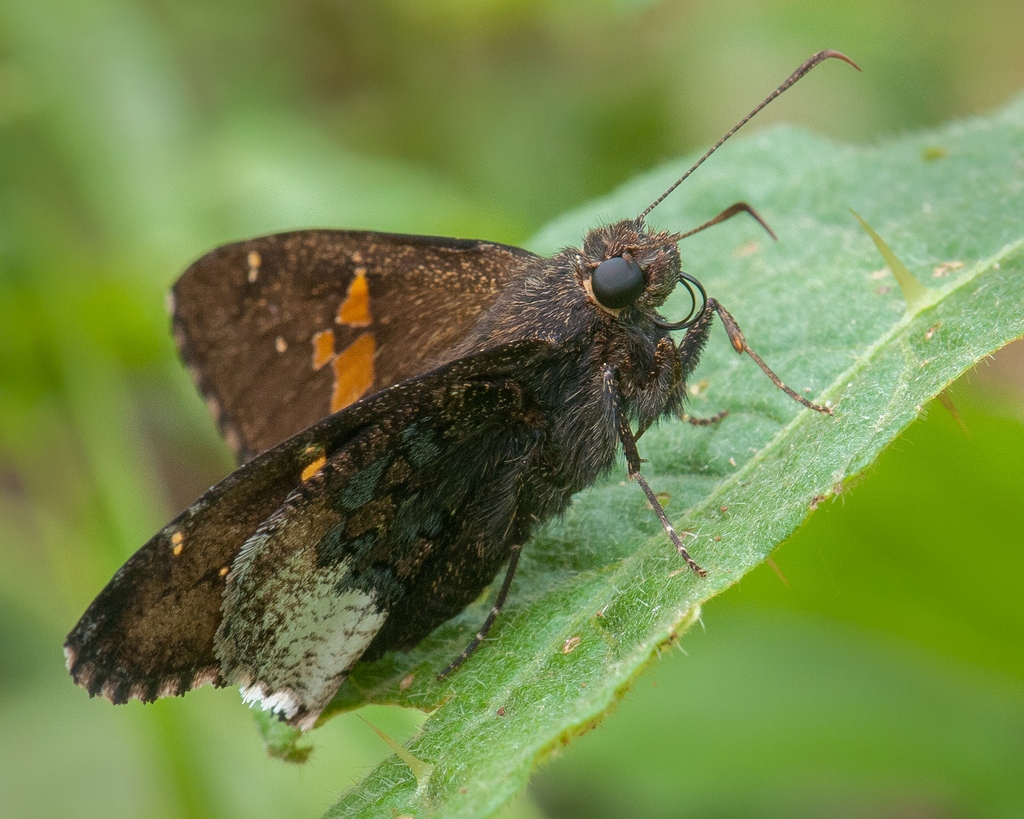
The hoary edge is a small skipper butterfly with a wingspan of about 4.5 to 4.9 cm. It lives in open woodlands, mixed deciduous forests and sandy areas across the eastern United States. Two generations appear each year, one in April and another in September.
Source: Wikipedia
How to recognize it
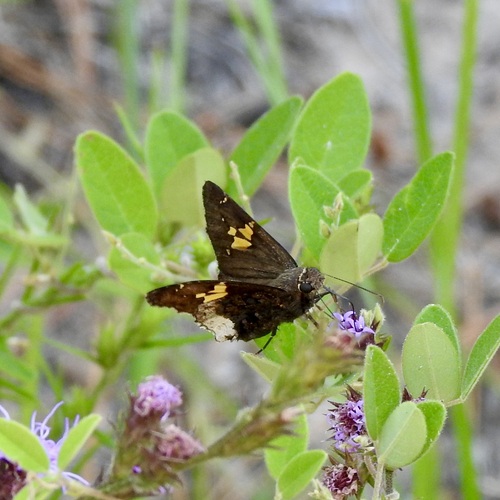
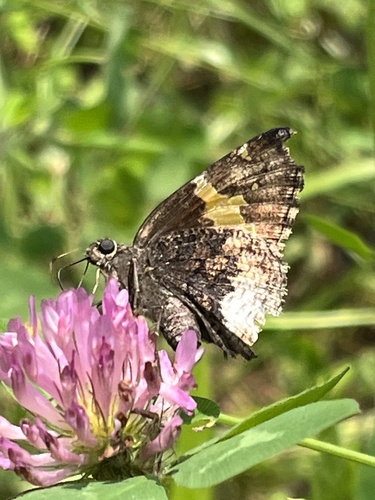
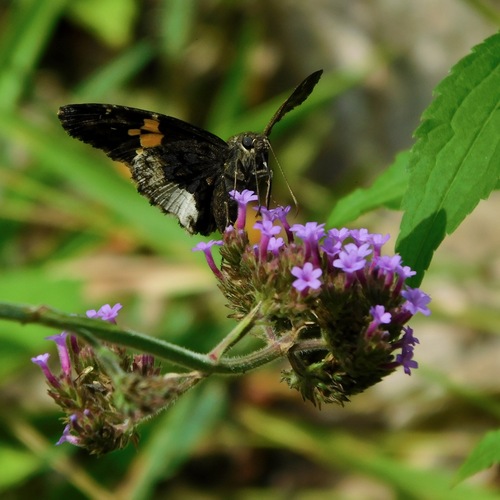
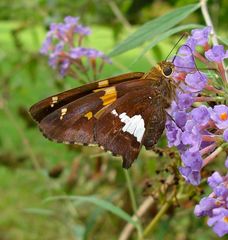
The species is named for a whitish patch on the hindwing.
Source: Wikipedia
Size
Wingspan ranges from 4.5 to 4.9 cm.
Source: Wikipedia
Where it lives
Found in open woodlands, mixed deciduous forests and sandy habitats.
Source: Wikipedia
Life cycle
There are two broods each year, one in April and another in September.
Source: Wikipedia
Where it comes from
It occurs throughout the eastern United States.
Source: Wikipedia
Where it is found in the US
Recorded in 26 of 51 states and DC. Most records: Georgia, Arkansas, Alabama, Texas, Oklahoma, North Carolina, Missouri, Tennessee.
Darker = more records. Counts are museum and citizen-science records, not population size.
Source: GBIF
Status: native in North America; native in United States; native in Canada. Source: iNaturalist
Months it is reported in the US
Source: GBIF
More photos

Questions people ask
When can I see the hoary edge?
Adults appear in two broods, one in April and another in September.
Source: Wikipedia
Where does the hoary edge live?
It is found across the eastern United States in open woodlands, mixed deciduous forests and sandy areas.
Source: Wikipedia
How can I tell the hoary edge apart from similar butterflies?
It is smaller than the silver-spotted skipper and has a longer, diffused silver streak on its wing, plus a whitish patch on the hindwing.
Source: Wikipedia
Same family (Hesperiidae)




Sources
- Wikipedia: https://en.wikipedia.org/wiki/Cecropterus_lyciades
Look it up elsewhere: GBIF · iNaturalist · BugGuide · Wikipedia
Text written 2026-10-23 from the sources above and checked sentence by sentence against them. Data fetched 2026-10-23.