 Bug FAQ
Hemiandrus pallitarsis
Hemiandrus pallitarsis · Order: Orthoptera · Family: Anostostomatidae
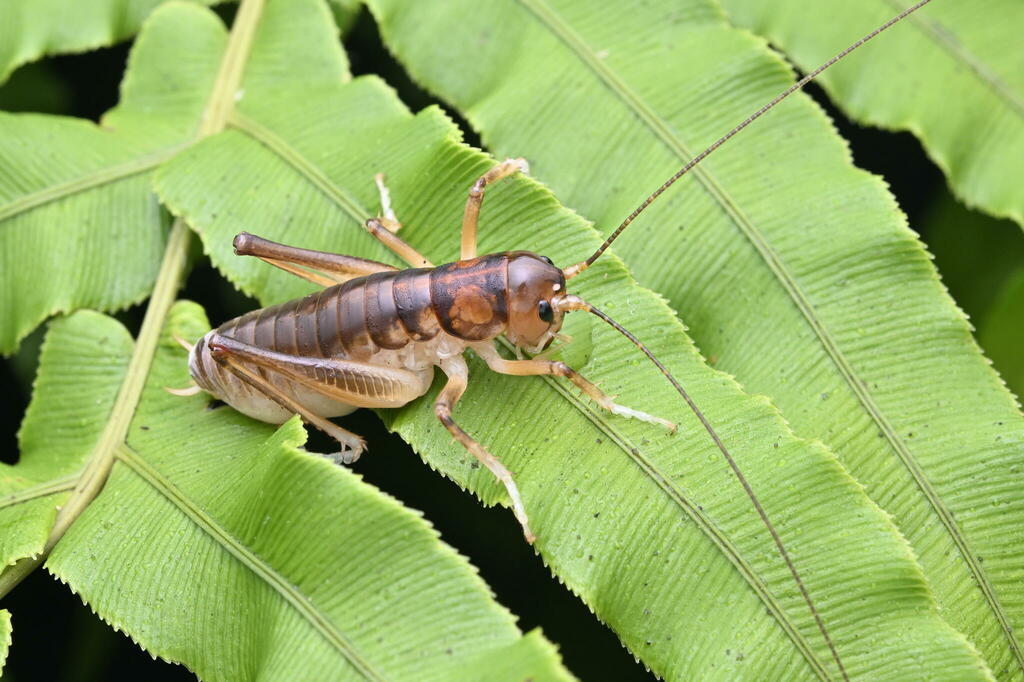
Hemiandrus pallitarsis is a ground wētā found only on New Zealand's North Island. It lives in burrows by day and climbs vegetation at night, especially beech trees and other native plants. The species has a two-year life cycle, with eggs laid in July and hatching in early spring.
Source: Wikipedia
How to recognize it
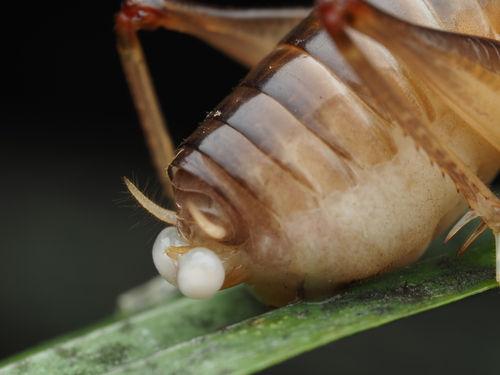
Look for a single spine on the front tibia, three spines on the front-side and four on the back-side of the middle tibia; the tibia lacks a hearing membrane. Females have a distinctive abdominal appendage, while males show blackened hooks on the last abdominal segment.
Source: Wikipedia
Where it lives
During daylight they stay in underground burrows because they are nocturnal. At night they are active on the ground and can be seen on beech trees, kanuka bushes and kawakawa leaves.
Source: Wikipedia
What it eats
Their specific diet is not recorded, but they are often caught climbing tree trunks, especially hard beech trees, in summer.
Source: Wikipedia
Life cycle
They complete their development over two years. Juveniles may take up to a year to become adults and then live for about two more years.
Source: Wikipedia
When you see it
Immature individuals are most common from December to March, while adults can be found year-round. Eggs are laid in July and hatch in September to October.
Source: Wikipedia
More photos
Questions people ask
When are these wētā active?
They stay hidden in burrows by day and become active on the ground and in vegetation at night.
Source: Wikipedia
How long does it take for them to mature?
Juveniles may need up to a year to develop into adults, after which they live for about two more years.
Source: Wikipedia
Where can I find Hemiandrus pallitarsis?
They are native to New Zealand’s North Island and are usually found in underground burrows during the day.
Source: Wikipedia
Same family (Anostostomatidae)


Sources
- Wikipedia: https://en.wikipedia.org/wiki/Hemiandrus_pallitarsis
Look it up elsewhere: GBIF · iNaturalist · BugGuide · Wikipedia
Text written 2026-10-23 from the sources above and checked sentence by sentence against them. Data fetched 2026-10-23.