 Bug FAQ
Jumping spider (Hakka himeshimensis)
Hakka himeshimensis · Order: Araneae · Family: Salticidae
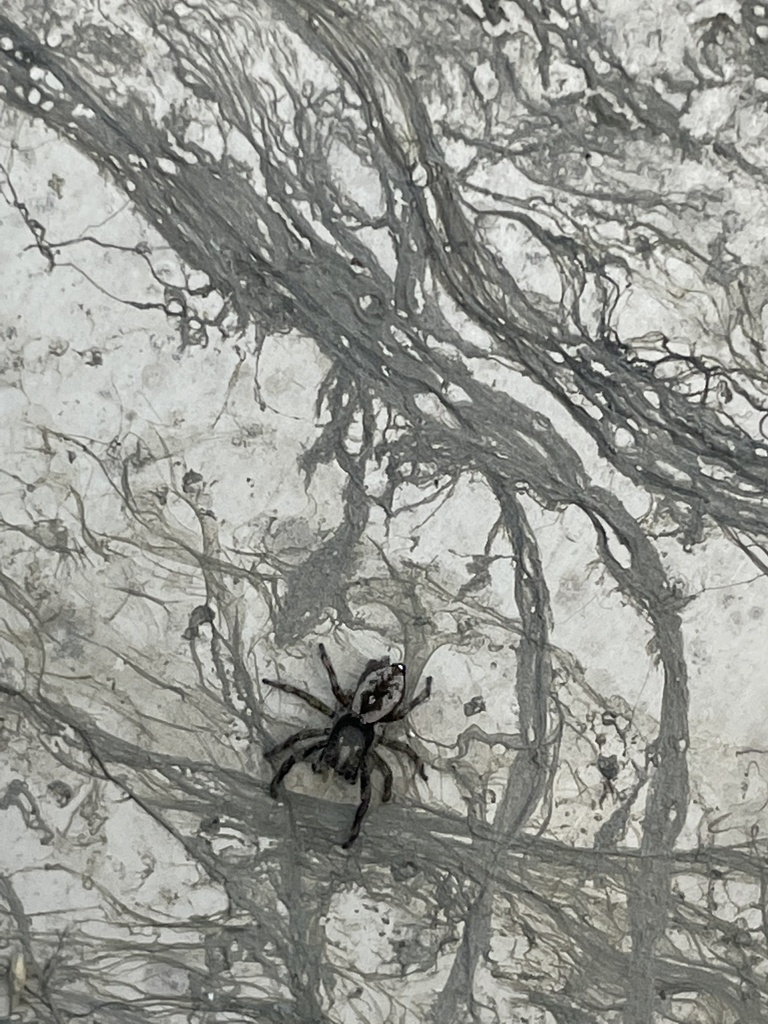
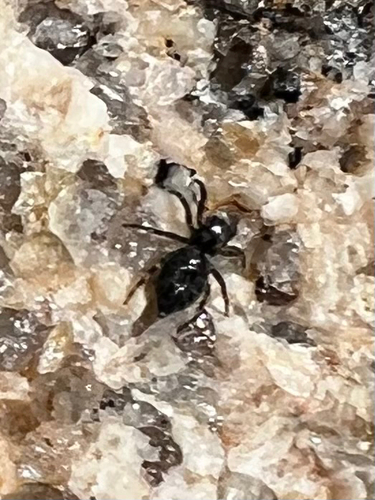
Both males and females are about 7 mm long. The body and legs are a uniform dark brown, and reddish hairs stand up diagonally between the eyes. It is most often found on rocky coasts and is native to East Asia.
Source: Wikipedia
How to recognize it
The insect’s body and legs are uniformly dark brown. Long reddish hairs project diagonally upward between the eyes.
Source: Wikipedia
Size
Both sexes measure roughly 7 mm in length.
Source: Wikipedia
Where it lives
It is commonly encountered in rocky coastal environments.
Source: Wikipedia
Where it comes from
Hakka himeshimensis originates from East Asia.
Source: Wikipedia
Where it is found in the US
Recorded in 15 of 51 states and DC. Most records: New York, Massachusetts, New Jersey, Maryland, Rhode Island, California, Pennsylvania, Delaware.
Darker = more records. Counts are museum and citizen-science records, not population size.
Source: GBIF
Status: introduced in North America; introduced in Canada; introduced in United States. Source: iNaturalist
Months it is reported in the US
Source: GBIF
More photos
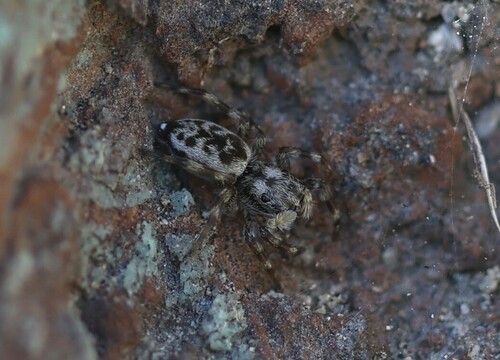
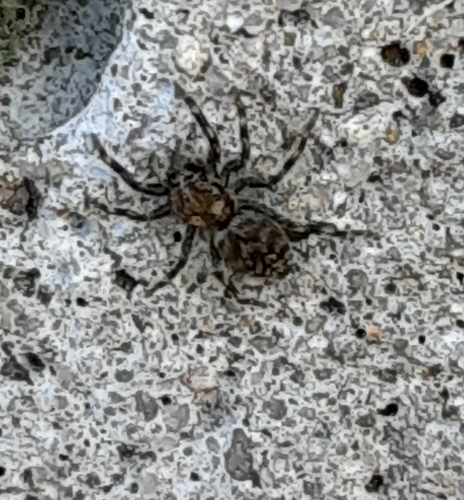
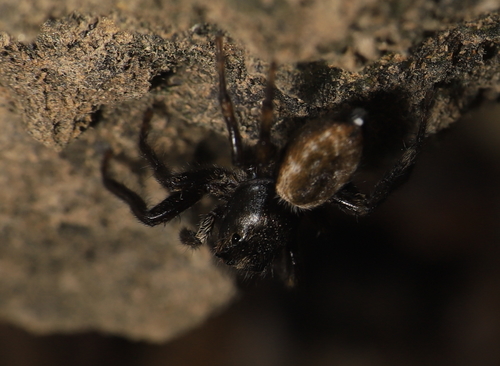
Questions people ask
What does Hakka himeshimensis look like?
It has a uniformly dark brown body and legs, with long reddish hairs that stand up diagonally between the eyes.
Source: Wikipedia
Where is Hakka himeshimensis found?
It lives mainly on rocky coastal habitats and is native to East Asia.
Source: Wikipedia
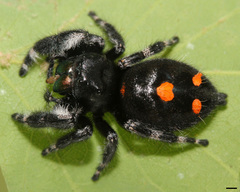
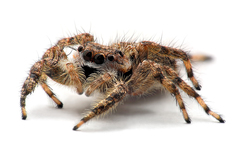
Same family (Salticidae)



Sources
- Wikipedia: https://en.wikipedia.org/wiki/Hakka_himeshimensis
Look it up elsewhere: GBIF · iNaturalist · BugGuide · ITIS · Wikipedia
Text written 2026-10-27 from the sources above and checked sentence by sentence against them. Data fetched 2026-10-27.