 Bug FAQ
Hairy Beech Gall
Hartigiola annulipes · Order: Diptera · Family: Cecidomyiidae
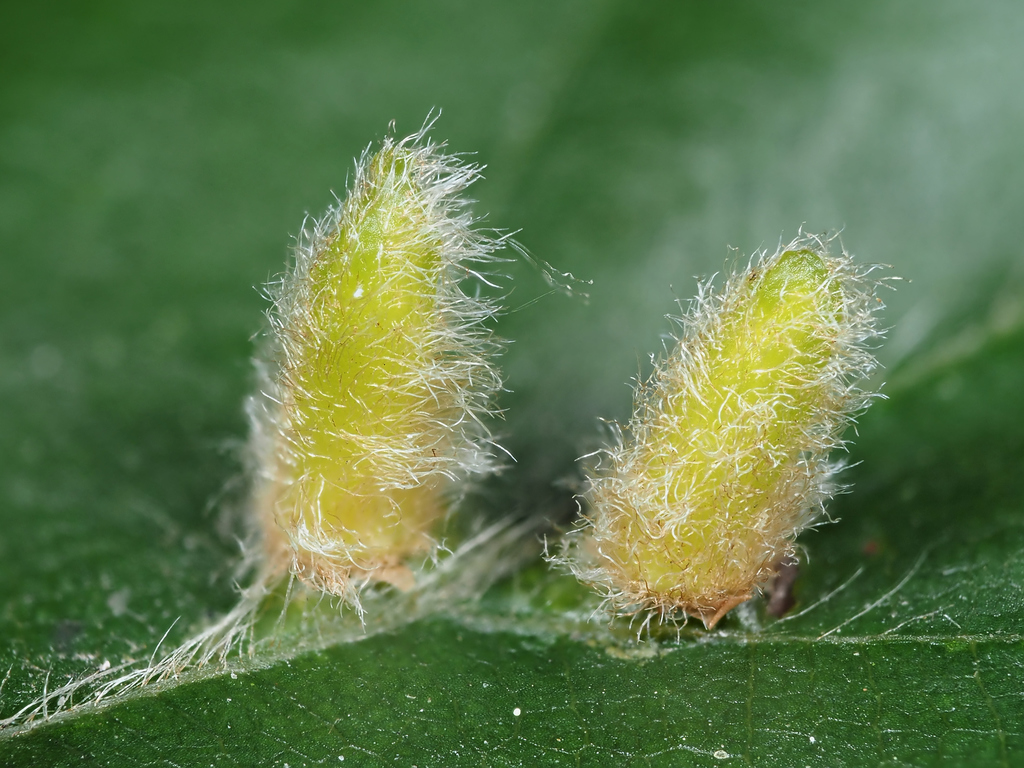
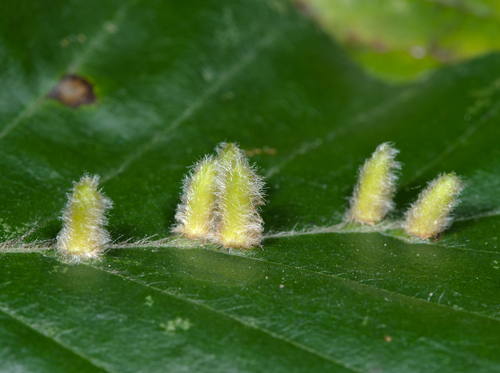
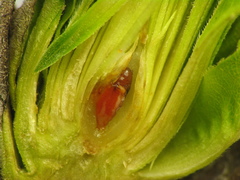
The gall starts yellow-green, turns reddish-brown and grows up to 6 mm tall by late summer. A single white larva lives inside; when mature the gall drops to the ground, leaving a round hole in the leaf. Larvae feed on beech leaves, pupate in the fallen gall, and adults emerge in spring to lay eggs on new leaves.
Source: Wikipedia
How to recognize it
Young galls are yellow-green and later become reddish-brown. In August to September the gall can reach up to 6 mm in height.
Source: Wikipedia
Size
Each gall contains one white larva and may be smooth or hairy, sometimes with a point. Mature galls fall to the floor, leaving a circular hole in the leaf.
Source: Wikipedia
How to get rid of it
Heavy infestations may be reduced by the fungus Apiognomonia errabunda, which can kill the larvae.
Source: Wikipedia
Where it lives
The larvae form galls on the leaves of beech trees (Fagus species).
Source: Wikipedia
What it eats
Larvae feed on beech leaves, creating the characteristic galls.
Source: Wikipedia
Life cycle
After feeding, larvae pupate inside the fallen gall and adults emerge in spring to lay eggs on fresh leaves.
Source: Wikipedia
When you see it
Adults are active and can be seen in May and June. Galls reach their maximum height in August and September.
Source: Wikipedia
More photos
Questions people ask
How can I control hairy beech gall?
A heavy infestation can be helped by the fungus Apiognomonia errabunda, which may kill the larvae.
Source: Wikipedia
When are adult hairy beech gall flies present?
Adults are typically seen in May and June.
Source: Wikipedia
What do the galls look like?
They start yellow-green, turn reddish-brown, and can grow up to 6 mm tall, often smooth or hairy with a point.
Source: Wikipedia
Same family (Cecidomyiidae)


Sources
- Wikipedia: https://en.wikipedia.org/wiki/Hartigiola_annulipes
Look it up elsewhere: GBIF · iNaturalist · BugGuide · Wikipedia
Text written 2026-10-23 from the sources above and checked sentence by sentence against them. Data fetched 2026-10-22.