 Bug FAQ
Habronattus americanus
Habronattus americanus · Order: Araneae · Family: Salticidae
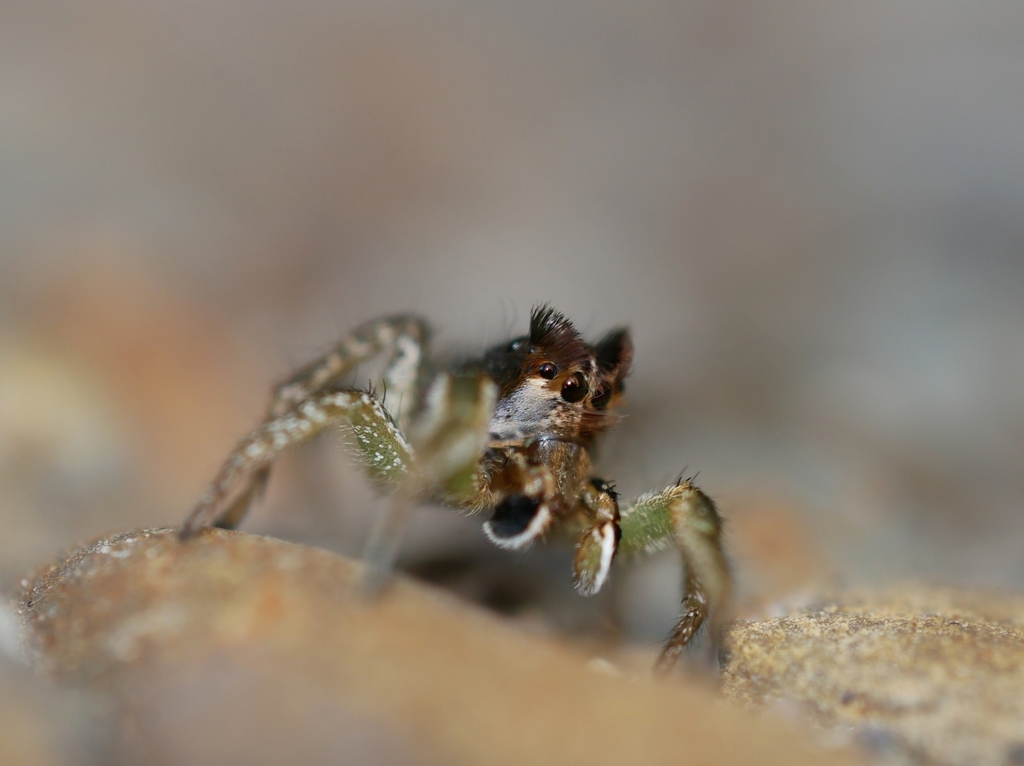
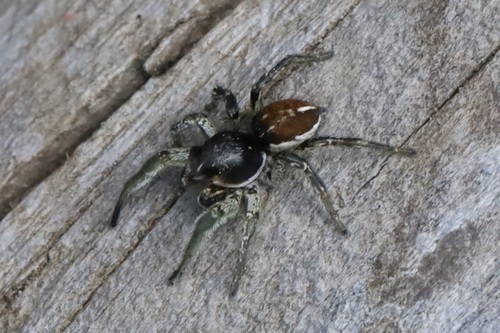
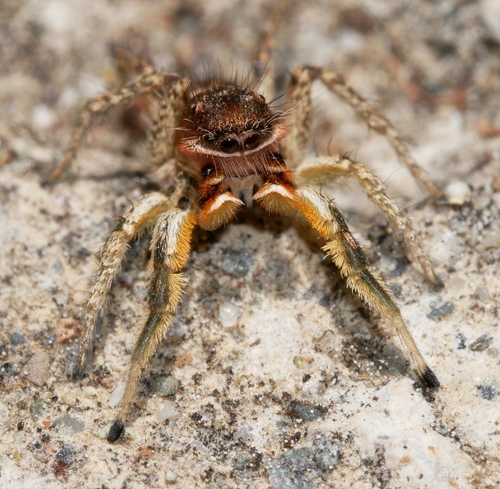
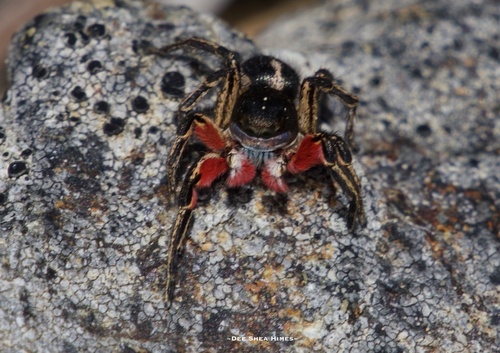
The western jumping spider Habronattus americanus lives from British Columbia down to California. Females are brown-gray and small, while males are black on top with red on the pedipalp and parts of the legs.
Source: Wikipedia
How to recognize it
Males have a black dorsal surface and red coloration on the pedipalp and some leg segments.
Source: Wikipedia
Size
Females show a brown and gray coloration with a limited color range.
Source: Wikipedia
Where it lives
This spider inhabits western North America, from British Columbia in Canada to California in the United States.
Source: Wikipedia
Where it comes from
Its native range covers western North America, spanning British Columbia to California.
Source: Wikipedia
Where it is found in the US
Recorded in 10 of 51 states and DC. Most records: California, Colorado, Oregon, Idaho, Montana, Nevada, Washington, Utah.
Darker = more records. Counts are museum and citizen-science records, not population size.
Source: GBIF
Months it is reported in the US
Source: GBIF
More photos
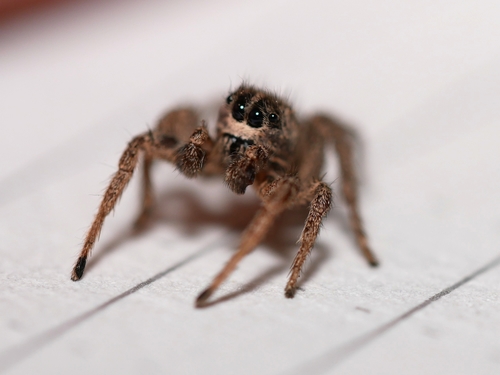
Same family (Salticidae)
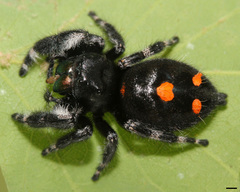

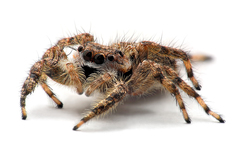


Sources
- Wikipedia: https://en.wikipedia.org/wiki/Habronattus_americanus
Look it up elsewhere: GBIF · iNaturalist · BugGuide · ITIS · Wikipedia
Text written 2026-10-24 from the sources above and checked sentence by sentence against them. Data fetched 2026-10-24.