 Bug FAQ
Grey Swallowtail Moth
Micronia aculeata · Order: Lepidoptera · Family: Uraniidae
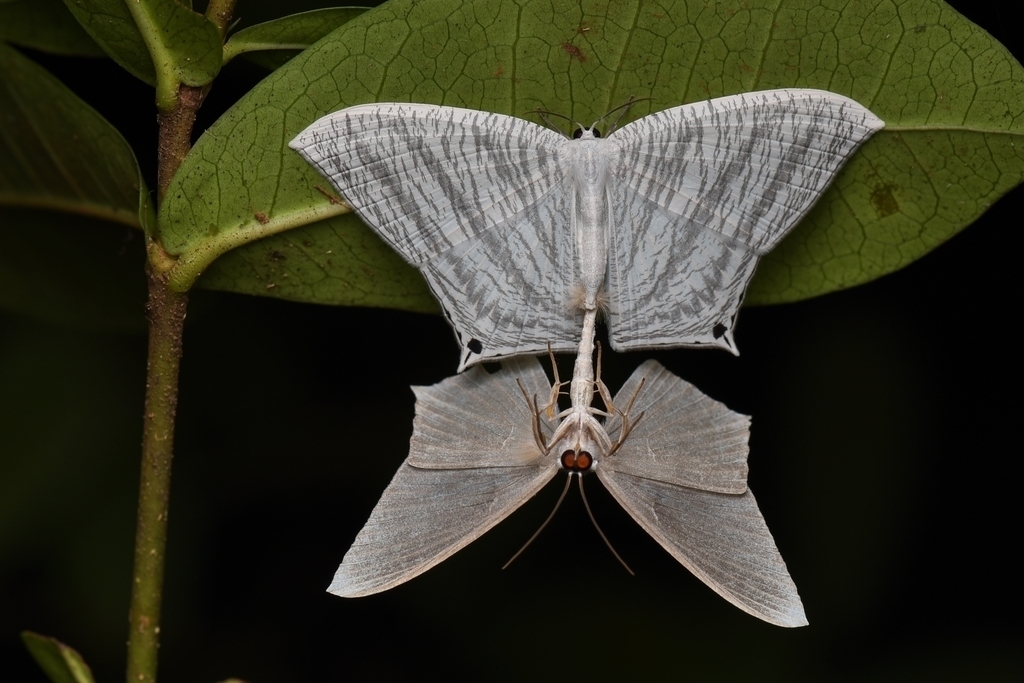
The Grey Swallowtail Moth has a wingspan of about 42 to 50 mm. Its head, thorax and abdomen are white with a faint dark tint, and its wings are white with fine dark streaks and faint oblique bands. It occurs in Myanmar, India, Sri Lanka and extends toward Sulawesi.
Source: Wikipedia
How to recognize it
The moth’s body parts are white with a slight dark shading. The wings are white, closely striped with dark lines, have faint diagonal dark bands, a fine edge line, and a black spot near the hindwing tail base.
Source: Wikipedia
Size
Its wingspan ranges from 42 mm to 50 mm.
Source: Wikipedia
Where it comes from
It is found in Myanmar, India, Sri Lanka and reaches toward Sulawesi.
Source: Wikipedia
Questions people ask
What does the Grey Swallowtail Moth look like?
It has a white body with a faint dark tint and white wings marked with fine dark streaks, faint diagonal bands, a thin marginal line, and a black spot near the hindwing tail base.
Source: Wikipedia
Where is the Grey Swallowtail Moth found?
It occurs in Myanmar, India, Sri Lanka and extends toward Sulawesi.
Source: Wikipedia
Same family (Uraniidae)
Sources
- Wikipedia: https://en.wikipedia.org/wiki/Micronia_aculeata
Look it up elsewhere: GBIF · iNaturalist · BugGuide · Wikipedia
Text written 2026-10-22 from the sources above and checked sentence by sentence against them. Data fetched 2026-10-22.