 Bug FAQ
Green-banded Urania
Urania leilus · Order: Lepidoptera · Family: Uraniidae
Also called: Peacock Moth
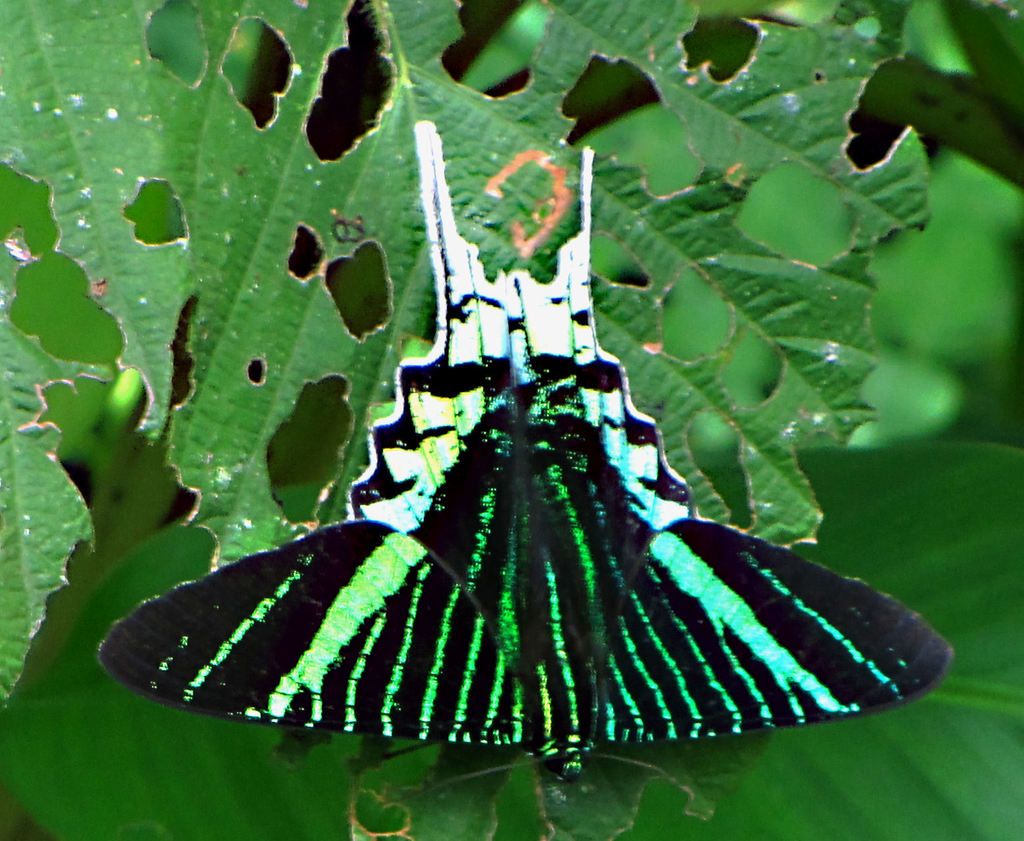
The green-banded Urania moth has a wingspan of about 70 mm (2.8 in). It lives along riverbanks in primary and secondary rainforest from sea level up to roughly 800 m. Its range is the Amazon and other tropical areas east of the Andes in South America.
Source: Wikipedia
How to recognize it
It can be mistaken for Urania fulgens, which lives west of the Andes and is a bit smaller with less white on the tail.
Source: Wikipedia
Size
Wingspan is about 70 mm (2.8 in).
Source: Wikipedia
Where it lives
Prefers riverbanks in primary and secondary rainforest up to about 800 m elevation.
Source: Wikipedia
What it eats
Caterpillars feed exclusively on the toxic spurge Omphalea.
Source: Wikipedia
Lookalikes
Often confused with the similar-looking Urania fulgens.
Source: Wikipedia
More photos
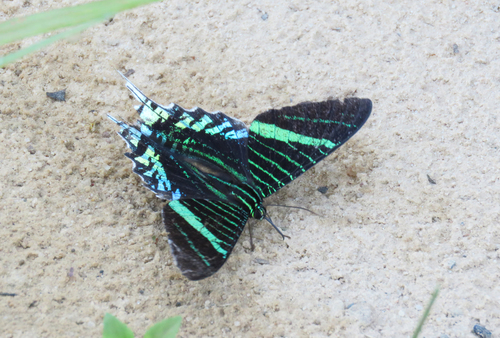
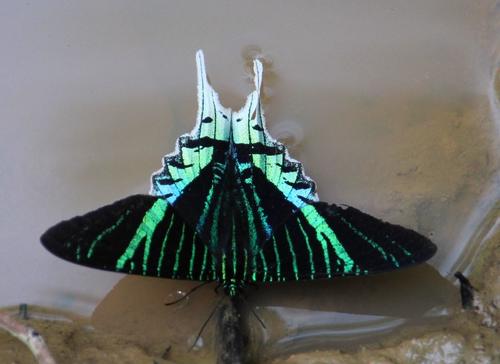
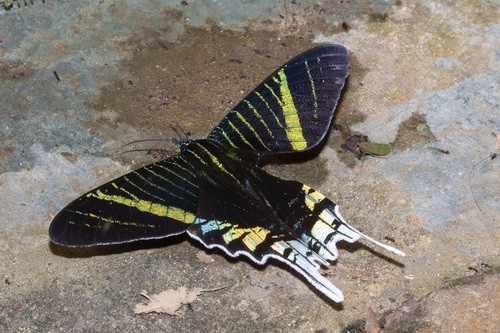
Questions people ask
What do the caterpillars eat?
The larvae feed only on leaves of the toxic spurge Omphalea.
Source: Wikipedia
Where is the green-banded Urania found?
It occurs in the Amazon and other tropical regions east of the Andes in South America.
Source: Wikipedia
What habitat does it prefer?
It lives along riverbanks in primary and secondary rainforest up to about 800 m elevation.
Source: Wikipedia
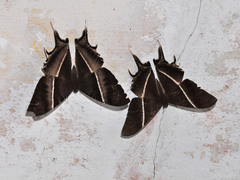
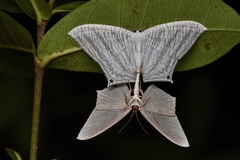
Same family (Uraniidae)
Sources
- Wikipedia: https://en.wikipedia.org/wiki/Urania_leilus
Look it up elsewhere: GBIF · iNaturalist · BugGuide · Wikipedia
Text written 2026-10-23 from the sources above and checked sentence by sentence against them. Data fetched 2026-10-22.