 Bug FAQ
Green-striped Grasshopper
Chortophaga viridifasciata · Order: Orthoptera · Family: Acrididae
Also called: Greenstriped Grasshopper, Northern Green-striped Grasshopper
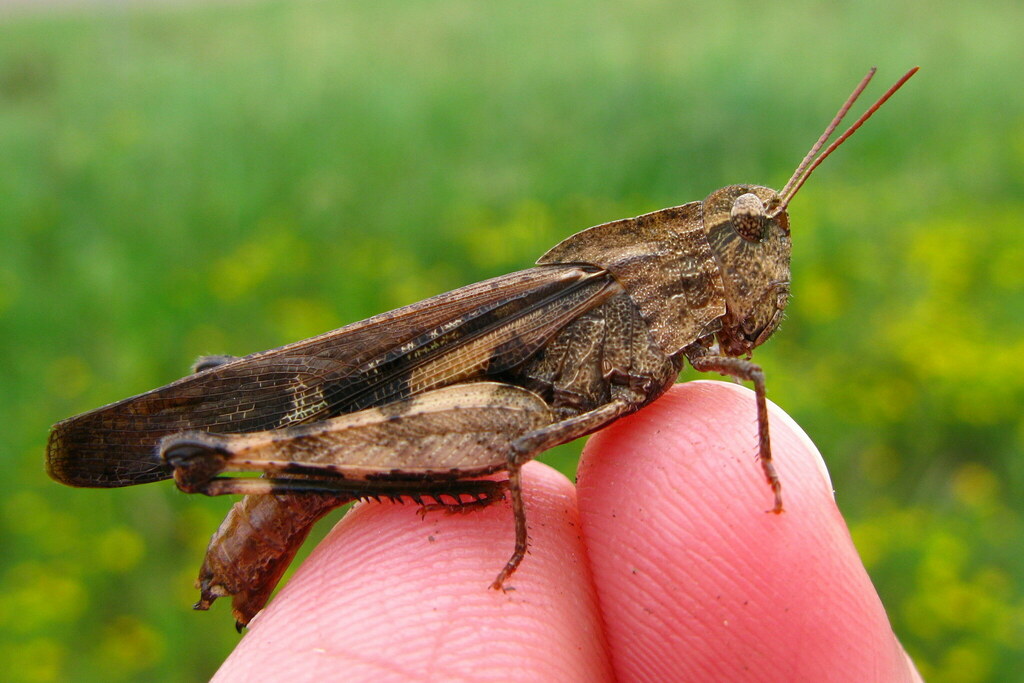
Males are 23 to 30 mm long and females 28 to 38 mm long. They live in moist short-grass areas such as roadsides and hay meadows. Their range extends from British Columbia down to Costa Rica, mainly east of the Rockies.
Source: Wikipedia
How to recognize it
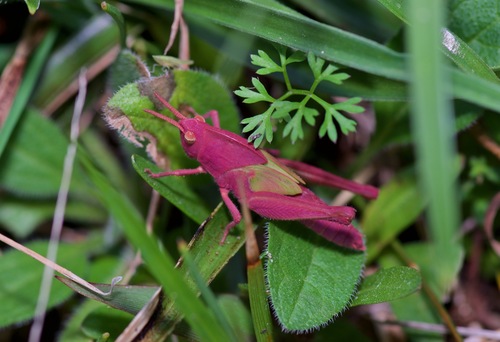
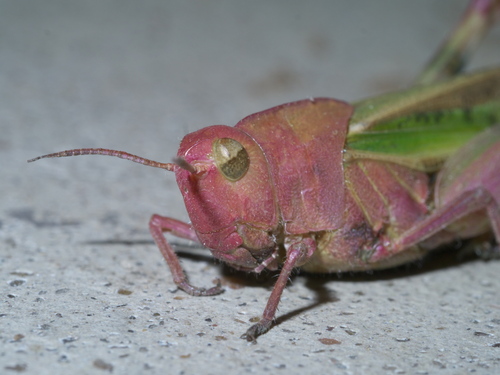
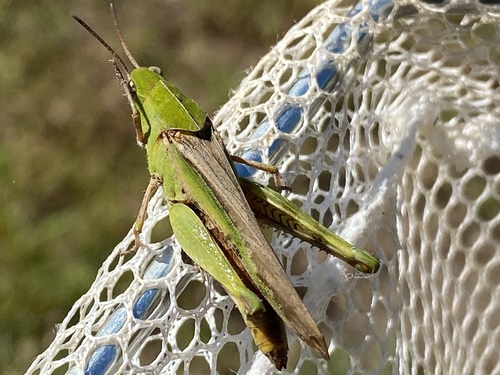
Females are usually green and males brown, though both sexes can vary in colour.
Source: Wikipedia
Size
Males measure 23 to 30 mm, while females are larger at 28 to 38 mm.
Source: Wikipedia
Where it lives
They prefer relatively moist sites with short grass, like roadsides and hay fields.
Source: Wikipedia
Life cycle
Development includes five immature stages, called instars.
Source: Wikipedia
When you see it
They are often the first grasshoppers seen in early spring because they overwinter as adults.
Source: Wikipedia
Where it comes from
Found from British Columbia south to the Gulf of Mexico and Costa Rica, mostly east of the Rocky Mountains.
Source: Wikipedia
Lookalikes
It belongs to the band-winged grasshopper group in the family Acrididae.
Source: Wikipedia
Where it is found in the US
Recorded in 47 of 51 states and DC. Most records: Texas, Oklahoma, Mississippi, Massachusetts, Colorado, Virginia, Maryland, New York.
Darker = more records. Counts are museum and citizen-science records, not population size.
Source: GBIF
Status: native in North America; native in Canada; native in United States. Source: iNaturalist
Months it is reported in the US
Source: GBIF
More photos
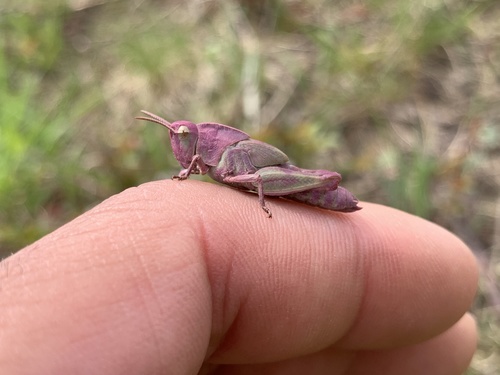
Same family (Acrididae)
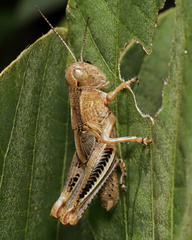 Differential GrasshopperMelanoplus differentialisDamages trees, gardens or crops
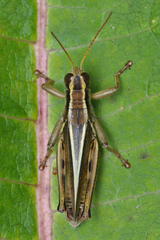 Two-striped GrasshopperMelanoplus bivittatusDamages trees, gardens or crops
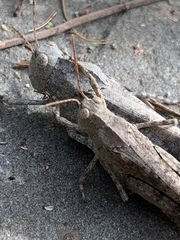 Carolina GrasshopperDissosteira carolinaDamages trees, gardens or crops
 Common Field GrasshopperChorthippus brunneus
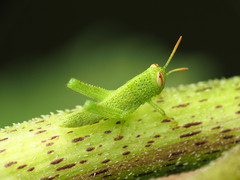 Egyptian Bird GrasshopperAnacridium aegyptium
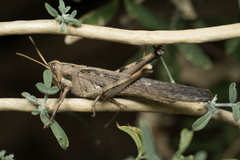 Gray Bird GrasshopperSchistocerca nitensDamages trees, gardens or crops
Sources
- Wikipedia: https://en.wikipedia.org/wiki/Chortophaga_viridifasciata
Look it up elsewhere: GBIF · iNaturalist · BugGuide · ITIS · Wikipedia
Text written 2026-10-22 from the sources above and checked sentence by sentence against them. Data fetched 2026-10-22.