 Bug FAQ
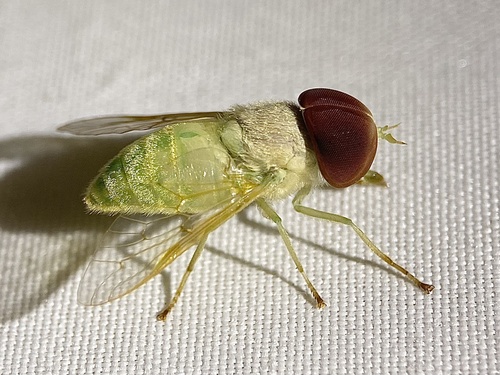
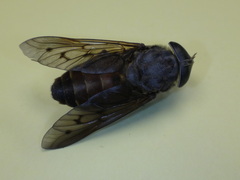
Green Horse Fly
Chlorotabanus crepuscularis · Order: Diptera · Family: Tabanidae
Source: Wikipedia
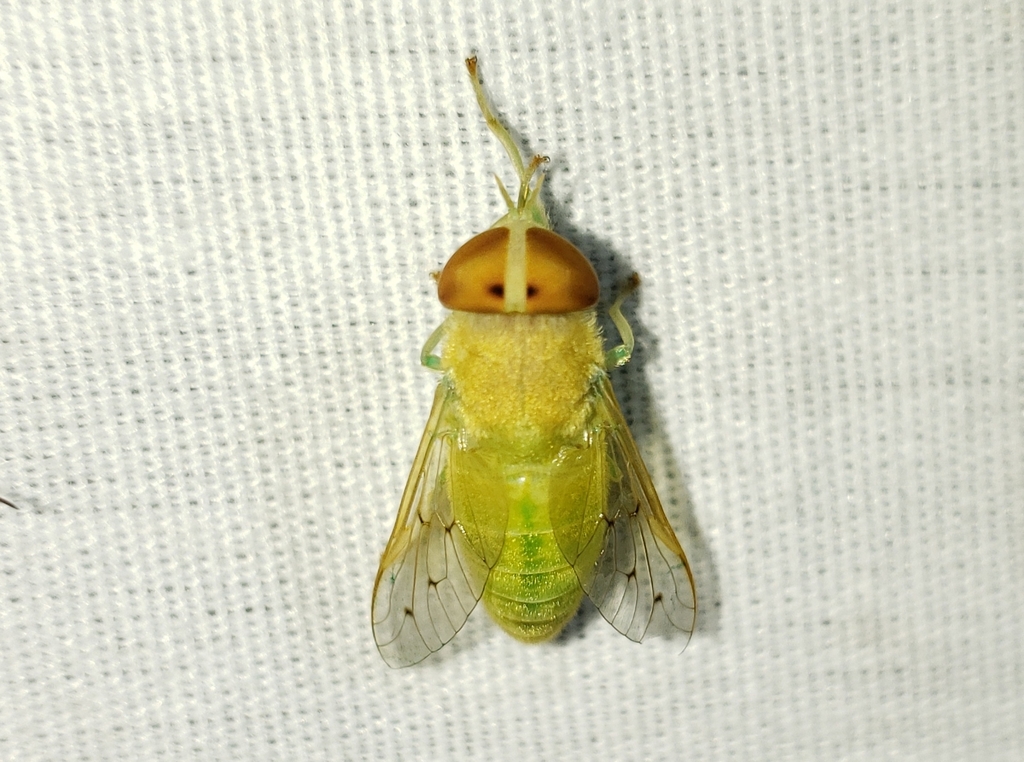
Females locate mammals by sensing carbon dioxide and feed on their blood, especially at night. Adults appear from March through September in Florida, with peak activity from May to mid-July.
Source: Wikipedia
How to recognize it
The eyes are brown but shine yellow under 385 nm UV light.
Source: Wikipedia
Does it bite or sting?
Females bite mammals by feeding on their blood, especially at night.
Source: Wikipedia
Where it lives
Larvae are predaceous and live in soil near water, on floating vegetation, or in forest sand.
Source: Wikipedia
What it eats
Females sense carbon dioxide to locate mammals and feed on their blood. Larvae are also predaceous.
Source: Wikipedia
Life cycle
The insect’s blood is blue.
Source: Wikipedia
When you see it
In Florida adults are seen from March through September, most active May to mid-July.
Source: Wikipedia
Where it comes from
It occurs from Texas to Delaware in the United States.
Source: Wikipedia
Lookalikes
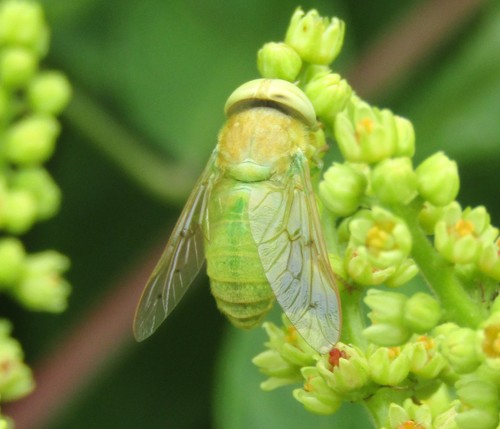
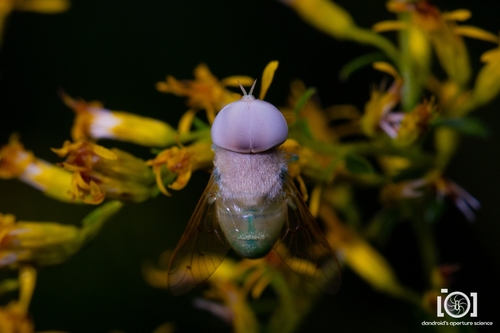
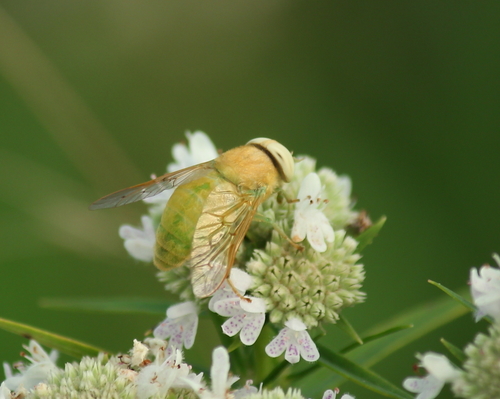
There are no other green tabanids in North America to confuse it with.
Source: Wikipedia
Where it is found in the US
Recorded in 21 of 51 states and DC. Most records: Florida, Mississippi, Louisiana, South Carolina, Texas, Georgia, North Carolina, Virginia.
Darker = more records. Counts are museum and citizen-science records, not population size.
Source: GBIF
Months it is reported in the US
Source: GBIF
More photos
Questions people ask
When are they active?
Adults appear from March through September in Florida, with peak activity from May to mid-July.
Source: Wikipedia
How can I tell them apart from other flies?
They are the only green tabanid in North America and their eyes glow yellow under UV light.
Source: Wikipedia
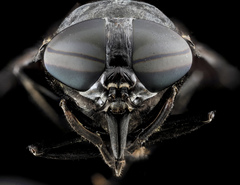
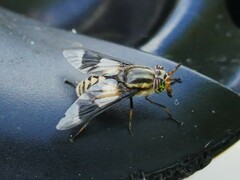
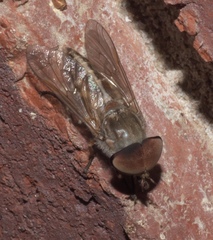
Same family (Tabanidae)


Sources
- Wikipedia: https://en.wikipedia.org/wiki/Chlorotabanus_crepuscularis
Look it up elsewhere: GBIF · iNaturalist · BugGuide · ITIS · Wikipedia
Text written 2026-10-24 from the sources above and checked sentence by sentence against them. Data fetched 2026-10-24.