 Bug FAQ
Green Grocer
Cyclochila australasiae · Order: Hemiptera · Family: Cicadidae
Also called: Blue Moon, Blue Moon (turquoise form), Chocolate Soldier, Chocolate Soldier (dark tan form)
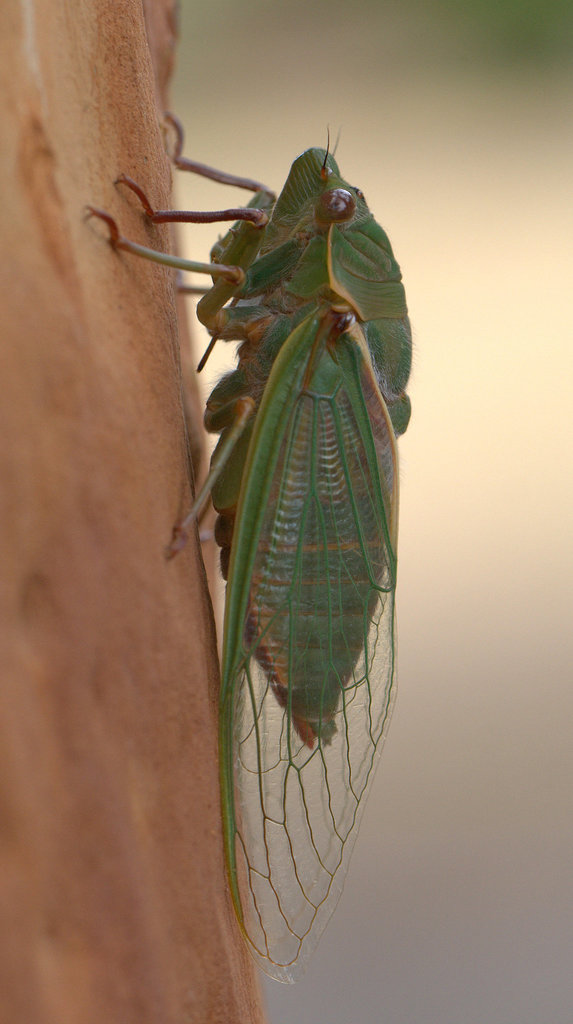
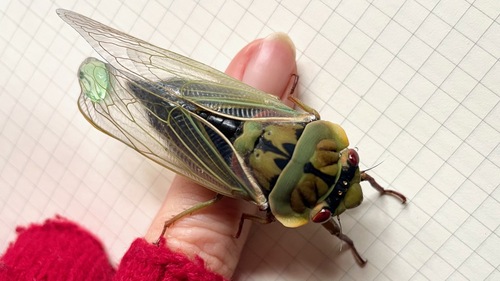
The green grocer cicada is about 4 cm long with a wingspan of roughly 12 cm. It is usually green or brown-yellow with red eyes and is heard around Sydney, Melbourne and nearby regions. The nymph lives underground for seven years feeding on plant root sap before emerging as an adult.
Source: Wikipedia
How to recognize it
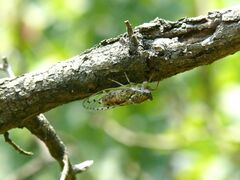
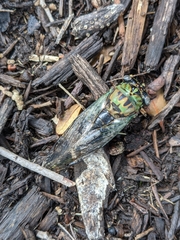
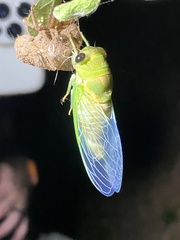
Adults are most often green or brown-yellow and have red eyes.
Source: Wikipedia
Where it lives
They are commonly heard around Sydney, Melbourne, the Blue Mountains and Gippsland, and in Brisbane only above 300 m.
Source: Wikipedia
What it eats
The cicada spends seven years as a nymph drinking sap from plant roots before emerging as an adult.
Source: Wikipedia
Life cycle
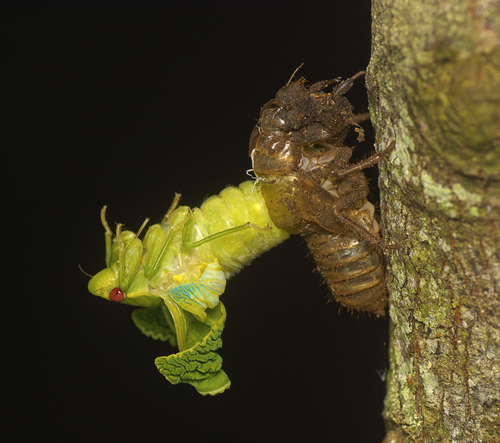
Nymphs live underground for about seven years feeding on root sap, then emerge as winged adults.
Source: Wikipedia
Lookalikes
Green specimens are called green grocers, while yellow ones are known as yellow mondays.
Source: Wikipedia
More photos
Questions people ask
How big are green grocer cicadas?
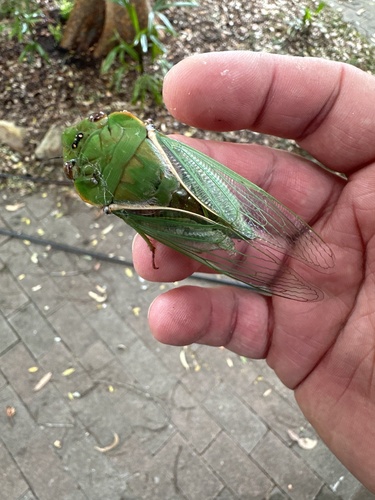
They are about 4 cm long with a wingspan of 11 to 13 cm.
Source: Wikipedia
What do green grocer cicadas look like?
They are usually green or brown-yellow and have red eyes.
Source: Wikipedia
Where are green grocer cicadas found?
They are common around Sydney, Melbourne, the Blue Mountains, Gippsland, and in higher elevations near Brisbane.
Source: Wikipedia
What do green grocer cicadas eat?
As nymphs they drink sap from plant roots underground for about seven years before becoming adults.
Source: Wikipedia
Same family (Cicadidae)
Sources
- Wikipedia: https://en.wikipedia.org/wiki/Cyclochila_australasiae
Look it up elsewhere: GBIF · iNaturalist · BugGuide · Wikipedia
Text written 2026-10-24 from the sources above and checked sentence by sentence against them. Data fetched 2026-10-22.