 Bug FAQ
Green-and-gold Nomia Bee
Lipotriches australica · Order: Hymenoptera · Family: Halictidae
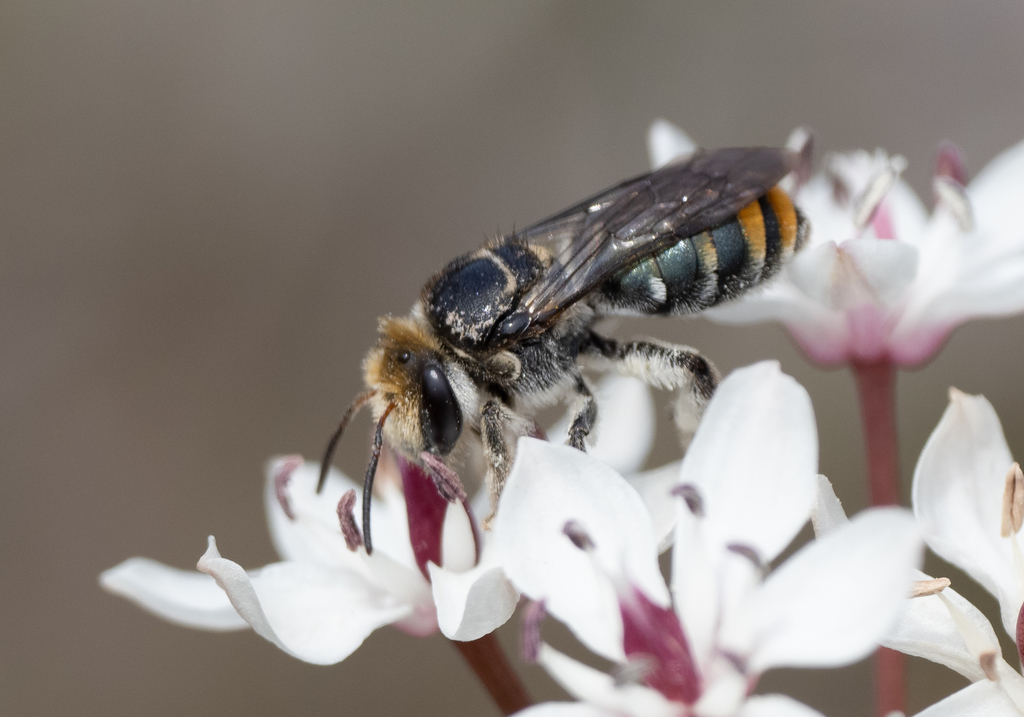
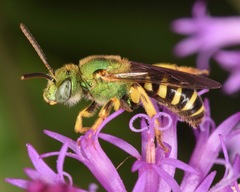
The green-and-gold Nomia bee is about 10 mm long, similar to a European honeybee. Females nest in soil burrows that may be used for several years, sometimes forming dense aggregations of tens of thousands of nests per hectare.
Source: Wikipedia
How to recognize it
Males have a narrower abdomen than females and modified hind legs with an expanded, angular tibia and a swollen femur.
Source: Wikipedia
Size
Adults are about 10 mm long, roughly the size of a European honeybee.
Source: Wikipedia
Where it lives
Nests are dug in soil as vertical burrows leading to one or more brood-cell cavities.
Source: Wikipedia
What it eats
It is a buzz pollinator that visits many different flowering species.
Source: Wikipedia
More photos
Questions people ask
How can I identify a green-and-gold Nomia bee?
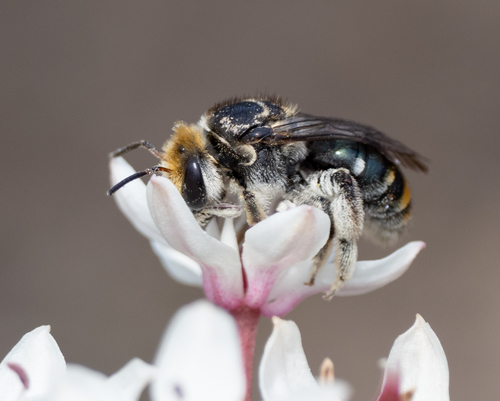
Look for a 10 mm bee with a black head and thorax, a white hair patch on the rear of the thorax, and an abdomen with broad golden bands and a metallic blue-green sheen; males have a narrower abdomen and distinctive hind-leg modifications.
Source: Wikipedia
When are these bees active?
In Victoria they are on the wing from September through April, most abundant in February.
Source: Wikipedia
Where do they nest?
They dig vertical soil burrows that end in brood-cell cavities, and can form dense aggregations of many thousands of nests per hectare when conditions are good.
Source: Wikipedia
Same family (Halictidae)

Sources
- Wikipedia: https://en.wikipedia.org/wiki/Lipotriches_australica
Look it up elsewhere: GBIF · iNaturalist · BugGuide · ITIS · Wikipedia
Text written 2026-10-23 from the sources above and checked sentence by sentence against them. Data fetched 2026-10-22.