 Bug FAQ
Greater St. John's wort beetle
Chrysolina quadrigemina · Order: Coleoptera · Family: Chrysomelidae
Also called: Klamath Weed Beetle, Leaf beetle
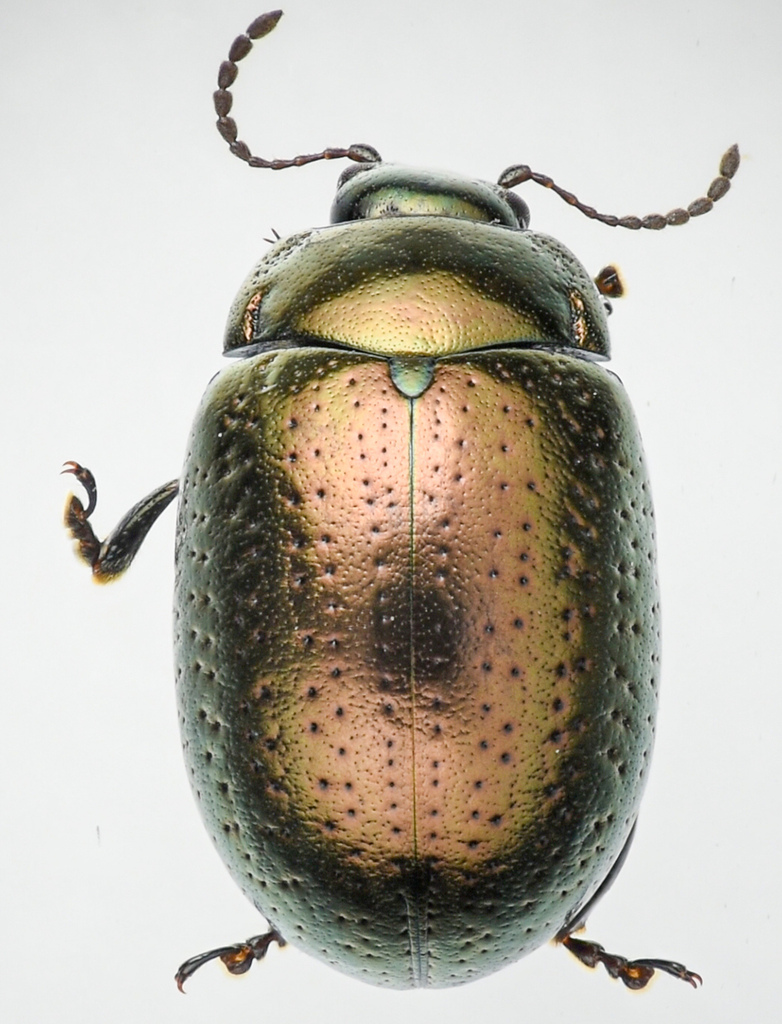
It feeds on Hypericum plants, especially the invasive St. John's wort. One generation occurs each year, with larvae feeding at night before pupating in soil.
Source: Wikipedia
How to recognize it
Chrysolina quadrigemina is the scientific name for the greater St. John's wort beetle.
Source: Wikipedia
How to get rid of it
The species was introduced to some regions as a biological control agent.
Source: Wikipedia
What it eats
Both adults and larvae eat plants of the Hypericum genus, including Hypericum perforatum.
Source: Wikipedia
Life cycle
The beetle completes one full life cycle each year. Larvae feed on host plants at night for about a month, then burrow into soil to pupate.
Source: Wikipedia
When you see it
Adults emerge in late spring, around April or May, to feed heavily before or after the plants flower. In the fall, adults become active again to mate and start the next cycle.
Source: Wikipedia
Where it comes from
It originates from Europe and North Africa.
Source: Wikipedia
Where it is found in the US
Recorded in 11 of 51 states and DC. Most records: Colorado, California, Idaho, Massachusetts, Oregon, Montana, Washington, Iowa.
Darker = more records. Counts are museum and citizen-science records, not population size.
Source: GBIF
Status: introduced in Canada. Source: iNaturalist
Months it is reported in the US
Source: GBIF
More photos

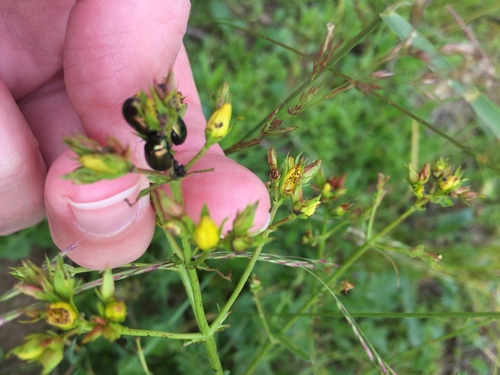
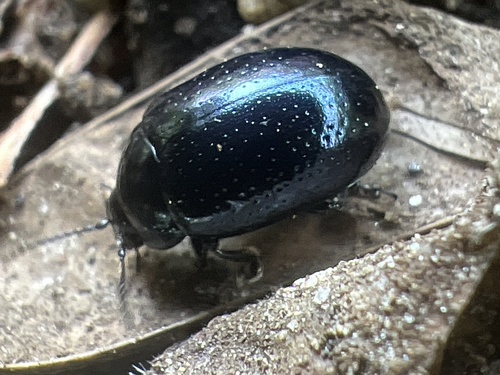
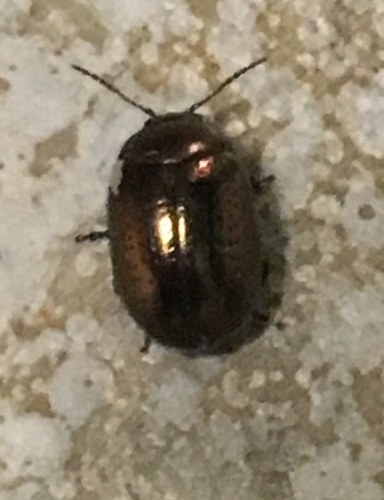
Questions people ask
What plants does the greater St. John's wort beetle eat?
It feeds on Hypericum species, especially the invasive St. John's wort.
Source: Wikipedia
When are the adults active?
Adults appear in late spring (April-May) and again in the fall to mate.
Source: Wikipedia
Why was this beetle introduced to new areas?
It was released as a biological control to help manage St. John's wort.
Source: Wikipedia
Same family (Chrysomelidae)
 Spotted Cucumber BeetleDiabrotica undecimpunctataDamages trees, gardens or crops
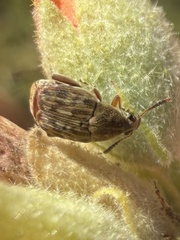 Bean WeevilAcanthoscelides obtectusDamages trees, gardens or crops
 Cowpea WeevilCallosobruchus maculatusDamages trees, gardens or crops
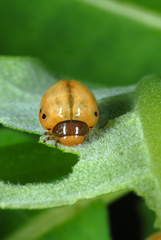 Swamp Milkweed Leaf BeetleLabidomera clivicollisDamages trees, gardens or crops
 Alder Leaf BeetleAgelastica alniDamages trees, gardens or crops
 Dogbane Leaf BeetleChrysochus auratus
Sources
- Wikipedia: https://en.wikipedia.org/wiki/Chrysolina_quadrigemina
Look it up elsewhere: GBIF · iNaturalist · BugGuide · ITIS · Wikipedia
Text written 2026-10-28 from the sources above and checked sentence by sentence against them. Data fetched 2026-10-28.