 Bug FAQ
Gray Ethmia Moth
Ethmia monticola · Order: Lepidoptera · Family: Ethmiidae
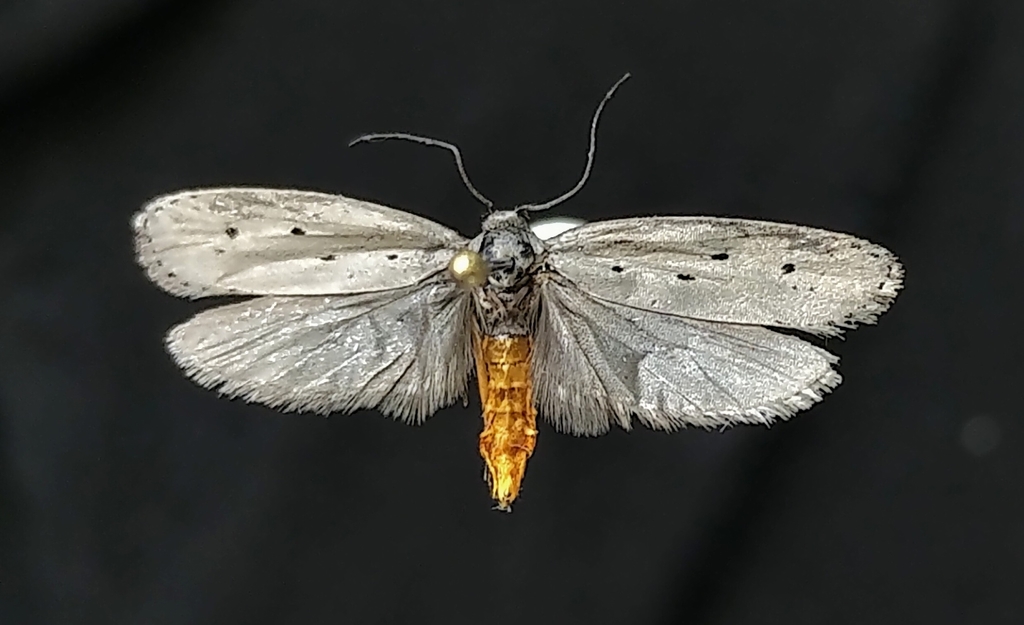
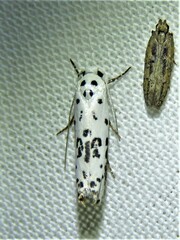
Gray ethmia moths have slate-gray forewings 10.8 to 15.3 mm long with bold black markings, and similarly colored hindwings.
Source: Wikipedia
How to recognize it
The forewings are slate gray, ranging from pale to dark, with conspicuous black markings; the hindwings are also gray.
Source: Wikipedia
Size
Forewing length measures between about 11 and 15 mm.
Source: Wikipedia
Where it lives
It lives across western and central North America, from British Columbia and Alberta down to California and Arizona, and east to at least North Dakota and Colorado.
Source: Wikipedia
What it eats
The larvae of the subspecies fuscipedella feed on the plants Lithospermum canescens and Lithospermum gmelini, living in a slight web.
Source: Wikipedia
Life cycle
Adults fly from May through July.
Source: Wikipedia
When you see it
The flight period for adults is May to July.
Source: Wikipedia
Where it comes from
Its native range covers those same North American regions.
Source: Wikipedia
Lookalikes
It is a member of the Depressariidae family and may be confused with other Ethmia moths.
Source: Wikipedia
Where it is found in the US
Recorded in 20 of 51 states and DC. Most records: Montana, Michigan, North Dakota, Colorado, Nebraska, Minnesota, Washington, Idaho.
Darker = more records. Counts are museum and citizen-science records, not population size.
Source: GBIF
Status: native in North America; native in Canada; native in United States. Source: iNaturalist
Months it is reported in the US
Source: GBIF
Questions people ask
What do the caterpillars eat?
They feed on Lithospermum canescens and Lithospermum gmelini.
Source: Wikipedia
Where are they found?
They occur from British Columbia and Alberta down to California and Arizona, extending east to North Dakota and Colorado.
Source: Wikipedia
Same family (Ethmiidae)

Sources
- Wikipedia: https://en.wikipedia.org/wiki/Ethmia_monticola
Look it up elsewhere: GBIF · iNaturalist · BugGuide · Wikipedia
Text written 2026-10-27 from the sources above and checked sentence by sentence against them. Data fetched 2026-10-27.