 Bug FAQ
Zeller's Ethmia Moth
Ethmia zelleriella · Order: Lepidoptera · Family: Ethmiidae
Also called: Zeller's Ethmia
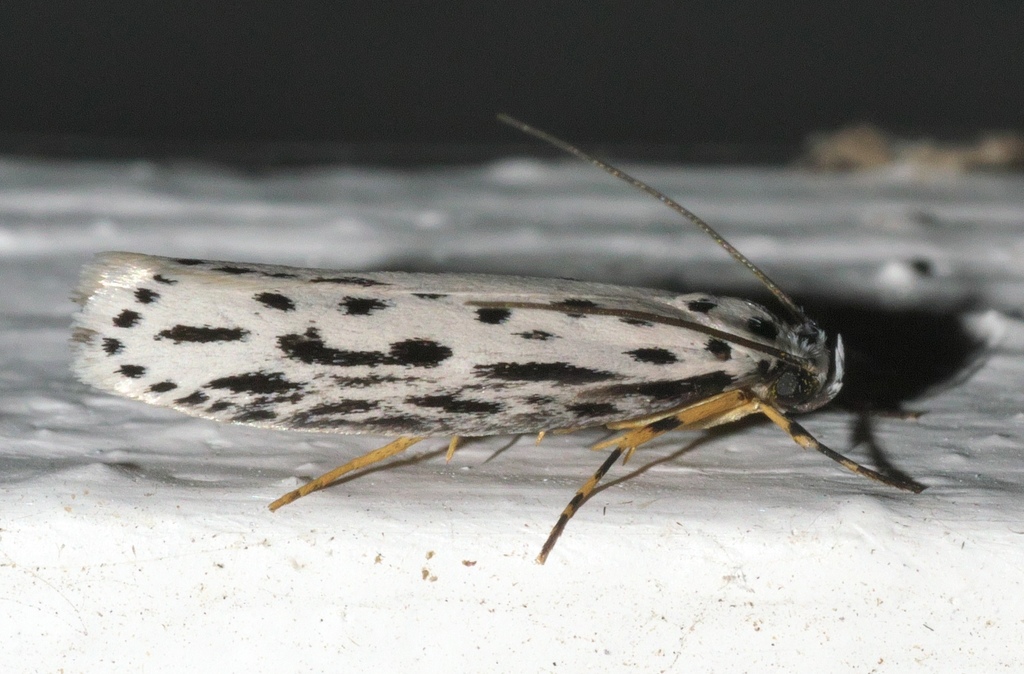
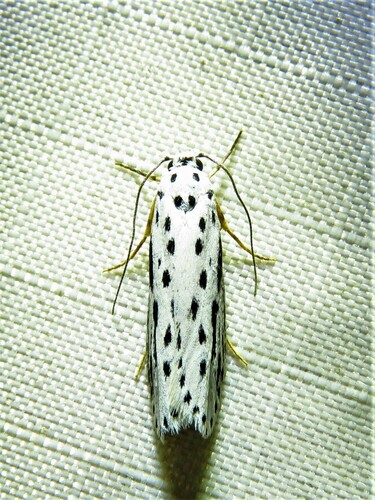
The forewings measure about 10 to 12 mm long. Adults have white forewings dusted with gray along the leading edge and display a series of elongated black spots. It lives in eastern North America, from southern Canada through the Ohio Valley and Appalachian regions down to central Texas, and its larvae feed openly on Phacelia plants.
Source: Wikipedia
How to recognize it
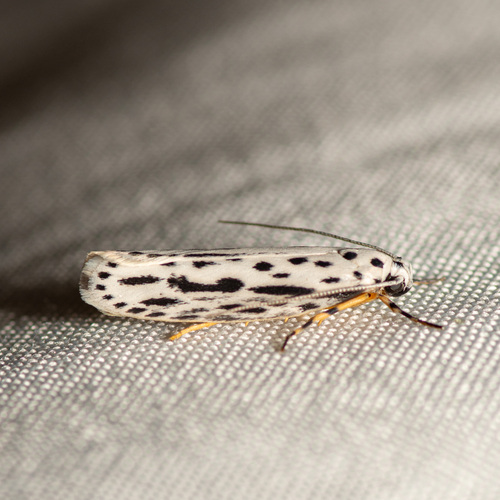
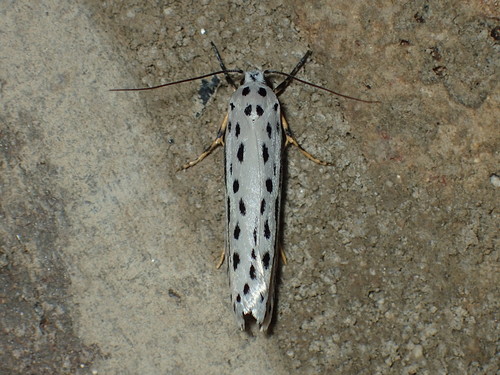
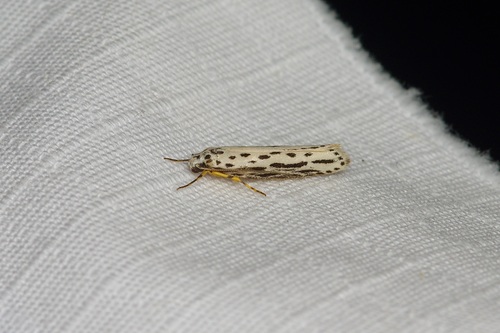
The forewings are white with gray dusting along the costa to the middle of the wing. A row of elongated black spots is spread across the wings.
Source: Wikipedia
Size
Forewing length ranges from 10.4 to 12 mm.
Source: Wikipedia
What it eats
Larvae feed on Phacelia species such as Phacelia dubia and Phacelia bipinnatifida. The caterpillars feed openly without building a web.
Source: Wikipedia
Life cycle
There are probably two generations each year. Pupation occurs inside corky bark of trees, for example Ulmus racemosa.
Source: Wikipedia
Where it comes from
Its native range covers eastern North America, including parts of Canada and the United States.
Source: Wikipedia
Where it is found in the US
Recorded in 26 of 51 states and DC. Most records: Texas, Tennessee, Ohio, North Carolina, Kentucky, Alabama, Illinois, Oklahoma.
Darker = more records. Counts are museum and citizen-science records, not population size.
Source: GBIF
Status: native in North America; native in Canada. Source: iNaturalist
Months it is reported in the US
Source: GBIF
More photos
Questions people ask
What do the larvae eat?
The caterpillars feed on Phacelia plants, including Phacelia dubia and Phacelia bipinnatifida, and they do so openly without making a web.
Source: Wikipedia
Same family (Ethmiidae)

Sources
- Wikipedia: https://en.wikipedia.org/wiki/Ethmia_zelleriella
Look it up elsewhere: GBIF · iNaturalist · BugGuide · Wikipedia
Text written 2026-10-25 from the sources above and checked sentence by sentence against them. Data fetched 2026-10-25.