 Bug FAQ
Grass Demon
Udaspes folus · Order: Lepidoptera · Family: Hesperiidae
Source: Wikipedia
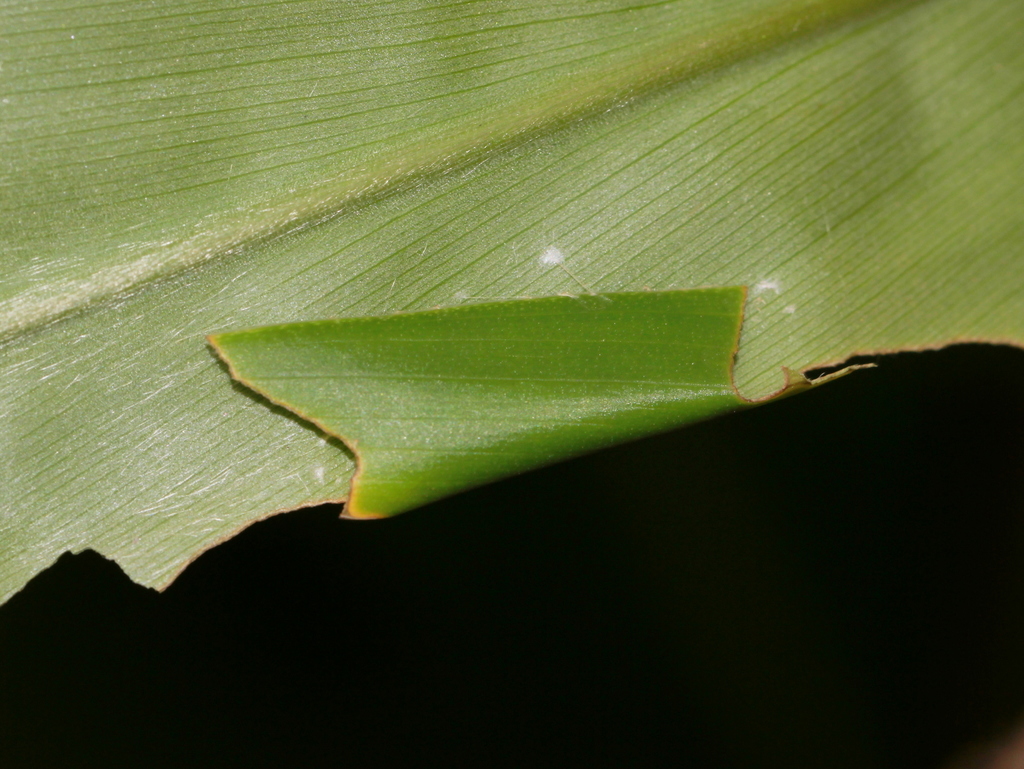
It lives on the edges of deciduous and semi-evergreen forests across South and Southeast Asia and is most often seen during the monsoon season. Adults emerge in February-March, lay eggs, and the caterpillars pupate in September-October, emerging as adults four to six months later.
Source: Wikipedia
Size
Wingspan ranges from about 4 to 4.8 cm.
Source: Wikipedia
Is it a pest in the house?
Occasionally considered a pest of ginger and turmeric plants.
Source: Wikipedia
Where it lives
Found in deciduous and semi-evergreen forests, preferring the edges of open spaces rather than deep shade or full sun.
Source: Wikipedia
What it eats
Feeds on ginger, turmeric and related plants such as Curcuma aromatica, Curcuma decipiens, Hedychium species, as well as other Zingiberaceae and some grasses.
Source: Wikipedia
Life cycle
Adults emerge in February or March, lay eggs before dying; caterpillars pupate in September-October and adults emerge four to six months later.
Source: Wikipedia
When you see it
Seen mainly during the monsoon season and is a bold insect not easily disturbed.
Source: Wikipedia
Where it comes from
Native to Sri Lanka, India, Nepal, Myanmar, China, Indochina, Taiwan, Japan, Thailand, the Malay Peninsula, Singapore, Borneo and Indonesia.
Source: Wikipedia
Lookalikes
Displays a unique wing-flashing display after landing on a leaf, and can move forewings and hindwings separately, behaviour not seen in other peninsular Indian butterflies.
Source: Wikipedia
Questions people ask
How can I tell a grass demon apart from other butterflies?
Look for the large white spot on the black hindwing and several smaller white spots on the forewing, plus the flashing wing display after it lands.
Source: Wikipedia
When are grass demons most active?
They are most commonly seen during the monsoon season.
Source: Wikipedia
Do grass demons damage garden plants?
Yes, they can feed on and damage ginger and turmeric crops.
Source: Wikipedia
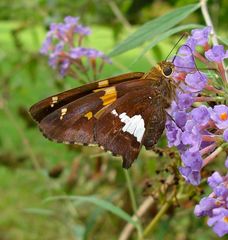
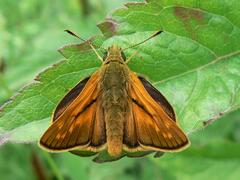
Same family (Hesperiidae)




Sources
- Wikipedia: https://en.wikipedia.org/wiki/Ancistroides_folus
Look it up elsewhere: GBIF · iNaturalist · BugGuide · Wikipedia
Text written 2026-10-22 from the sources above and checked sentence by sentence against them. Data fetched 2026-10-22.