 Bug FAQ
Grape Flea Beetle
Altica chalybea · Order: Coleoptera · Family: Chrysomelidae
Source: Wikipedia
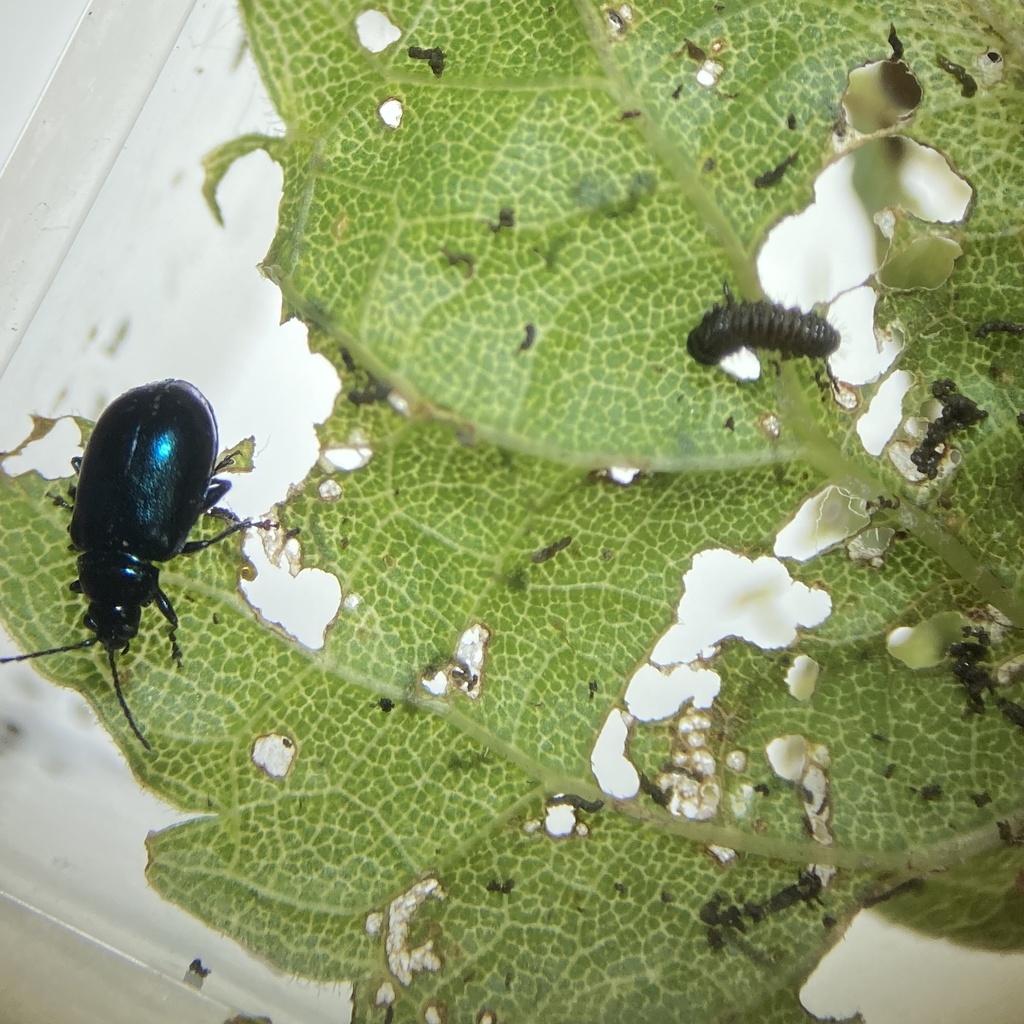
It feeds on grape-vine buds, cutting back vegetative growth and harming the vines.
Source: Wikipedia
How to recognize it
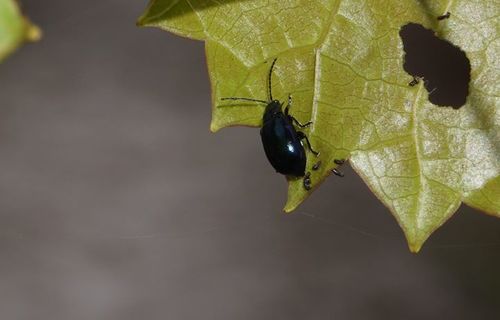
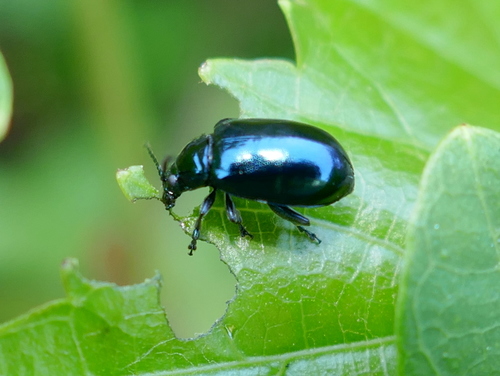
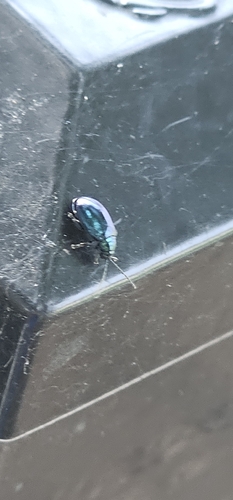
Its reflective surface gives it the nickname “grape steely beetle.”
Source: Wikipedia
Size
The beetle is small and displays a bluish-green coloration.
Source: Wikipedia
Is it a pest in the house?
By eating grape-vine buds, it can become a pest for vineyards.
Source: Wikipedia
Where it lives
It lives on grape vines in North America, where it feeds on the buds and reduces plant growth.
Source: Wikipedia
What it eats
It consumes grape-vine buds, which limits vegetative development.
Source: Wikipedia
Where it comes from
Altica chalybea is native to North America.
Source: Wikipedia
Lookalikes
Its shiny appearance may cause it to be mistaken for other metallic leaf beetles.
Source: Wikipedia
Where it is found in the US
Recorded in 31 of 51 states and DC. Most records: Florida, Kentucky, New York, Georgia, Michigan, Ohio, Wisconsin, Maryland.
Darker = more records. Counts are museum and citizen-science records, not population size.
Source: GBIF
Status: native in North America; native in Canada. Source: iNaturalist
Months it is reported in the US
Source: GBIF
More photos
Questions people ask
How does the grape flea beetle damage grape vines?
It chews the buds of grape vines, which slows the vines’ vegetative growth.
Source: Wikipedia
What does the grape flea beetle look like?
It is a small, bluish-green beetle with a reflective, metallic surface.
Source: Wikipedia
Same family (Chrysomelidae)
 Spotted Cucumber BeetleDiabrotica undecimpunctataDamages trees, gardens or crops
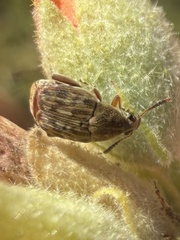 Bean WeevilAcanthoscelides obtectusDamages trees, gardens or crops
 Cowpea WeevilCallosobruchus maculatusDamages trees, gardens or crops
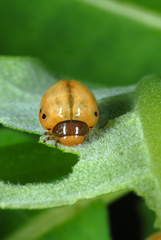 Swamp Milkweed Leaf BeetleLabidomera clivicollisDamages trees, gardens or crops
 Alder Leaf BeetleAgelastica alniDamages trees, gardens or crops
 Dogbane Leaf BeetleChrysochus auratus
Sources
- Wikipedia: https://en.wikipedia.org/wiki/Altica_chalybea
Look it up elsewhere: GBIF · iNaturalist · BugGuide · ITIS · Wikipedia
Text written 2026-10-25 from the sources above and checked sentence by sentence against them. Data fetched 2026-10-25.