 Bug FAQ
Golden-brown Jumping Spider
Trite auricoma · Order: Araneae · Family: Salticidae
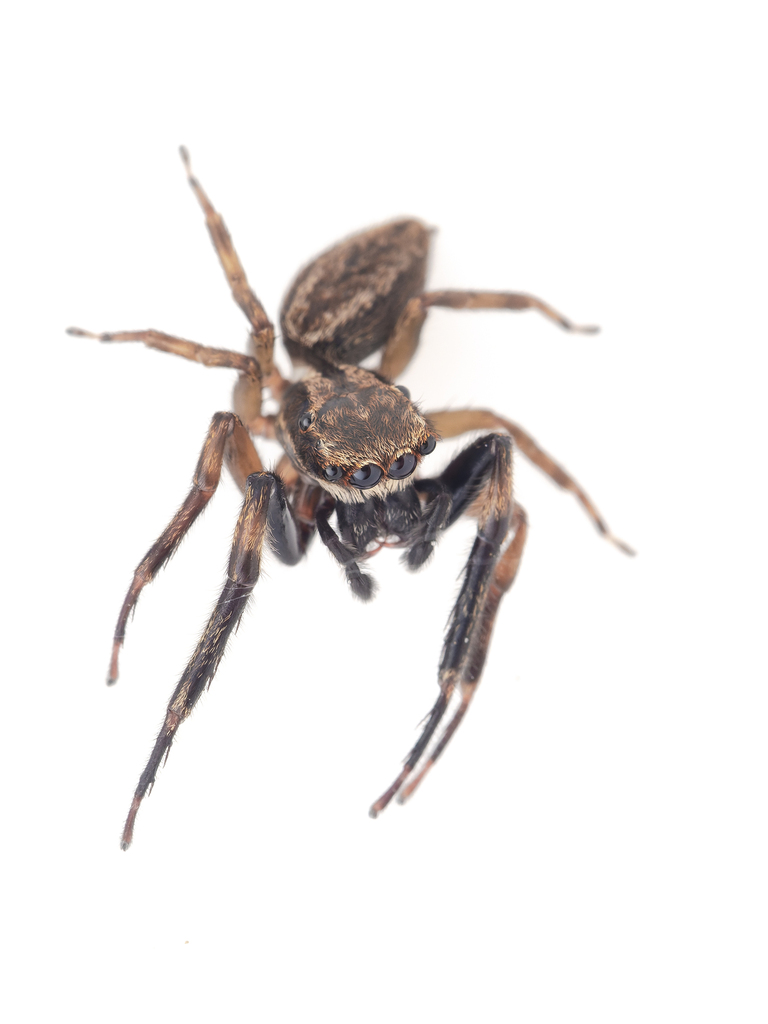
Adult golden-brown jumping spiders are about 8.4 to 8.8 mm long, while a second-instar before feeding measures roughly 1.75 mm. They live in New Zealand, often hiding in rolled flax leaves, under cabbage-tree leaves, stones, vegetation, or on the ground. These spiders are obligate carnivores that prefer small flies as they mature, ignoring collembola and mites.
Source: Wikipedia
How to recognize it
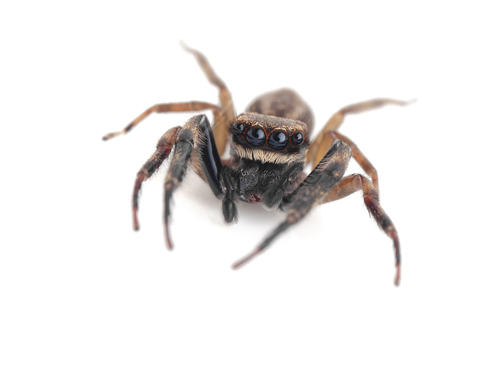
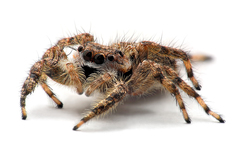
Male spiders have a brown cephalothorax with black around the eyes, a light brown top, and a yellow mustache-like band on the clypeus, which females lack.
Source: Wikipedia
Size
Second-instar juveniles are about 1.75 mm (0.069 in) long before they feed.
Source: Wikipedia
Where it lives
They are commonly found in rolled flax (Phormium) leaves and under dropped cabbage-tree (Cordyline) leaves. They also occur under stones, in vegetation, and on the ground.
Source: Wikipedia
What it eats
Like all spiders, they are obligate carnivores. When mature they prefer small flies such as Drosophila and ignore prey like collembola and mites.
Source: Wikipedia
Life cycle
After mating, females produce one to four silk-covered egg sacs. First-instar spiderlings stay inside the cocoon for 24 to 28 days before their first molt.
Source: Wikipedia
Where it comes from
The golden-brown jumping spider is endemic to New Zealand.
Source: Wikipedia
More photos
Questions people ask
How big are golden-brown jumping spiders?
Adults are about 8.4 to 8.8 mm long, while a second-instar before feeding is roughly 1.75 mm.
Source: Wikipedia
Where can I find these spiders in New Zealand?
They often hide in rolled flax leaves, under cabbage-tree leaves, beneath stones, in vegetation, or on the ground.
Source: Wikipedia
What do golden-brown jumping spiders eat?
They are obligate carnivores that mainly hunt small flies such as Drosophila as they mature, ignoring collembola and mites.
Source: Wikipedia
How do females care for their eggs?
After mating, a female builds one to four silk-covered egg sacs, and the first-instar spiderlings remain in the cocoon for about 24 to 28 days before molting.
Source: Wikipedia
Same family (Salticidae)



Sources
- Wikipedia: https://en.wikipedia.org/wiki/Trite_auricoma
Look it up elsewhere: GBIF · iNaturalist · BugGuide · ITIS · Wikipedia
Text written 2026-10-23 from the sources above and checked sentence by sentence against them. Data fetched 2026-10-22.