 Bug FAQ
Giant Grasshopper
Valanga irregularis · Order: Orthoptera · Family: Acrididae
Also called: Hedge Grasshopper
Source: Wikipedia
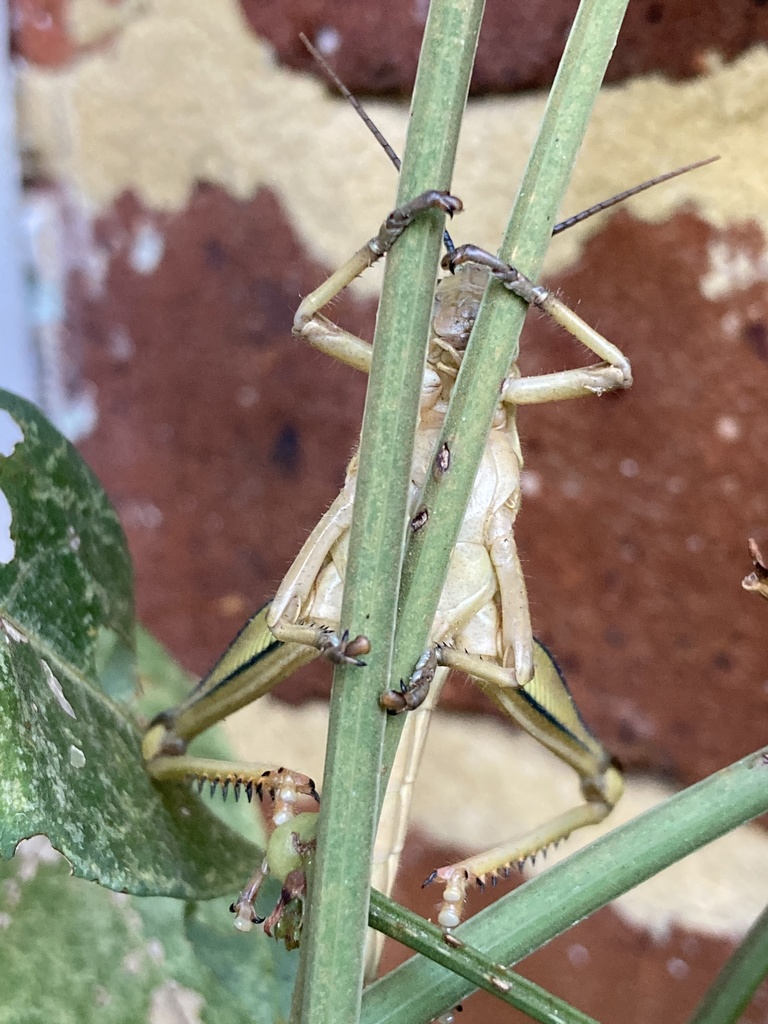
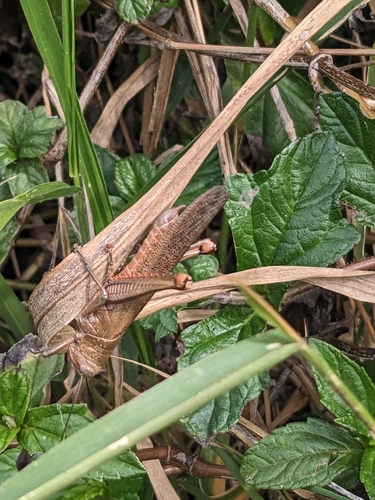
Females grow up to about 60 to 75 mm, sometimes reported as large as 90 mm, while males are 45 to 55 mm long. Adults are creamy brown to grey-green, with forewings marked by black dots and dark grey hindwings that may appear colourless or light green. They live in moist grasslands or forests in tropical and subtropical Australia and may wander into suburban gardens when conditions are right.
Source: Wikipedia
How to recognize it
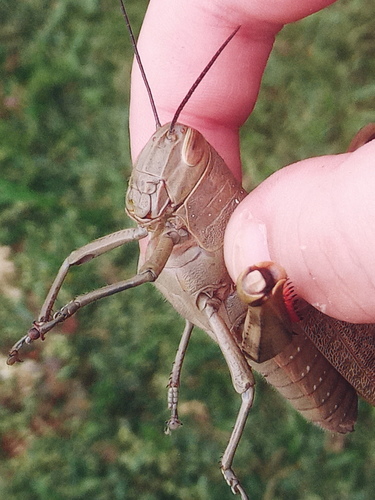
Adults have a creamy brown to grey-green colour. Their forewings show a pattern of black dots; hindwings are dark grey, sometimes colourless or light green.
Source: Wikipedia
Size
Females can reach 60 to 75 mm in length, males about 45 to 55 mm. Some reports list a maximum body length of up to 90 mm.
Source: Wikipedia
Is it a pest in the house?
In favorable conditions they can form small groups that damage young coffee berries. They are not considered an ecological vermin.
Source: Wikipedia
Where it lives
The species prefers moist climates and is common in grassland or forest during spring and autumn. When weather is ideal they may move into suburban gardens.
Source: Wikipedia
What it eats
It feeds on shrubs such as Acalypha, Hibiscus and Bauhinia. Palm trees (family Arecaceae) are also part of its diet.
Source: Wikipedia
Life cycle
One generation is produced each year. The life cycle follows the wet and dry seasons of its tropical and subtropical habitat.
Source: Wikipedia
When you see it
Adults spend winter in hideouts but may emerge occasionally to eat or sunbathe. Mating begins in the first warm days of spring.
Source: Wikipedia
Where it comes from
It is native to tropical and subtropical regions of Australia north of Sydney, extending as far south as Perth in Western Australia.
Source: Wikipedia
Lookalikes
Two subspecies are known, including Valanga irregularis irregularis (Walker, 1870).
Source: Wikipedia
More photos
Questions people ask
What size can a giant grasshopper reach?
Females can grow up to about 75 mm, sometimes reported as large as 90 mm, while males are typically 45 to 55 mm long.
Source: Wikipedia
Where does the giant grasshopper live?
It prefers moist grasslands and forests in tropical and subtropical Australia and may wander into suburban gardens when conditions are ideal.
Source: Wikipedia
What plants does it eat?
It feeds on shrubs like Acalypha, Hibiscus and Bauhinia, and also on palm trees.
Source: Wikipedia
Can it damage crops or garden plants?
Yes, it can damage young coffee berries when it forms small groups under favorable conditions.
Source: Wikipedia
Same family (Acrididae)
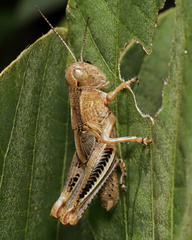 Differential GrasshopperMelanoplus differentialisDamages trees, gardens or crops
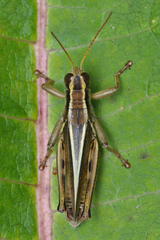 Two-striped GrasshopperMelanoplus bivittatusDamages trees, gardens or crops
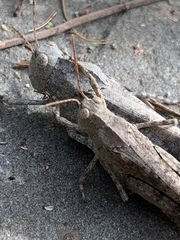 Carolina GrasshopperDissosteira carolinaDamages trees, gardens or crops
 Common Field GrasshopperChorthippus brunneus
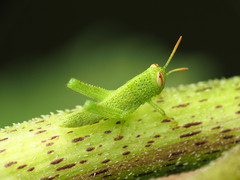 Egyptian Bird GrasshopperAnacridium aegyptium
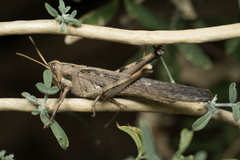 Gray Bird GrasshopperSchistocerca nitensDamages trees, gardens or crops
Sources
- Wikipedia: https://en.wikipedia.org/wiki/Valanga_irregularis
Look it up elsewhere: GBIF · iNaturalist · BugGuide · Wikipedia
Text written 2026-10-22 from the sources above and checked sentence by sentence against them. Data fetched 2026-10-22.