 Bug FAQ
Giant Goldenrod Bunch Gall Midge
Rhopalomyia capitata · Order: Diptera · Family: Cecidomyiidae
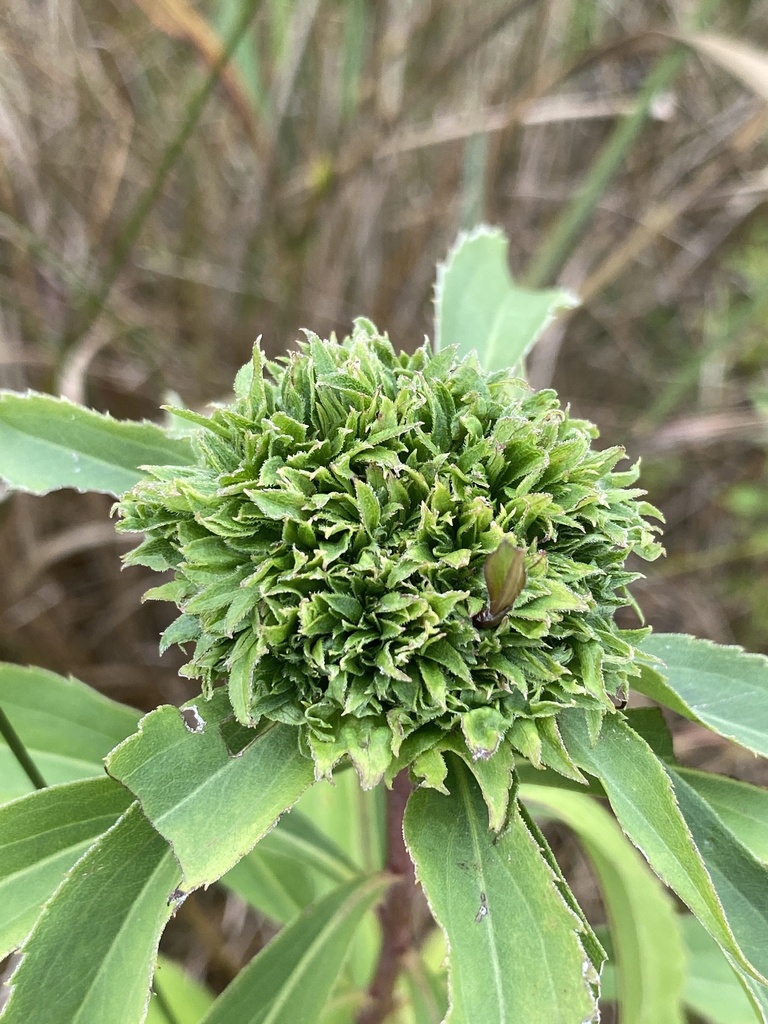
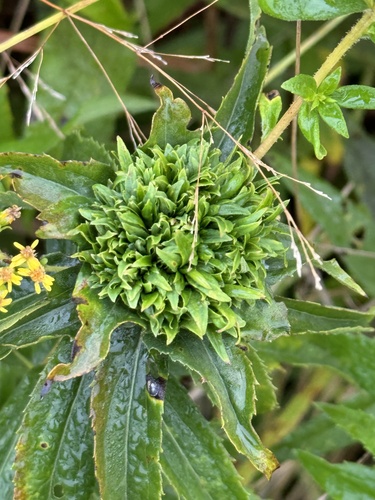
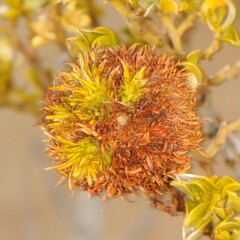
The gall looks like a star of short and long leaves up to 10 cm across, each leaf holding a single orange larva. It forms on several goldenrod species across North America in both spring and summer generations.
Source: Wikipedia
How to recognize it
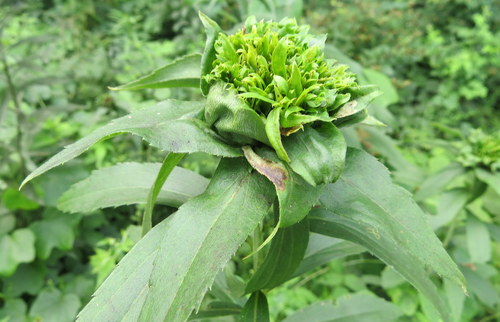
Each gall is made of many short, narrow leaves surrounding 1-8 white cone-shaped chambers, each chamber holding one orange larva. A ring of 5-10 longer, wider leaves encircles the central leaves, giving the gall a star-like shape up to 10 cm in diameter.
Source: Wikipedia
Size
The overall gall can reach about 10 cm across.
Source: Wikipedia
Where it lives
It is found throughout North America.
Source: Wikipedia
What it eats
Overwintering first-instar larvae in rhizomes start the early galls. The larvae are heavily parasitized by other insects.
Source: Wikipedia
Life cycle
The species has two generations per year, each producing similar galls. Spring-generation pupae emerge in mid-late May and trigger the slower-developing summer galls.
Source: Wikipedia
When you see it
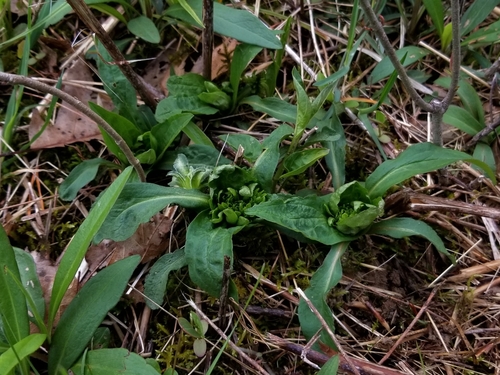
Spring galls appear in early to mid-May on young goldenrod sprouts.
Source: Wikipedia
Where it comes from
Its native range covers North America.
Source: Wikipedia
Lookalikes
Spring galls resemble those of Dasineura folliculi but lack the central short leaves and instead have wider leaves with yellowish spots.
Source: Wikipedia
Where it is found in the US
Recorded in 32 of 51 states and DC. Most records: Wisconsin, Massachusetts, Minnesota, Vermont, New York, Pennsylvania, New Jersey, New Hampshire.
Darker = more records. Counts are museum and citizen-science records, not population size.
Source: GBIF
Status: native in North America; native in United States. Source: iNaturalist
Months it is reported in the US
Source: GBIF
More photos
Questions people ask
When do the galls appear?
Spring-generation galls show up in early to mid-May, and their pupae emerge by late May.
Source: Wikipedia
What plants do they affect?
They form on Solidago canadensis, Solidago gigantea, and Solidago leavenworthii.
Source: Wikipedia
How many generations does this midge have each year?
It is bivoltine, producing two generations that make similar galls.
Source: Wikipedia
What do the galls look like?
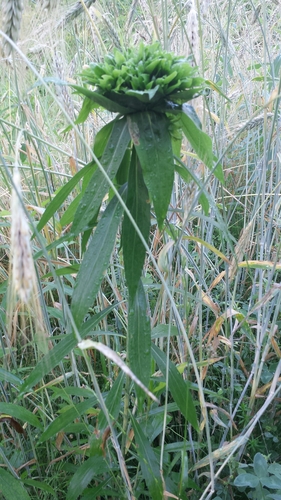
A star-shaped cluster of short and long leaves up to 10 cm wide, each leaf holding a single orange larva in a white cone-shaped chamber.
Source: Wikipedia
Same family (Cecidomyiidae)


Sources
- Wikipedia: https://en.wikipedia.org/wiki/Rhopalomyia_capitata
Look it up elsewhere: GBIF · iNaturalist · BugGuide · ITIS · Wikipedia
Text written 2026-10-23 from the sources above and checked sentence by sentence against them. Data fetched 2026-10-22.