 Bug FAQ
Gaudy Sphinx
Eumorpha labruscae · Order: Lepidoptera · Family: Sphingidae
Also called: Gaudy Sphinx Moth
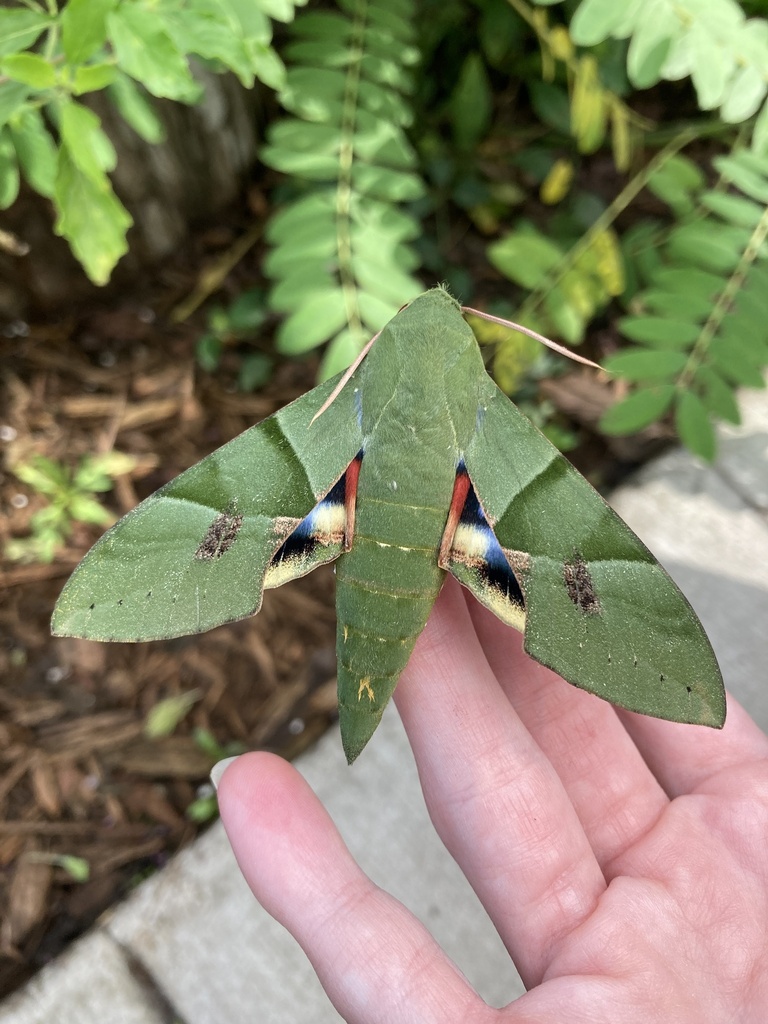
Its wingspan is about 11 to 12 cm (4 ⅕ to 4 ¾ inches) and it was first described by Linnaeus in 1758. Caterpillars pupate in underground burrows and emerge as adults that likely feed on flower nectar; females emit night pheromones that males track.
Source: Wikipedia
How to recognize it
The moth’s body and the dorsal side of its forewings are a deep green color.
Source: Wikipedia
Size
Its wingspan ranges from about 4 ⅕ to 4 ¾ inches (approximately 11 to 12 cm).
Source: Wikipedia
Where it lives
Caterpillars dig burrows where they later pupate. Adult moths probably feed on flower nectar.
Source: Wikipedia
What it eats
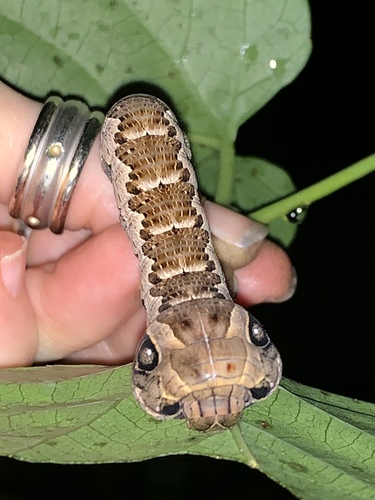
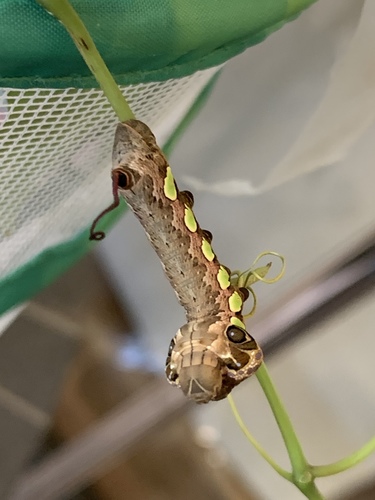
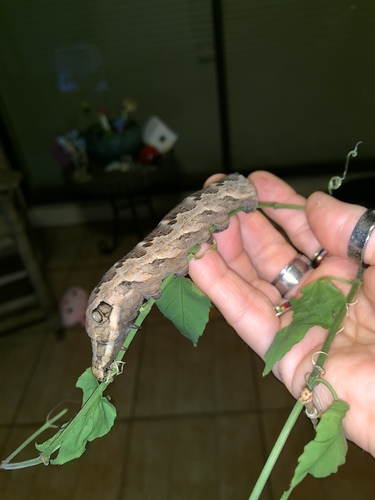
When they hatch, the caterpillars begin eating and look like a snake’s head. Adults probably drink nectar from flowers.
Source: Wikipedia
Life cycle
After feeding, the caterpillars form a pupa in their burrow and later wiggle to the surface just before emerging as adults.
Source: Wikipedia
Where it is found in the US
Recorded in 13 of 51 states and DC. Most records: Florida, Texas, Minnesota, Michigan, Oklahoma, Kansas, Wisconsin, Illinois.
Darker = more records. Counts are museum and citizen-science records, not population size.
Source: GBIF
Months it is reported in the US
Source: GBIF
More photos
Questions people ask
What do the caterpillars look like?
When they hatch, the caterpillars begin eating and resemble the head of a snake.
Source: Wikipedia
Same family (Sphingidae)

Sources
- Wikipedia: https://en.wikipedia.org/wiki/Eumorpha_labruscae
Look it up elsewhere: GBIF · iNaturalist · BugGuide · ITIS · Wikipedia
Text written 2026-10-25 from the sources above and checked sentence by sentence against them. Data fetched 2026-10-25.