 Bug FAQ
Garden Rose Tortrix
Acleris variegana · Order: Lepidoptera · Family: Tortricidae
Also called: Garden Rose Button
Source: Wikipedia
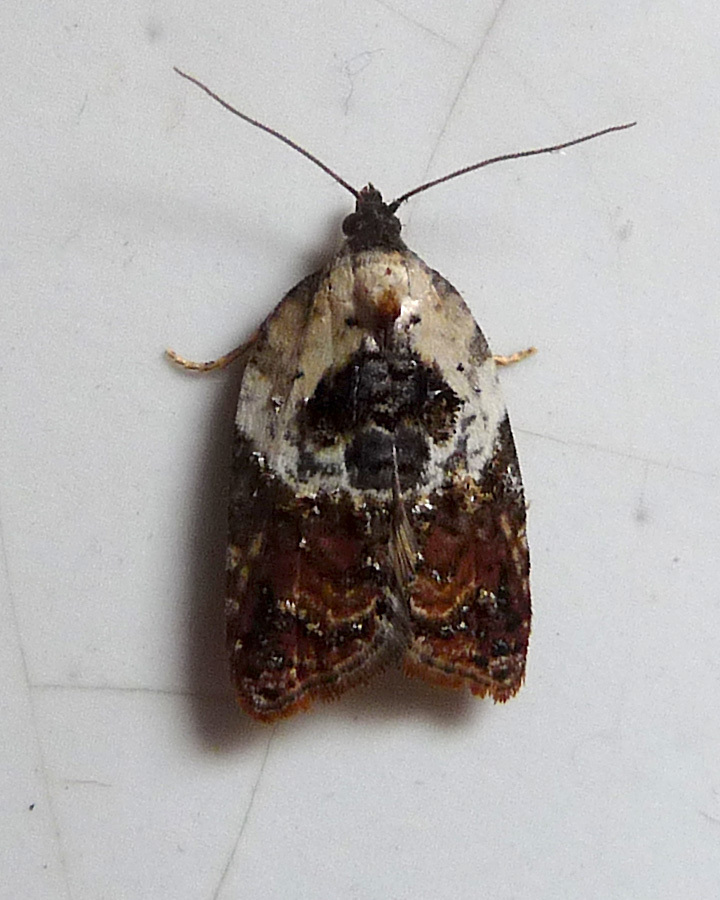
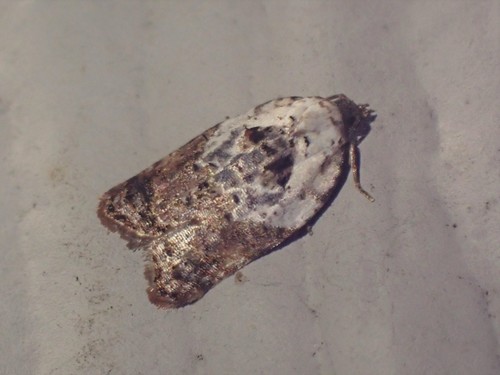
Adults have a 14 to 20 mm wingspan; the forewing is parallel-sided with a white or yellowish base, a grayish-brown triangular spot near the root, and a reddish-violet-brown distal area edged by a narrow gray-yellow strip, while the hind wing is brownish-gray. The moth flies at night from July to September, is attracted to bright lights, and its larvae are a serious pest of many rose-family plants, especially the first generation.
Source: Wikipedia
How to recognize it
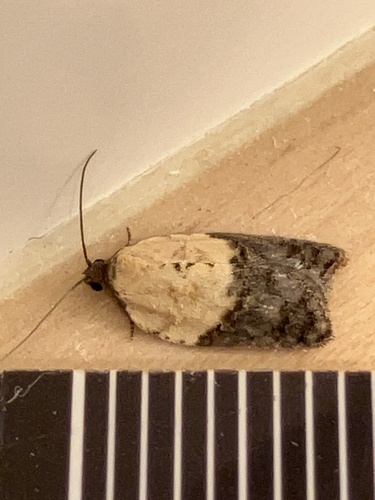
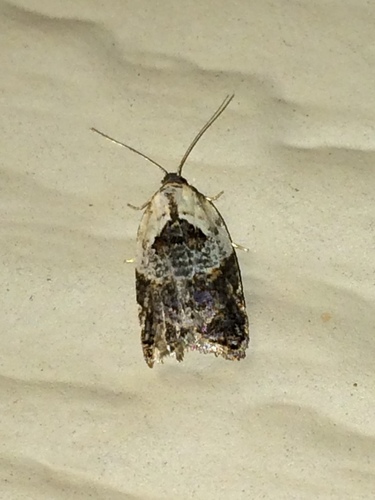
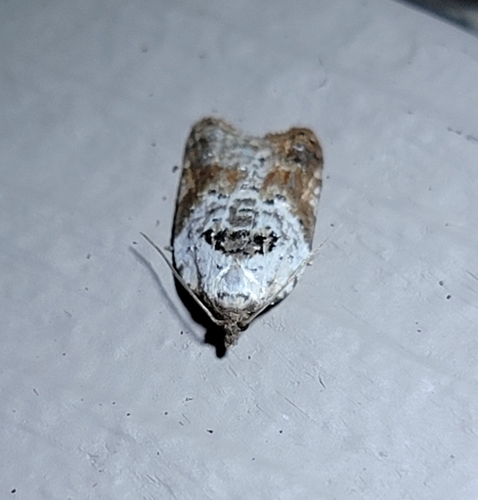
The forewing is parallel-sided with an oblique outer edge, a white or yellowish-white basal half, a grayish-brown triangular spot near the wing root, and a reddish-violet-brown distal part edged by a narrow gray-yellow strip; the hind wing is brownish-gray.
Source: Wikipedia
Size
The wingspan ranges from 14 to 20 mm (0.55 to 0.79 in).
Source: Wikipedia
Is it a pest in the house?
It is a significant pest of rose-family plants such as rose, apple, pear, plum, sloe and apricot, with the first-generation larvae causing the most damage.
Source: Wikipedia
How to get rid of it
They can be managed with chemical or biological control methods.
Source: Wikipedia
Where it lives
It has a Palearctic distribution.
Source: Wikipedia
What it eats
The larvae feed on a variety of trees and shrubs, especially rose and apple. They also occasionally feed on hazel, oak, elm, willow and Vaccinium shrubs.
Source: Wikipedia
Where it is found in the US
Recorded in 6 of 51 states and DC. Most records: California, Washington, Oregon, Montana, Ohio, Kansas.
Darker = more records. Counts are museum and citizen-science records, not population size.
Source: GBIF
Status: introduced in Canada. Source: iNaturalist
Months it is reported in the US
Source: GBIF
More photos
Questions people ask
How can I identify the garden rose tortrix?
Look for a small moth with a 14 to 20 mm wingspan; its forewing is parallel-sided, white or yellowish at the base, has a grayish-brown triangular spot near the root, and a reddish-violet-brown tip edged with a narrow gray-yellow strip, while the hind wing is brownish-gray.
Source: Wikipedia
When are garden rose tortrix moths active?
Adults are active at night from July through September and are attracted to bright lights.
Source: Wikipedia
What plants do garden rose tortrix larvae damage?
The larvae feed on rose, apple, pear, plum, sloe and apricot, with the first generation causing the most damage.
Source: Wikipedia
How can I control garden rose tortrix infestations?
Control can be achieved using chemical insecticides or biological agents.
Source: Wikipedia
Same family (Tortricidae)
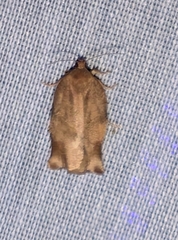 Oblique-banded Leafroller MothChoristoneura rosaceanaDamages trees, gardens or crops
 Garden TortrixClepsis peritanaDamages trees, gardens or crops
 Common MarbleSyricoris lacunanaDamages trees, gardens or crops
 Red-banded Leafroller MothArgyrotaenia velutinanaDamages trees, gardens or crops
 Light Brown Apple MothEpiphyas postvittanaDamages trees, gardens or crops
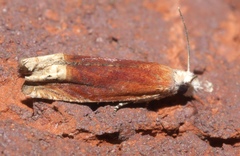 Aster and Reddish Eucosma Moths and AlliesEucosma parmatana
Sources
- Wikipedia: https://en.wikipedia.org/wiki/Acleris_variegana
Look it up elsewhere: GBIF · iNaturalist · BugGuide · Wikipedia
Text written 2026-10-28 from the sources above and checked sentence by sentence against them. Data fetched 2026-10-28.