 Bug FAQ
Funereal Duskywing
Erynnis funeralis · Order: Lepidoptera · Family: Hesperiidae
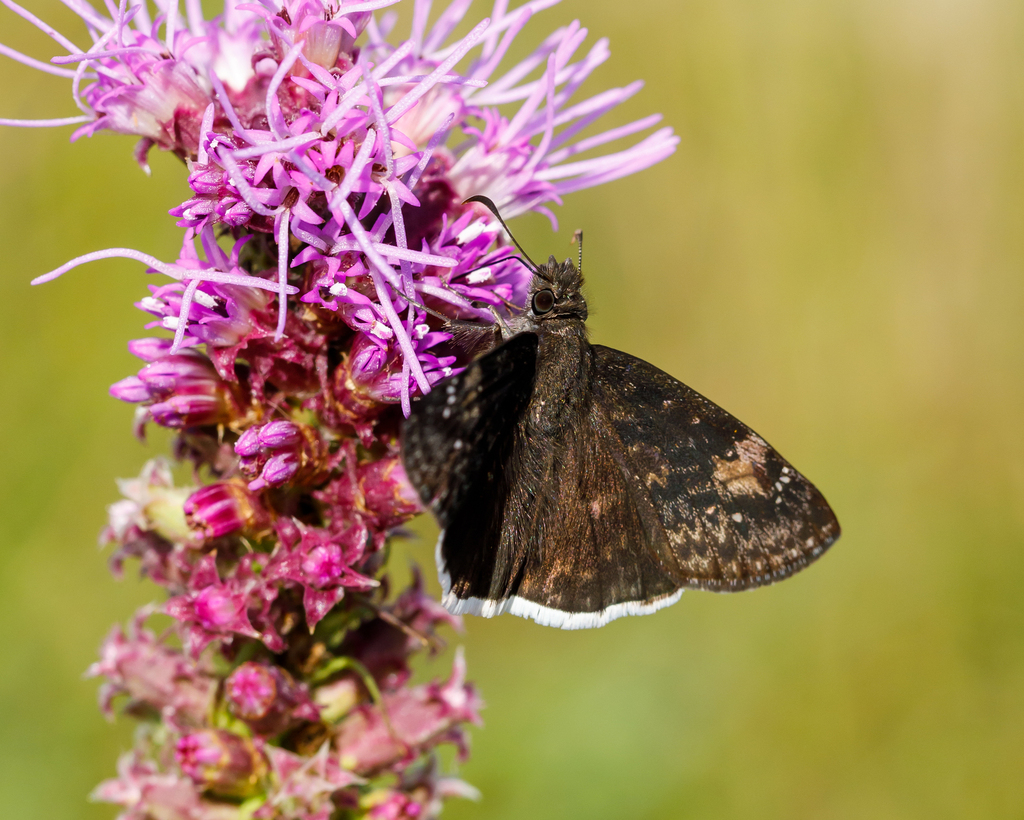
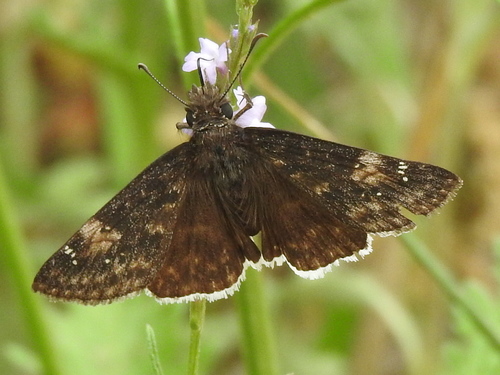
The funereal duskywing has a wingspan of about 34 to 45 mm and dark wings with a white fringe on the hindwings. It lives from the southern United States down through Argentina and Chile, with occasional strays farther north. Adults sip nectar from flowers, while larvae feed on a variety of legumes such as alfalfa and mesquite.
Source: Wikipedia
Size
Wingspan ranges from 34 to 45 mm.
Source: Wikipedia
Where it lives
Found throughout the southern United States, extending south to Argentina and Chile.
Source: Wikipedia
What it eats
Adults feed on flower nectar.
Source: Wikipedia
Life cycle
Caterpillars have a black head, green body, yellow hairs, and yellow markings.
Source: Wikipedia
When you see it
Adults are on the wing from February through October.
Source: Wikipedia
Where it comes from
Its native range matches its habitat, from the southern U.S. to Argentina and Chile.
Source: Wikipedia
Lookalikes
It looks very similar to the mournful duskywing.
Source: Wikipedia
Where it is found in the US
Recorded in 32 of 51 states and DC. Most records: Texas, California, Arizona, New Mexico, Oklahoma, Arkansas, Louisiana, Colorado.
Darker = more records. Counts are museum and citizen-science records, not population size.
Source: GBIF
Status: native in North America; native in United States. Source: iNaturalist
Months it is reported in the US
Source: GBIF
More photos
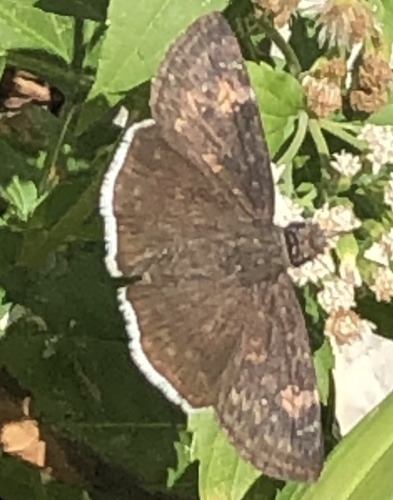
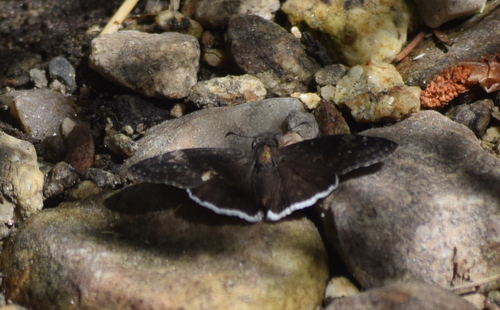
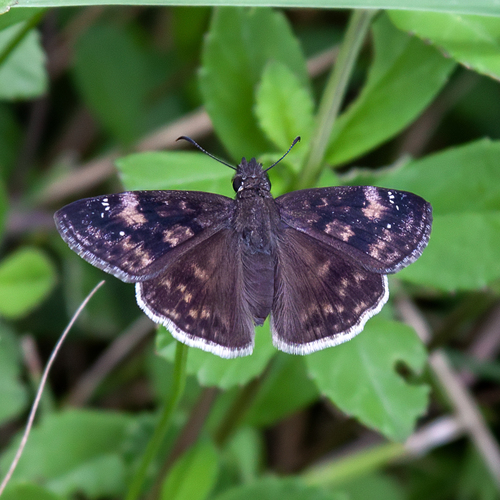
Same family (Hesperiidae)




Sources
- Wikipedia: https://en.wikipedia.org/wiki/Erynnis_funeralis
Look it up elsewhere: GBIF · iNaturalist · BugGuide · ITIS · Wikipedia
Text written 2026-10-22 from the sources above and checked sentence by sentence against them. Data fetched 2026-10-22.