 Bug FAQ
Fulvous Hawk
Coelonia fulvinotata · Order: Lepidoptera · Family: Sphingidae
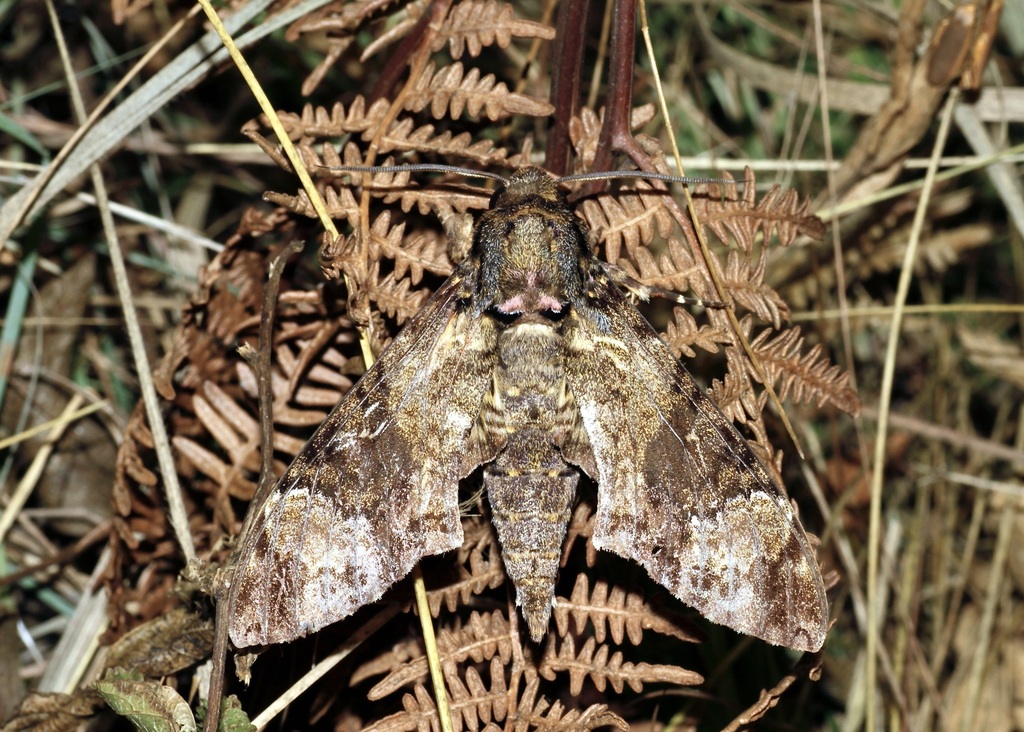
The fulvous hawk is a large moth with forewings about 52 to 55 mm long and a wingspan of roughly 101 to 111 mm. It lives across many habitats in the Afrotropical region, from West Africa through East Africa down to southern Africa and Madagascar. Its caterpillars feed on plants such as Lantana, Fraxinus, Clerodendrum, Dahlia and Duranta, while adults pollinate certain baobab trees in Madagascar.
Source: Wikipedia
Size
Male forewing length ranges from 52 to 55 mm and the overall wingspan is between 101 and 111 mm.
Source: Wikipedia
Where it lives
It occupies most habitat types throughout the Afrotropical realm.
Source: Wikipedia
What it eats
Adults act as pollinators for some Madagascar baobab species, such as Adansonia za.
Source: Wikipedia
Where it comes from
Its range extends from the Gambia eastward to Ethiopia and southward to northern South Africa and Madagascar.
Source: Wikipedia
Lookalikes
The fulvous hawk is identified as Coelonia fulvinotata, a member of the Sphingidae family.
Source: Wikipedia
More photos


Questions people ask
What plants do fulvous hawk caterpillars eat?
The caterpillars feed on Lantana, Fraxinus, Clerodendrum, Dahlia and Duranta species.
Source: Wikipedia
Do adult fulvous hawks help pollinate any plants?
Yes, adults pollinate certain baobab trees in Madagascar, including Adansonia za.
Source: Wikipedia
How large is the fulvous hawk?
Males have forewings 52 to 55 mm long and a wingspan of about 101 to 111 mm.
Source: Wikipedia
Same family (Sphingidae)
 White-lined SphinxHyles lineataDamages trees, gardens or crops
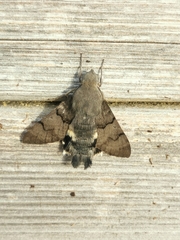 Eurasian Hummingbird HawkmothMacroglossum stellatarum
 Snowberry ClearwingHemaris diffinis
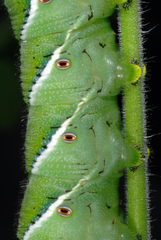 Carolina SphinxManduca sextaDamages trees, gardens or crops
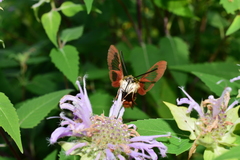 Hummingbird ClearwingHemaris thysbeDamages trees, gardens or crops
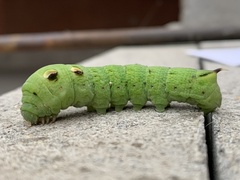 Elephant HawkmothDeilephila elpenor
Sources
- Wikipedia: https://en.wikipedia.org/wiki/Coelonia_fulvinotata
Look it up elsewhere: GBIF · iNaturalist · BugGuide · Wikipedia
Text written 2026-10-23 from the sources above and checked sentence by sentence against them. Data fetched 2026-10-23.