 Bug FAQ
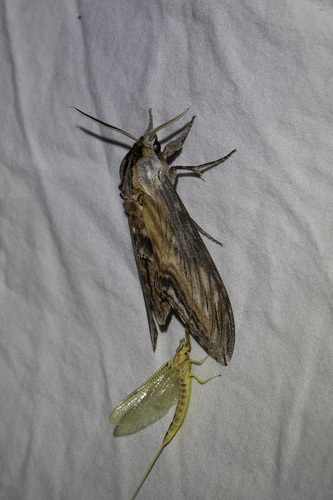
Franck's Sphinx
Sphinx franckii · Order: Lepidoptera · Family: Sphingidae
Also called: Franck's Sphinx Moth
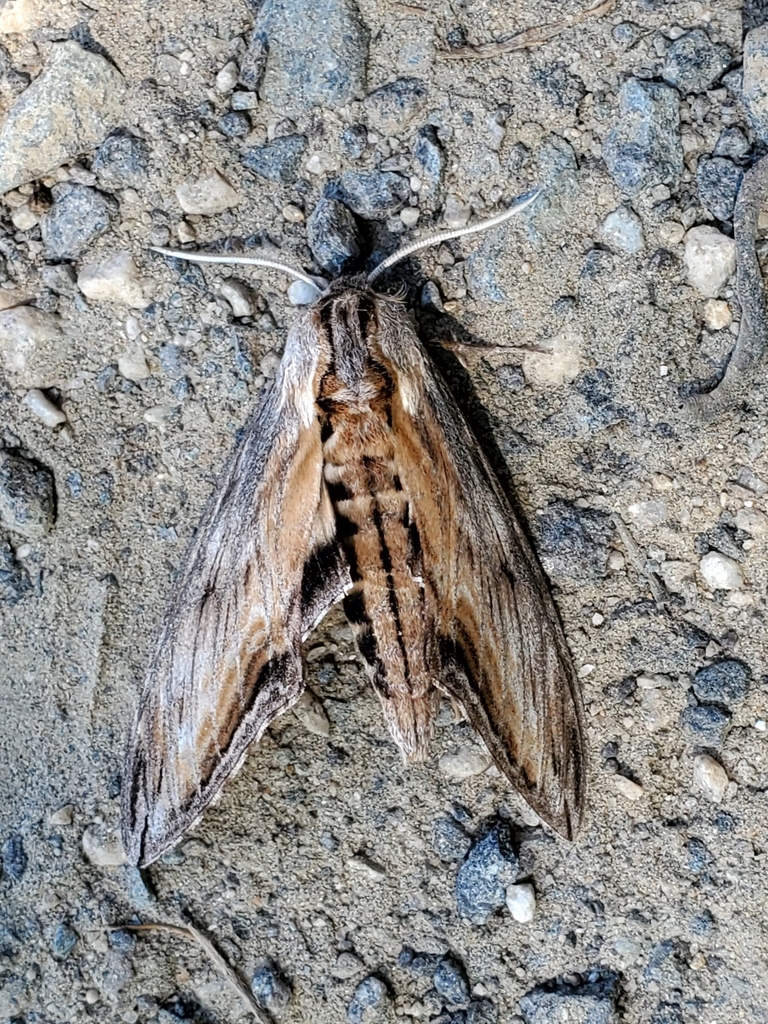
It lives in lowland deciduous woods and in suburban areas where lilacs are planted, ranging from New York down to northern Florida and west to Missouri and Louisiana. Larvae feed on plants in the olive family, while adults commonly sip nectar from phlox.
Source: Wikipedia
Size
The wingspan measures between 100 and 128 mm.
Source: Wikipedia
Where it lives
It is found in lowland deciduous woodland and in suburban areas where lilacs are planted.
Source: Wikipedia
What it eats
Adults most often nectar from phlox (Phlox paniculata and cultivars).
Source: Wikipedia
Life cycle
In the south a partial second generation may appear, with adults flying from August to September.
Source: Wikipedia
Where it comes from
Its range covers the eastern United States from New York to northern Florida, extending west to Missouri and Louisiana.
Source: Wikipedia
Where it is found in the US
Recorded in 22 of 51 states and DC. Most records: Illinois, Tennessee, North Carolina, Alabama, Georgia, Kentucky, New Jersey, Ohio.
Darker = more records. Counts are museum and citizen-science records, not population size.
Source: GBIF
Months it is reported in the US
Source: GBIF
More photos
Questions people ask
Where can I find this moth?
It lives in lowland deciduous woodlands and suburban areas with lilacs, from New York to northern Florida and west to Missouri and Louisiana.
Source: Wikipedia
How many generations are there?
In the north there is one generation; in the south a partial second generation may occur.
Source: Wikipedia
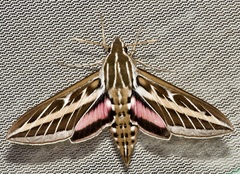
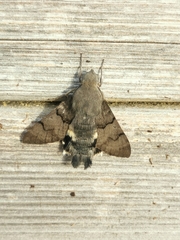
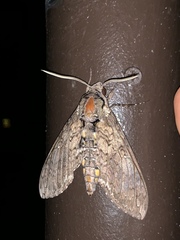
Same family (Sphingidae)

Sources
- Wikipedia: https://en.wikipedia.org/wiki/Sphinx_franckii
Look it up elsewhere: GBIF · iNaturalist · BugGuide · ITIS · Wikipedia
Text written 2026-10-28 from the sources above and checked sentence by sentence against them. Data fetched 2026-10-28.