 Bug FAQ
Florida Tailless Whipscorpion
Phrynus marginemaculatus · Order: Amblypygi · Family: Phrynidae
Also called: Florida whipspider, tail-less whip scorpion, whip spider
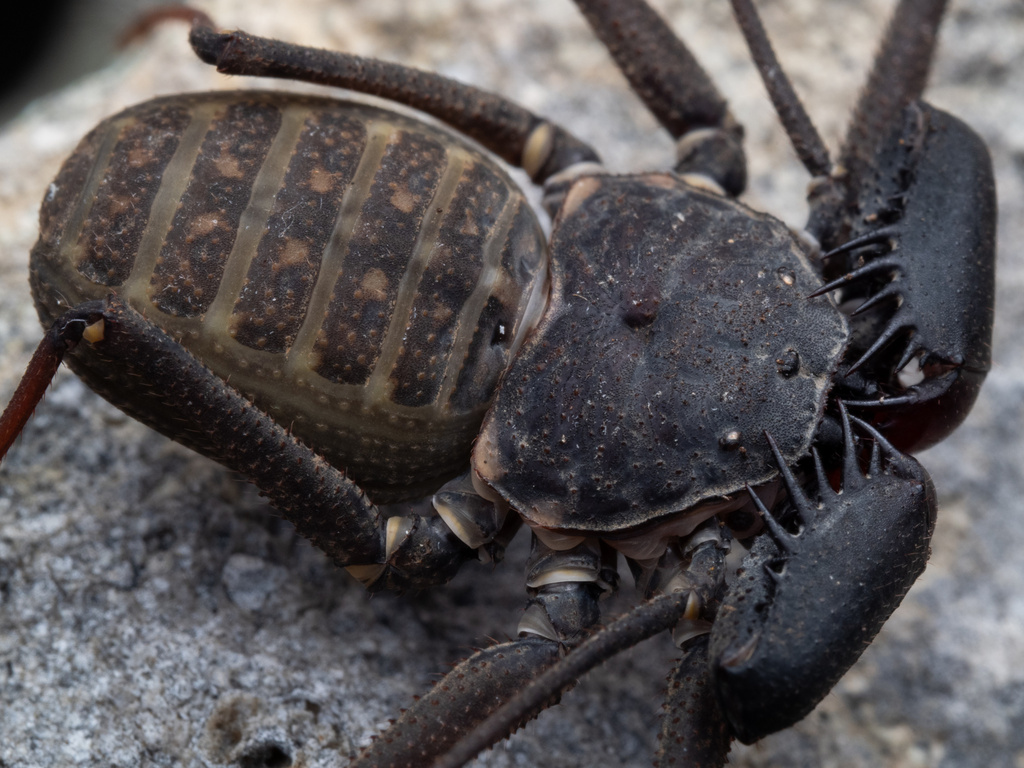
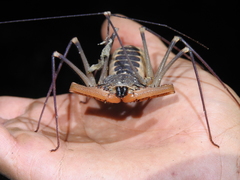
The body reaches about 18 mm and the front legs can be almost 100 mm long. They are nocturnal predators that hide in small retreats during daylight. Females carry 12 to 20 eggs in a brood sac for three months, then tend the first-instar young on their backs for about ten days; it takes roughly two years to become adult, with another two to three years of adult life.
Source: Wikipedia
How to recognize it
The head shield is wider than long and bears eight eyes to one pair at the front and three pairs on the sides.
Source: Wikipedia
Size
The body can grow up to about 18 mm, while the front legs may reach nearly 100 mm.
Source: Wikipedia
Can it bite, sting or make you sick?
They do not inject venom; instead they grasp with pinching pedipalps and small chelicerae.
Source: Wikipedia
Where it lives
They hunt at night and hide in small shelters during daylight.
Source: Wikipedia
Life cycle
After a few weeks to months, the female produces a brood sac with 12 to 20 eggs that develop for three months. The young stay on the mother’s back for about ten days before molting, and it takes about two years to reach adulthood, with adults living another two to three years.
Source: Wikipedia
Where it comes from
They are native to southern Florida and also occur in the Bahamas, Cuba and Hispaniola.
Source: Wikipedia
Where it is found in the US
Recorded in 3 of 51 states and DC. Most records: Florida, Kansas, New York.
Darker = more records. Counts are museum and citizen-science records, not population size.
Source: GBIF
Status: native in North America. Source: iNaturalist
Months it is reported in the US
Source: GBIF
More photos

Questions people ask
How big do they get?
The body can be up to about 18 mm long and the front legs can reach nearly 100 mm.
Source: Wikipedia
Where are they found?
They occur in southern Florida as well as the Bahamas, Cuba and Hispaniola.
Source: Wikipedia
What do they do during the day?
They hide in small retreats and are active at night.
Source: Wikipedia
Same family (Phrynidae)
Sources
- Wikipedia: https://en.wikipedia.org/wiki/Phrynus_marginemaculatus
Look it up elsewhere: GBIF · iNaturalist · BugGuide · ITIS · Wikipedia
Text written 2026-10-26 from the sources above and checked sentence by sentence against them. Data fetched 2026-10-26.