 Bug FAQ
Baja whipspider
Acanthophrynus coronatus · Order: Amblypygi · Family: Phrynidae
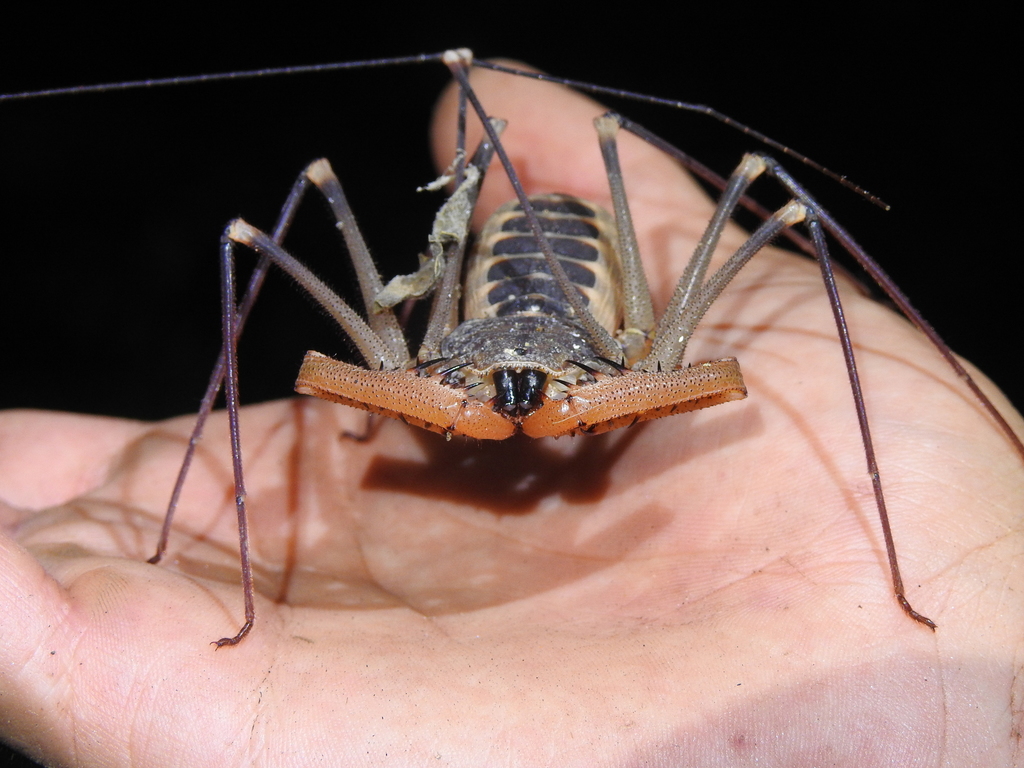
The Baja whipspider can grow to about 45 mm long (body only). It has reddish pedipalps, a light-brown front body, a similarly coloured rear body with darker stripes, and legs that are a pale brown-yellow. It lives in tropical deciduous forests along Mexico’s Pacific coast, from southern Sonora down to Oaxaca, including the Baja California region. When disturbed it can hiss by rubbing its chelicerae together.
Source: Wikipedia
How to recognize it
Their pedipalps are light red, the front body (prosoma) is light brown, the rear body (opisthosoma) matches that colour with darker brown stripes, and the legs are a lighter brown approaching yellow.
Source: Wikipedia
Size
Adults may reach a body length of up to 45 mm.
Source: Wikipedia
Status: native in North America. Source: iNaturalist
More photos

Questions people ask
What does a Baja whipspider look like?
It has light red pedipalps, a light-brown front body with darker striped rear body, and pale brown-yellow legs.
Source: Wikipedia
Do they make any sound?
When threatened they can hiss by rubbing their chelicerae together.
Source: Wikipedia
Same family (Phrynidae)
Sources
- Wikipedia: https://en.wikipedia.org/wiki/Acanthophrynus
Look it up elsewhere: GBIF · iNaturalist · BugGuide · ITIS · Wikipedia
Text written 2026-10-23 from the sources above and checked sentence by sentence against them. Data fetched 2026-10-23.