 Bug FAQ
Flinders Ranges Scorpion
Urodacus elongatus · Order: Scorpiones · Family: Scorpionidae
Source: Wikipedia
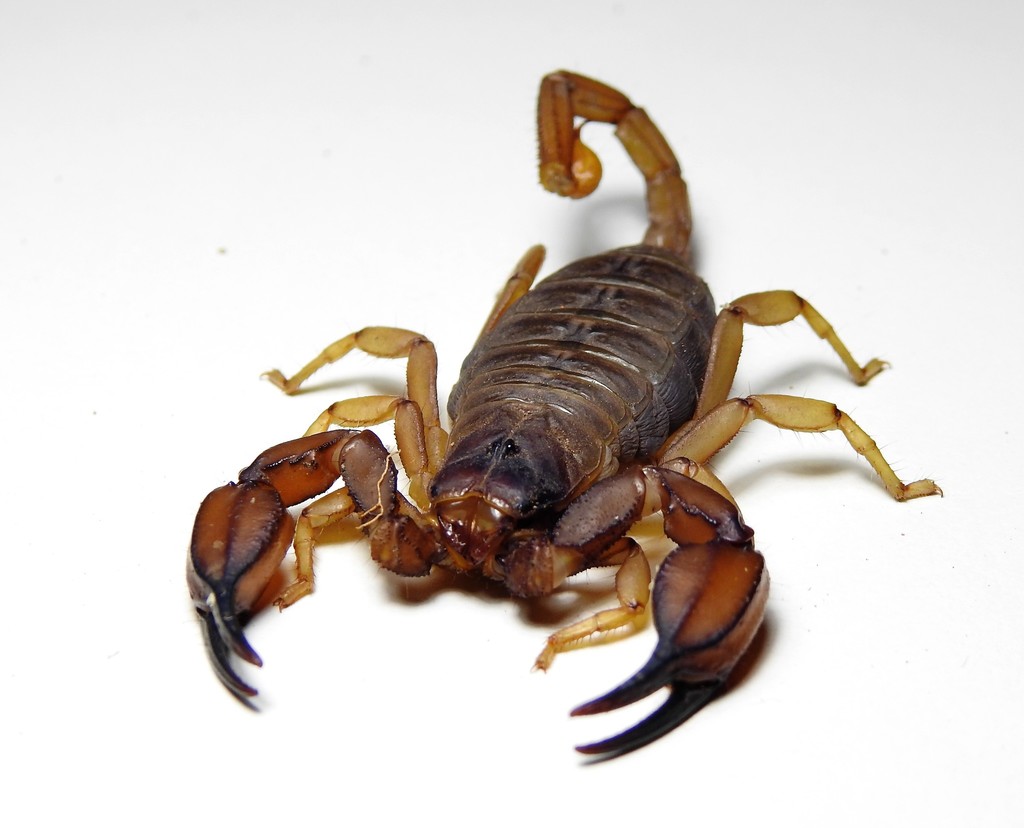
Males can reach about 12 cm and females about 10 cm in length. They live under rocks in shallow scrapes and can survive 8 to 12 years in the wild or captivity.
Source: Wikipedia
How to recognize it
Males are slimmer and have longer tail segments, while females are shorter and more robust.
Source: Wikipedia
Size
Males grow up to 12 cm and females up to 10 cm from mouth to stinger tip.
Source: Wikipedia
Does it bite or sting?
When threatened they will sting, causing painful but non-fatal venom effects. Stings rarely require medical attention.
Source: Wikipedia
Where it lives
In the wild they make shallow scrapes beneath rocks.
Source: Wikipedia
Life cycle
They can live for eight to twelve years in nature or in captivity.
Source: Wikipedia
Where it comes from
They are native to the Flinders Ranges in South Australia.
Source: Wikipedia
Questions people ask
How large do Flinders Range scorpions get?
Males can reach about 12 cm and females about 10 cm in length.
Source: Wikipedia
Can they sting humans?
Yes, they will sting when threatened, causing a painful but non-life-threatening reaction that usually does not need medical care.
Source: Wikipedia
How long do they live?
They can live for eight to twelve years in the wild or in captivity.
Source: Wikipedia
Same family (Scorpionidae)


Sources
- Wikipedia: https://en.wikipedia.org/wiki/Urodacus_elongatus
Look it up elsewhere: GBIF · iNaturalist · BugGuide · Wikipedia
Text written 2026-10-23 from the sources above and checked sentence by sentence against them. Data fetched 2026-10-23.