 Bug FAQ
Coastal Robust Scorpion
Urodacus novaehollandiae · Order: Scorpiones · Family: Scorpionidae
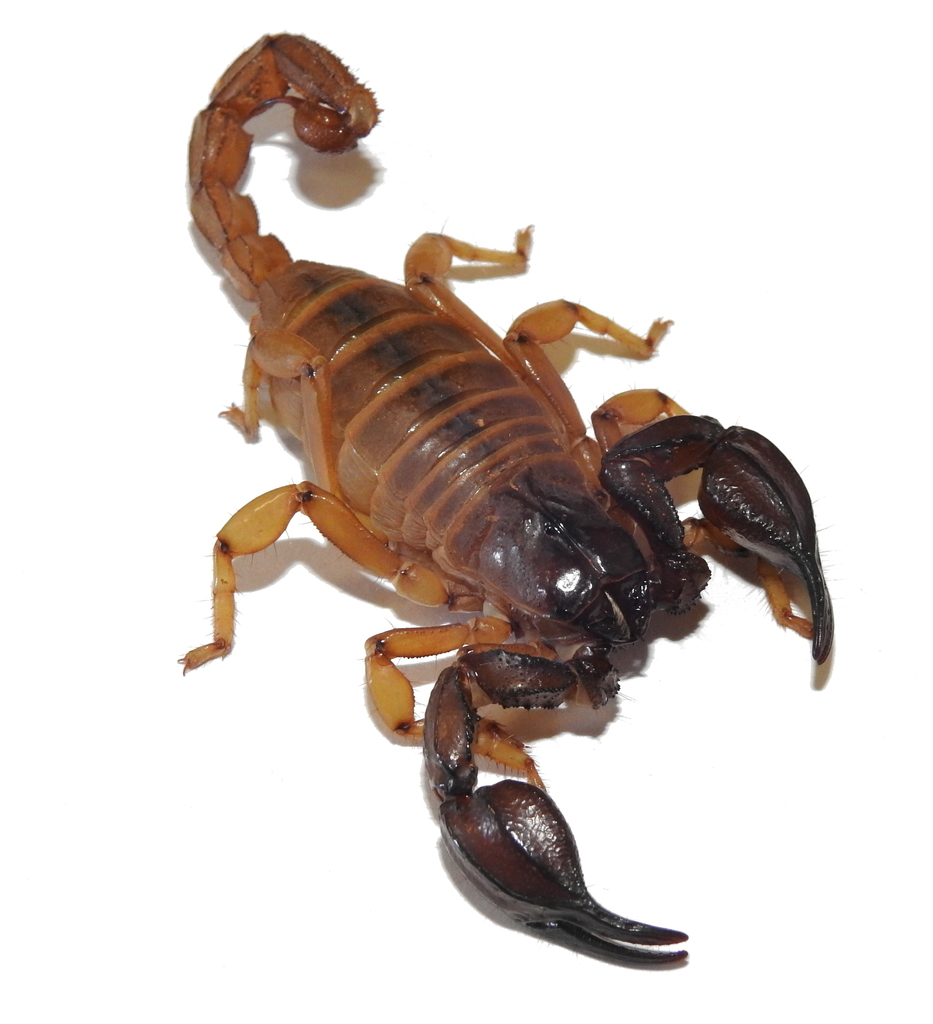
The coastal robust scorpion grows to about 7 to 10 cm long and is colored yellow-brown to dark brown, with a darker head and pincers. These scorpions are nocturnal ambush predators and can live for at least 12 years.
Source: Wikipedia
Size
Adults reach a length of roughly 70 to 100 mm.
Source: Wikipedia
What it eats
They are nocturnal ambush predators that hunt at night.
Source: Wikipedia
Life cycle
Individuals are known to live for at least twelve years.
Source: Wikipedia
When you see it
They are active during the night, hunting as nocturnal ambush predators.
Source: Wikipedia
Where it comes from
The species is endemic to Australia.
Source: Wikipedia
More photos
Questions people ask
How large do coastal robust scorpions get?
Adults grow to about 70 to 100 mm in length.
Source: Wikipedia
What do they look like?
They are yellowish-brown to dark brown, with a darker head and pincers.
Source: Wikipedia
What do they eat and when are they active?
They are nocturnal ambush predators that hunt at night.
Source: Wikipedia
Same family (Scorpionidae)


Sources
- Wikipedia: https://en.wikipedia.org/wiki/Urodacus_novaehollandiae
Look it up elsewhere: GBIF · iNaturalist · BugGuide · Wikipedia
Text written 2026-10-23 from the sources above and checked sentence by sentence against them. Data fetched 2026-10-23.