 Bug FAQ
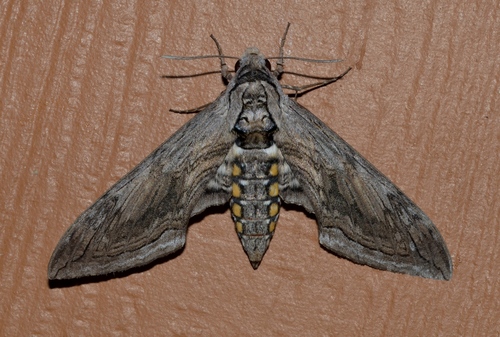
Five-spotted Hawk Moth
Manduca quinquemaculatus · Order: Lepidoptera · Family: Sphingidae
Also called: Tomato Hornworm
Source: Wikipedia
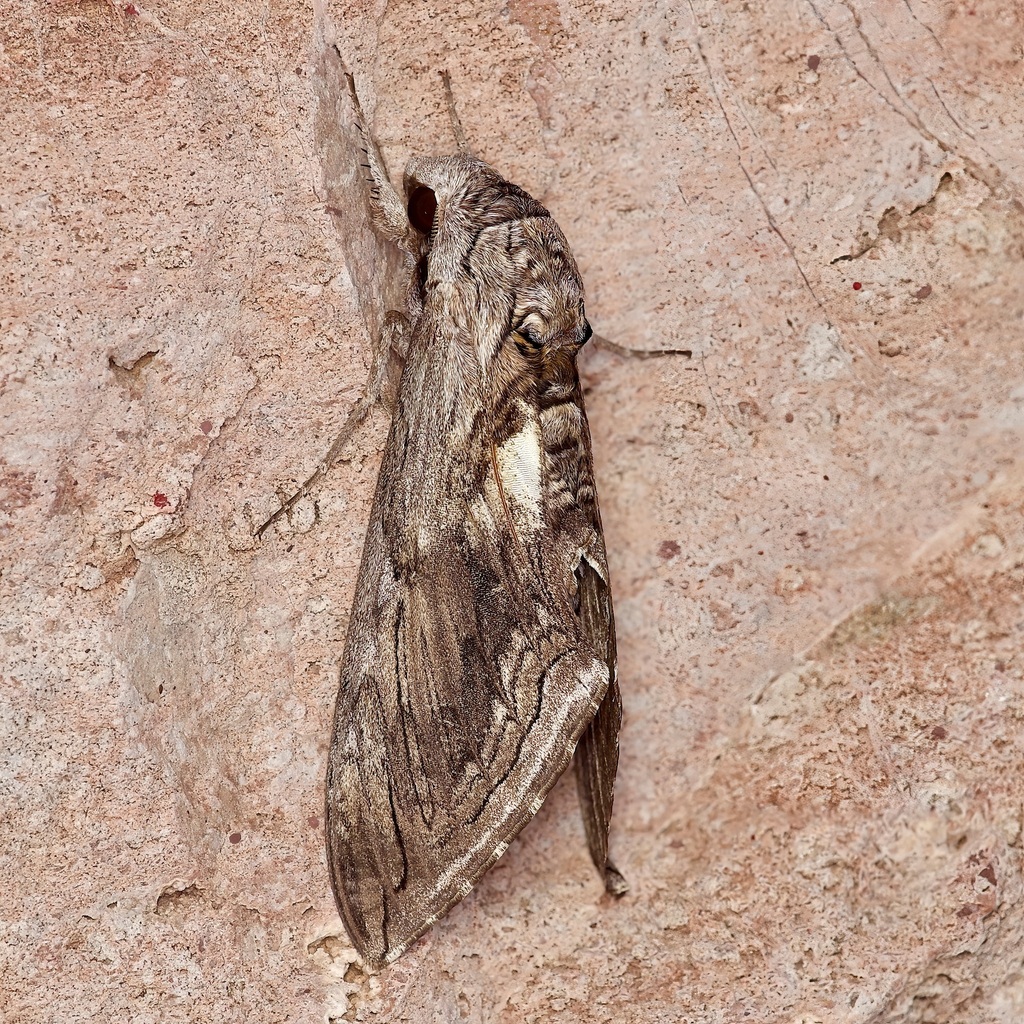
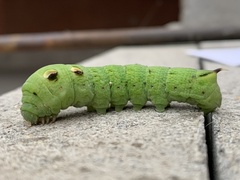
Fully grown caterpillars can reach about 10 cm (4 in) in length and have a dark horn-like tip on the rear. They are common garden pests that feed on many Solanaceae crops and can cause serious leaf loss.
Source: Wikipedia
How to recognize it
The rear end bears a pointed dark projection called a horn, which gives the caterpillar its name. Tomato hornworms show eight V-shaped white spots without borders and have dark blue or black horns.
Source: Wikipedia
Size
Mature larvae grow up to 10 cm long, roughly the length of a small ruler.
Source: Wikipedia
Is it a pest in the house?
Because the larvae attack garden crops, they are considered a major pest for home gardeners. Biological controls and traps are used to keep their numbers down.
Source: Wikipedia
How to get rid of it
Gardeners often remove the caterpillars by hand from affected plants. A UV blacklight at night can help locate them because they glow bright green.
Source: Wikipedia
Where it lives
The caterpillars are often found in gardens where they feed on host plants such as tomatoes.
Source: Wikipedia
What it eats
Adults sip nectar from flowers like Datura, evening primrose, and four-o’clock plants. Larvae eat a variety of nightshade family plants, including tomato, eggplant, pepper, tobacco, moonflower and potato.
Source: Wikipedia
When you see it
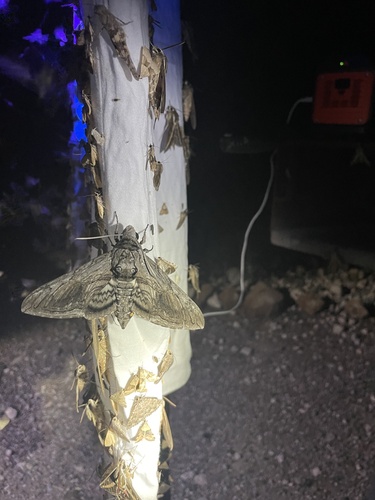
Adult moths are most active after dark.
Source: Wikipedia
Where it comes from
They occur across North America and also in Australia.
Source: Wikipedia
Lookalikes
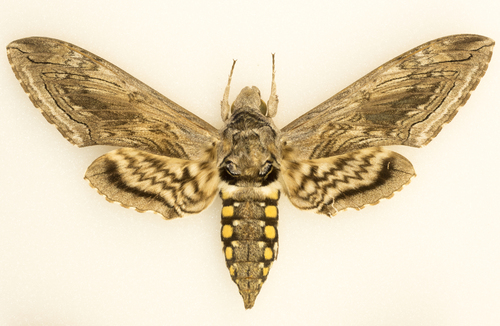
A reliable way to tell them apart from the tobacco hornworm is the pattern of white markings on the sides.
Source: Wikipedia
Where it is found in the US
Recorded in 47 of 51 states and DC. Most records: Texas, Arizona, New Mexico, California, Oklahoma, Colorado, Pennsylvania, Kansas.
Darker = more records. Counts are museum and citizen-science records, not population size.
Source: GBIF
Status: native in North America; native in United States; native in Canada. Source: iNaturalist
Months it is reported in the US
Source: GBIF
More photos
Questions people ask
How can I get rid of tomato hornworms?
Pick the caterpillars off the plants and use a UV blacklight at night to find any hidden ones.
Source: Wikipedia
What plants do tomato hornworms damage?
They feed on tomatoes, eggplant, peppers, tobacco, moonflowers and potatoes, stripping the leaves.
Source: Wikipedia
Same family (Sphingidae)
 White-lined SphinxHyles lineataDamages trees, gardens or crops
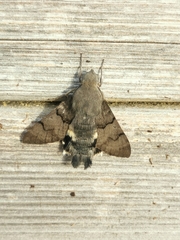 Eurasian Hummingbird HawkmothMacroglossum stellatarum
 Snowberry ClearwingHemaris diffinis
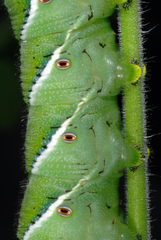 Carolina SphinxManduca sextaDamages trees, gardens or crops
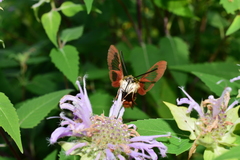 Hummingbird ClearwingHemaris thysbeDamages trees, gardens or crops
 Elephant HawkmothDeilephila elpenor
Sources
- Wikipedia: https://en.wikipedia.org/wiki/Manduca_quinquemaculata
Look it up elsewhere: GBIF · iNaturalist · BugGuide · Wikipedia
Text written 2026-10-23 from the sources above and checked sentence by sentence against them. Data fetched 2026-10-23.