 Bug FAQ
Fine striped sweat bee
Agapostemon subtilior · Order: Hymenoptera · Family: Halictidae
Also called: Metallic Green Bees, Striped Sweat Bees
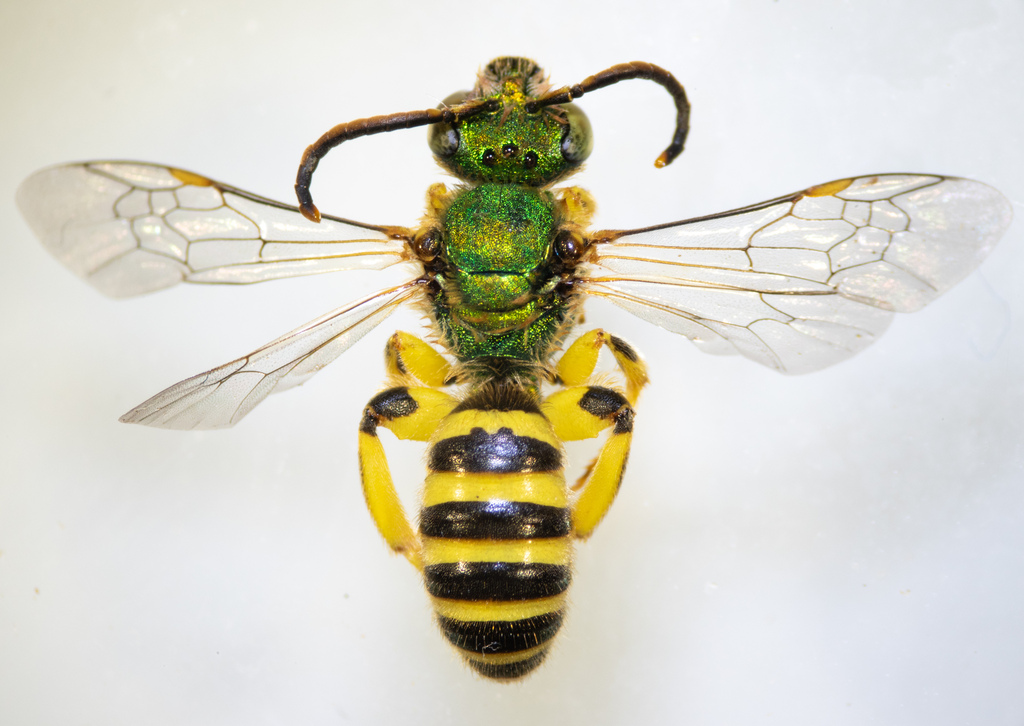
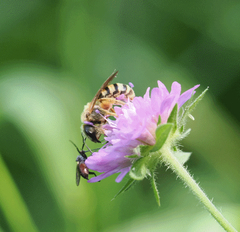
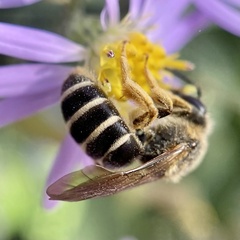
The fine striped sweat bee is a ground-nesting solitary bee found across much of the United States. Females are solid green about 11 mm long, while males are slightly smaller (9 to 10 mm) and have yellow-striped abdomens; their color can shift from bluish to pale green with humidity. It forages on many kinds of flowers, collecting pollen from a wide range of plants.
Source: Wikipedia
How to recognize it
Females are entirely green; males are slightly smaller and show yellow stripes on the abdomen. Body color can change from bluish to pale green depending on how dry or moist the air is.
Source: Wikipedia
Where it lives
It nests in solitary burrows dug in the ground.
Source: Wikipedia
What it eats
It is a generalist pollinator that gathers pollen from many plant species.
Source: Wikipedia
Life cycle
The bee lives and reproduces in solitary ground nests.
Source: Wikipedia
Where it comes from
It occurs across the northern and central United States and along the West Coast down to the U.S. to Mexico border.
Source: Wikipedia
Where it is found in the US
Recorded in 49 of 51 states and DC. Most records: California, Colorado, Arizona, Maryland, South Dakota, Washington, Texas, Pennsylvania.
Darker = more records. Counts are museum and citizen-science records, not population size.
Source: GBIF
Status: native in North America; native in Canada; native in United States. Source: iNaturalist
Months it is reported in the US
Source: GBIF
More photos
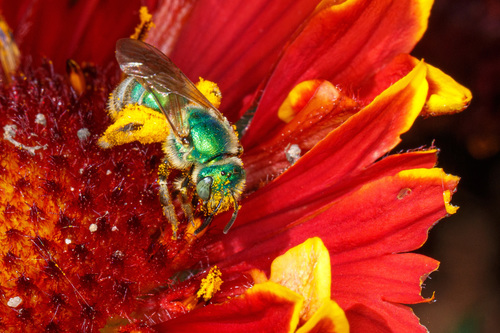
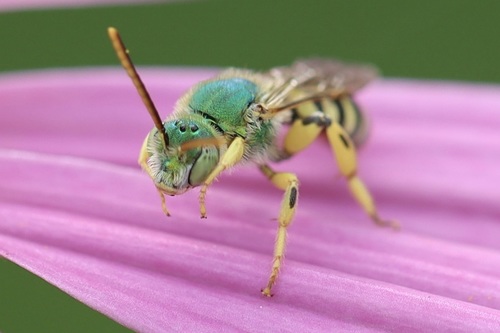
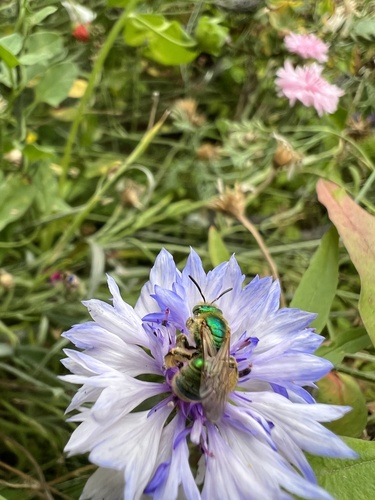
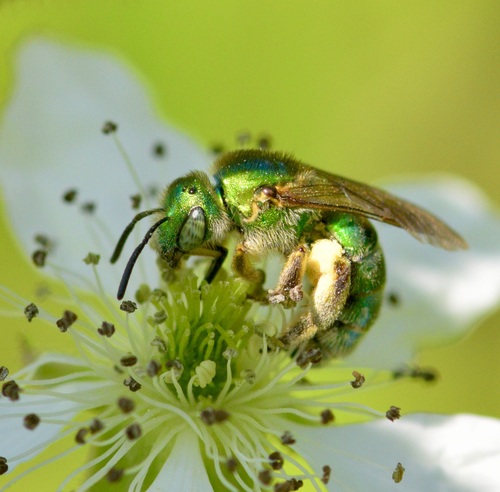
Same family (Halictidae)
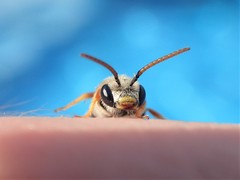
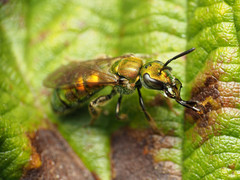
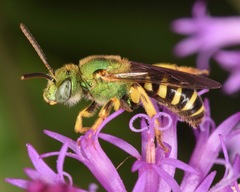

Sources
- Wikipedia: https://en.wikipedia.org/wiki/Agapostemon_subtilior
Look it up elsewhere: GBIF · iNaturalist · BugGuide · Wikipedia
Text written 2026-10-22 from the sources above and checked sentence by sentence against them. Data fetched 2026-10-22.