 Bug FAQ
Field Wolf Spider
Hogna lenta · Order: Araneae · Family: Lycosidae
Source: Wikipedia
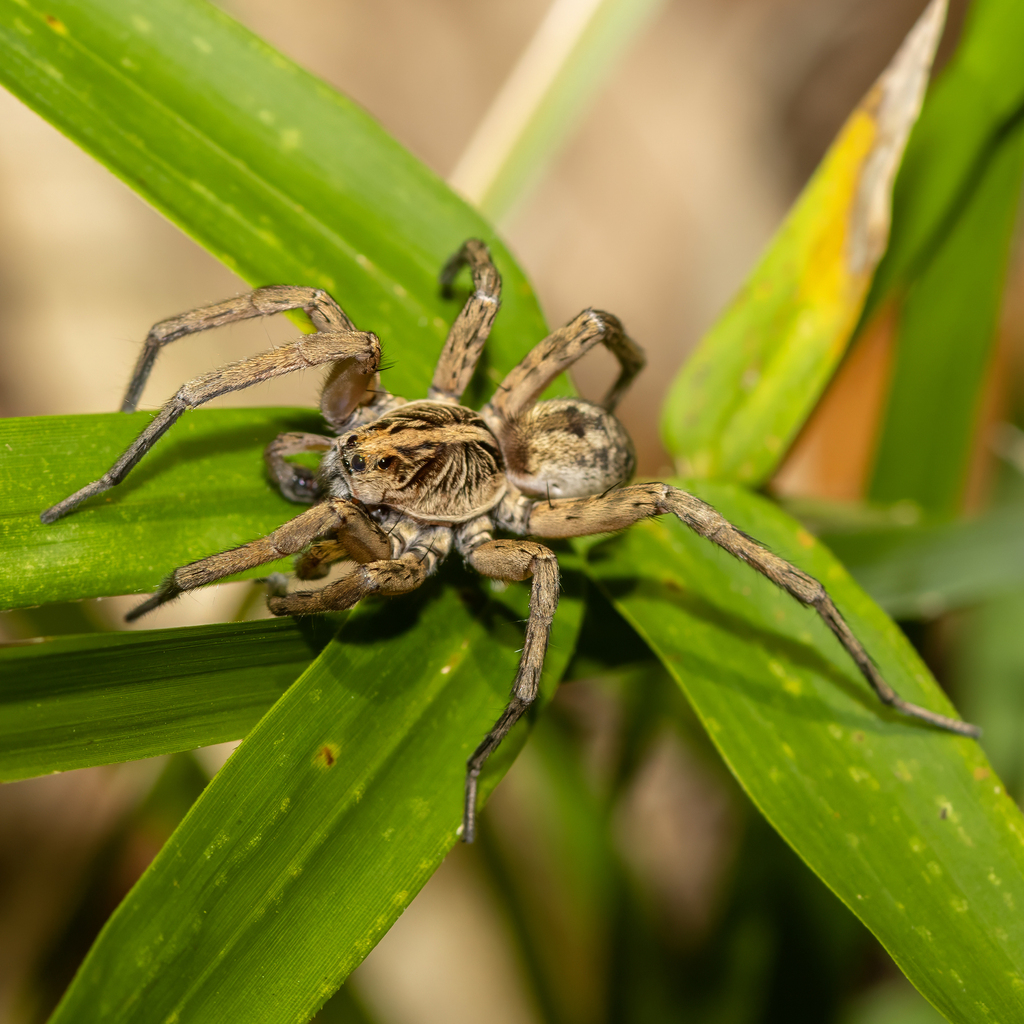
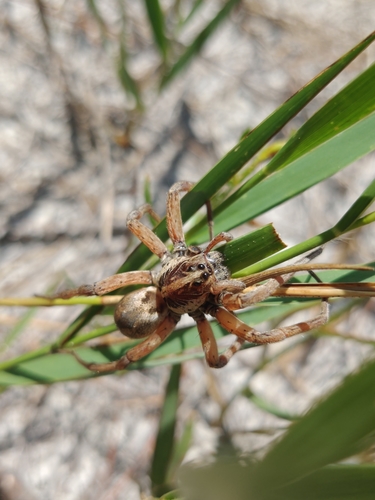
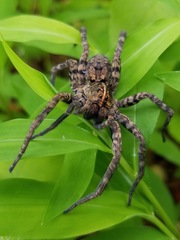
Field wolf spiders are 10 to 30 mm long and live in sandy soils, often in vertical burrows that may have a turret. They hunt small insects such as crickets, waxworms, mealworms, and will take beetles if needed. If handled they may bite, but the bite is only mildly painful, similar to a bee sting.
Source: Wikipedia
How to recognize it
When threatened they lift their front legs to appear larger. Young spiders are very quick and hard to catch.
Source: Wikipedia
Size
Adults measure between 10 and 30 mm in length.
Source: Wikipedia
Can it bite, sting or make you sick?
Their venom is harmless to healthy adults and feels like a bee sting. If provoked, they may bite as a last defense.
Source: Wikipedia
Where it lives
They are commonly found in sandy ground. Their burrows are vertical shafts that may end in a turret.
Source: Wikipedia
What it eats
If those are unavailable, they will also eat beetles.
Source: Wikipedia
Life cycle
After mating, the female builds a large white egg sac larger than her abdomen that holds many eggs. Spiderlings develop inside the eggs for five to eight weeks before hatching.
Source: Wikipedia
Where it comes from
The field wolf spider is native to the southeastern United States.
Source: Wikipedia
Where it is found in the US
Recorded in 13 of 51 states and DC. Most records: Florida, North Carolina, Georgia, South Carolina, Virginia, Alabama, Mississippi, Tennessee.
Darker = more records. Counts are museum and citizen-science records, not population size.
Source: GBIF
Months it is reported in the US
Source: GBIF
More photos
Questions people ask
What do field wolf spiders eat?
They hunt small insects such as crickets, waxworms, mealworms, and will also eat beetles if needed.
Source: Wikipedia
Do field wolf spiders bite?
They can bite, but the bite feels like a mild bee sting and isn’t dangerous to a healthy adult.
Source: Wikipedia
Where are field wolf spiders found?
They are native to the southeastern United States and are often found in sandy soils.
Source: Wikipedia
Same family (Lycosidae)


Sources
- Wikipedia: https://en.wikipedia.org/wiki/Hogna_lenta
Look it up elsewhere: GBIF · iNaturalist · BugGuide · ITIS · Wikipedia
Text written 2026-10-27 from the sources above and checked sentence by sentence against them. Data fetched 2026-10-27.