 Bug FAQ
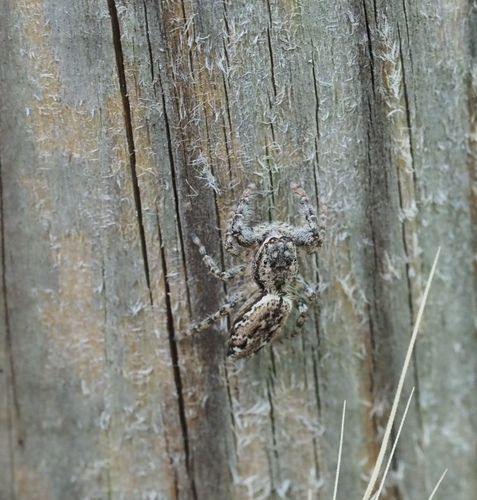
Fencepost jumping spider
Marpissa muscosa · Order: Araneae · Family: Salticidae
No source yet on danger. We have no source yet on whether it bites, stings or damages anything.
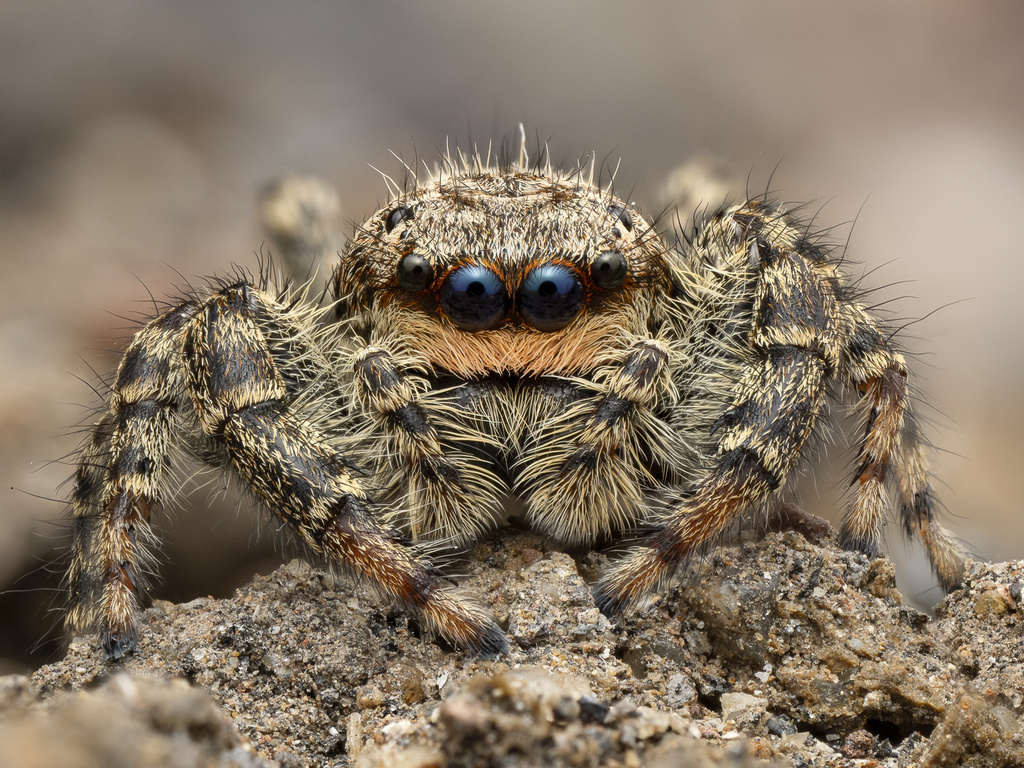
The fencepost jumping spider is grey to brown, furry and flattened in shape. Females are 7.5 to 14 mm long and males are 6 to 8.1 mm long.
Source: Wikipedia
How to recognize it
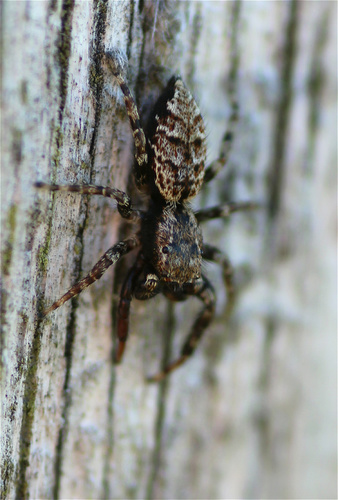
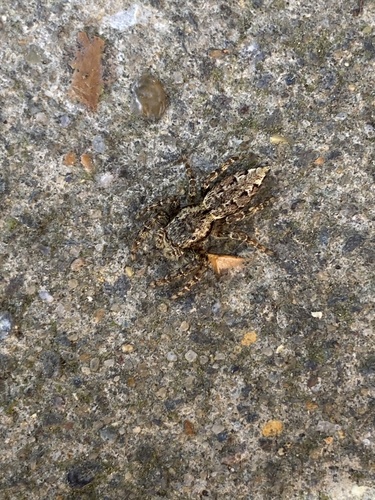
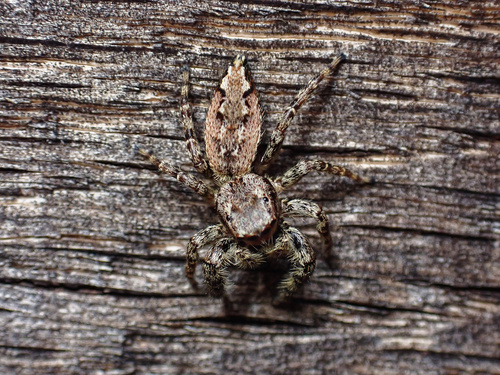
Both sexes are grey to brown, furry and have a flattened body.
Source: Wikipedia
Size
Females measure 7.5 to 14 mm and males 6 to 8.1 mm in body length.
Source: Wikipedia
Where it comes from
The species occurs throughout the Palaearctic region and is widespread in northern Europe.
Source: Wikipedia
Status: introduced in Canada. Source: iNaturalist
More photos
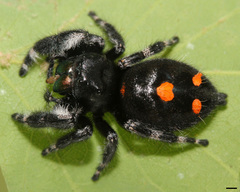
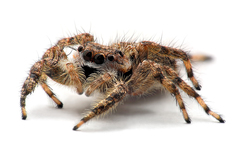
Same family (Salticidae)



Sources
- Wikipedia: https://en.wikipedia.org/wiki/Marpissa_muscosa
Look it up elsewhere: GBIF · iNaturalist · BugGuide · ITIS · Wikipedia
Text written 2026-10-22 from the sources above and checked sentence by sentence against them. Data fetched 2026-10-22.