 Bug FAQ
Euthamia leaf gall midge
Asteromyia euthamiae · Order: Diptera · Family: Cecidomyiidae
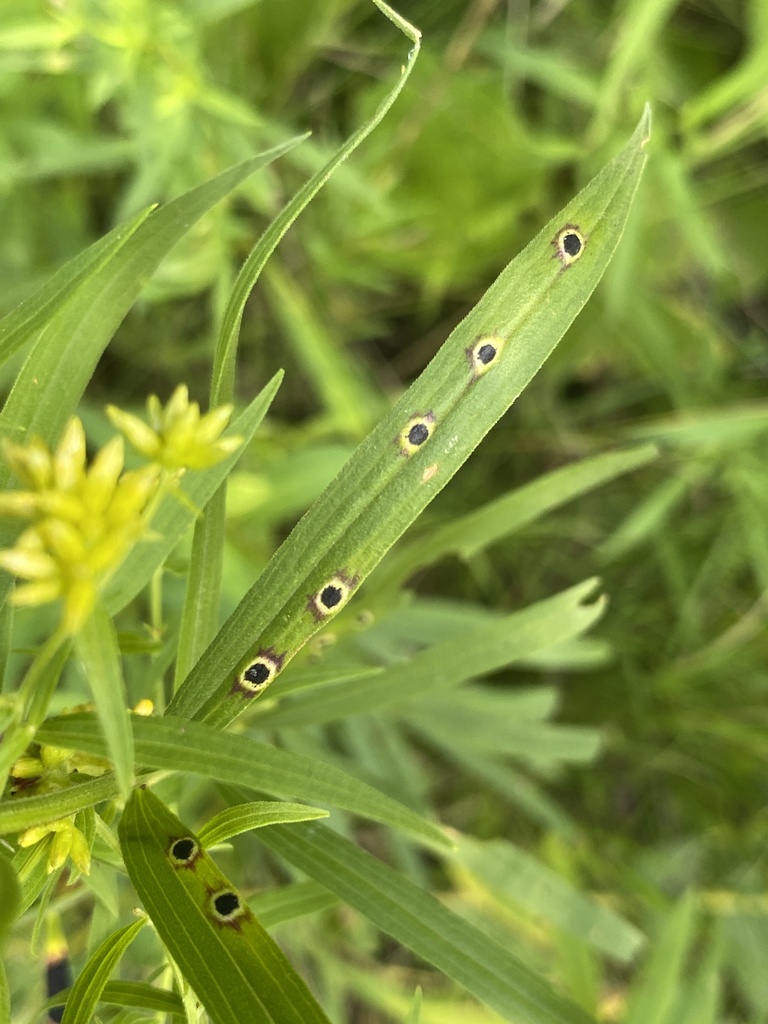
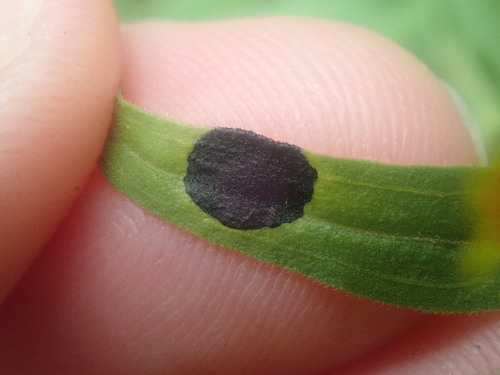
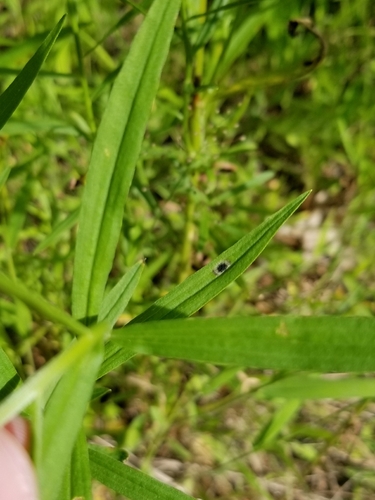
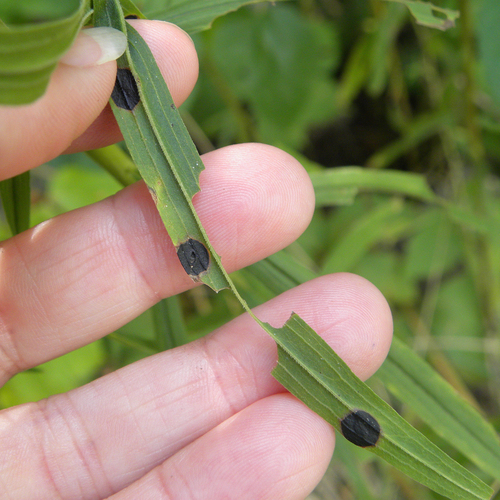
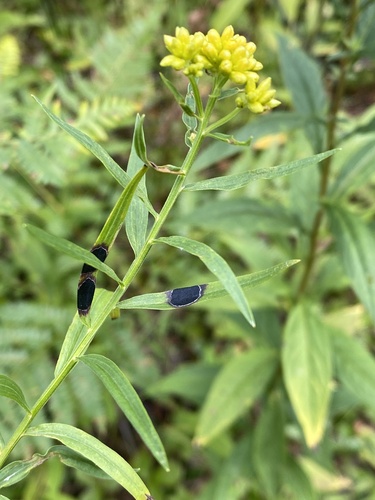
The galls are usually 3 to 10 mm long and are black, sometimes with a narrow yellow, white, or purple edge. It is found across northern North America and makes galls on several Euthamia species. The species was first described in 1968 by entomologist Raymond Gagné.
Source: Wikipedia
How to recognize it
Galls are black with a thin margin that may be yellow, white, or purple.
Source: Wikipedia
Size
Galls measure about 3 to 10 mm in length.
Source: Wikipedia
Where it lives
It occurs widely in northern parts of North America.
Source: Wikipedia
What it eats
The midge induces galls on plants of the genus Euthamia.
Source: Wikipedia
Where it comes from
Its distribution is throughout northern North America.
Source: Wikipedia
Where it is found in the US
Recorded in 28 of 51 states and DC. Most records: Pennsylvania, New Jersey, Ohio, New York, Massachusetts, New Hampshire, Maryland, Maine.
Darker = more records. Counts are museum and citizen-science records, not population size.
Source: GBIF
Status: native in North America; native in United States; native in Canada. Source: iNaturalist
Months it is reported in the US
Source: GBIF
More photos
Same family (Cecidomyiidae)


Sources
- Wikipedia: https://en.wikipedia.org/wiki/Asteromyia_euthamiae
Look it up elsewhere: GBIF · iNaturalist · BugGuide · ITIS · Wikipedia
Text written 2026-10-23 from the sources above and checked sentence by sentence against them. Data fetched 2026-10-22.