 Bug FAQ
Eucalyptus variegated beetle
Paropsisterna cloelia · Order: Coleoptera · Family: Chrysomelidae
Source: Wikipedia
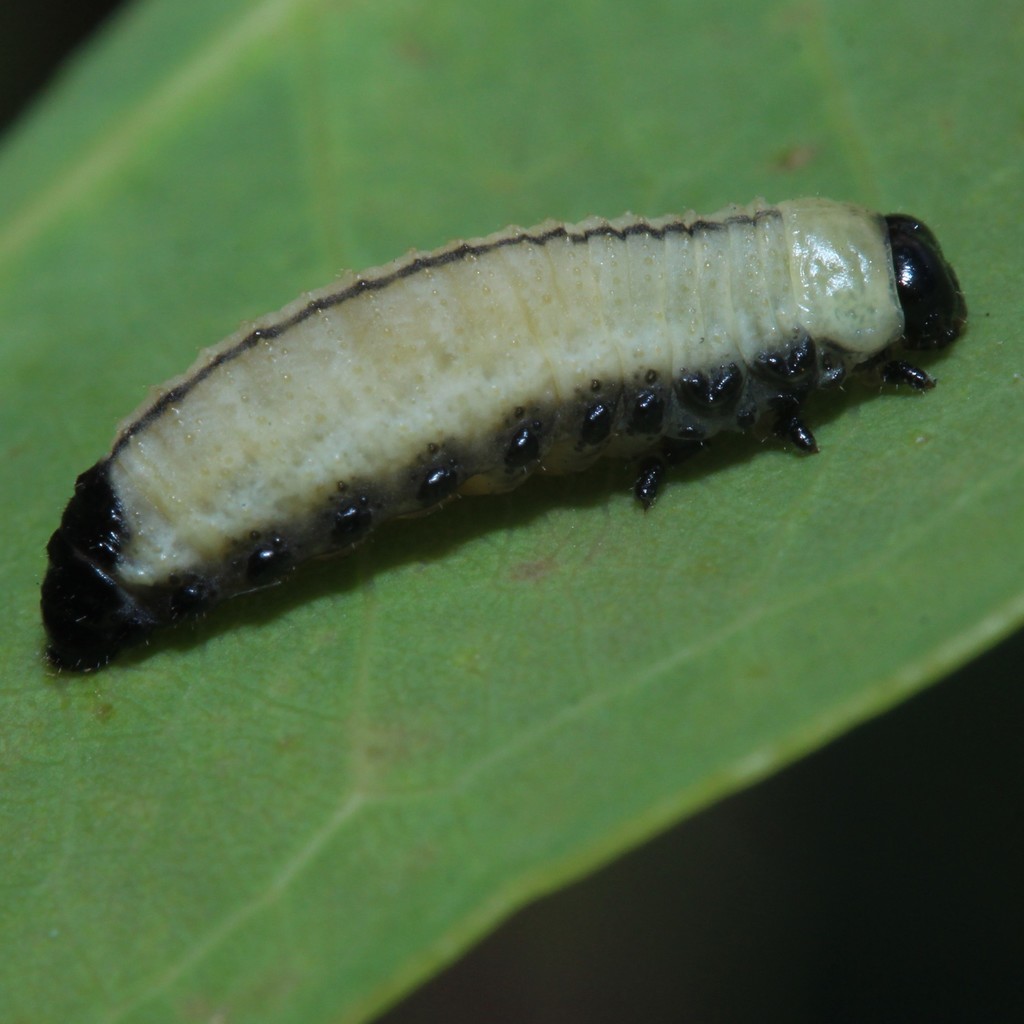
Adults are under 10 mm long and have a rounded, dome-shaped body. They are usually orange, but can appear dark brown or black with orange edging on the head and body. Both juvenile and adult beetles eat the leaves of eucalyptus plants.
Source: Wikipedia
Size
Adult beetles are less than 10 mm long and have a dome-shaped outline. Larvae range from 2 to 12 mm in length.
Source: Wikipedia
What it eats
Both young and mature beetles feed on the leaves of eucalyptus species.
Source: Wikipedia
Where it comes from
Paropsisterna cloelia is native to Australia.
Source: Wikipedia
Questions people ask
How can I recognize an adult eucalyptus variegated beetle?
Look for a tiny (under 10 mm), dome-shaped beetle that is usually orange, though it may be dark brown or black with orange edging on the head and body.
Source: Wikipedia
What plants do these beetles damage?
They feed on the leaves of eucalyptus trees, which can harm the trees if infestations are heavy.
Source: Wikipedia
Same family (Chrysomelidae)
 Spotted Cucumber BeetleDiabrotica undecimpunctataDamages trees, gardens or crops
 Bean WeevilAcanthoscelides obtectusDamages trees, gardens or crops
 Cowpea WeevilCallosobruchus maculatusDamages trees, gardens or crops
 Swamp Milkweed Leaf BeetleLabidomera clivicollisDamages trees, gardens or crops
 Alder Leaf BeetleAgelastica alniDamages trees, gardens or crops
 Dogbane Leaf BeetleChrysochus auratus
Sources
- Wikipedia: https://en.wikipedia.org/wiki/Paropsisterna_cloelia
Look it up elsewhere: GBIF · iNaturalist · BugGuide · Wikipedia
Text written 2026-10-23 from the sources above and checked sentence by sentence against them. Data fetched 2026-10-22.