 Bug FAQ
Ethmia mirusella
Ethmia mirusella · Order: Lepidoptera · Family: Ethmiidae
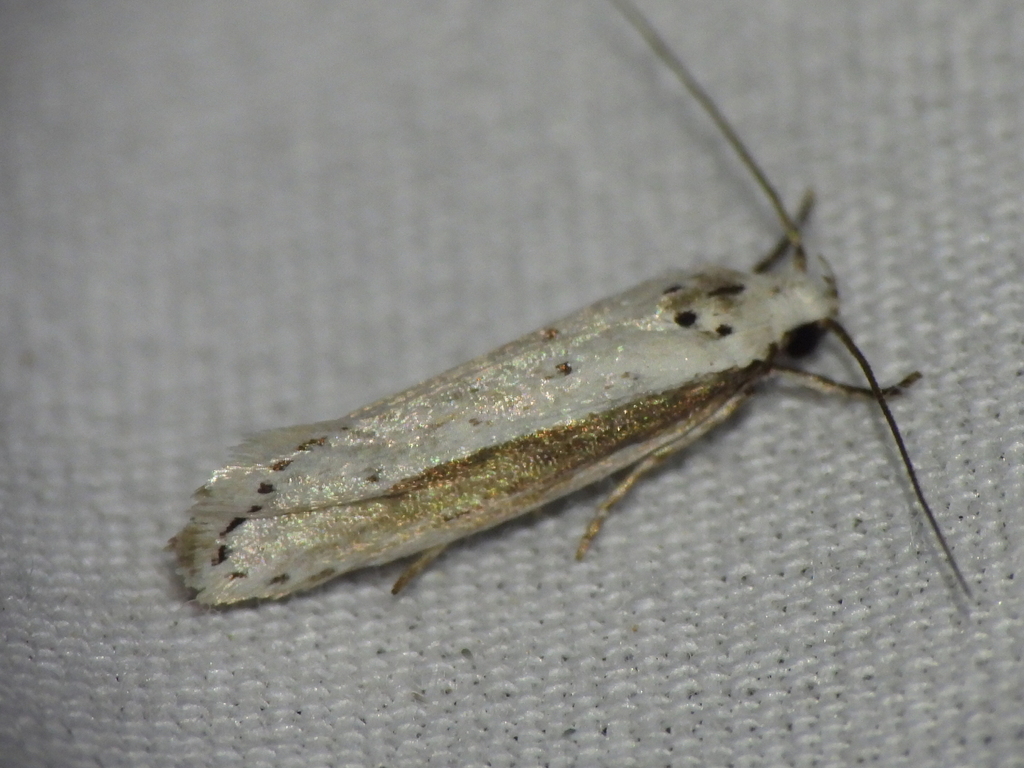
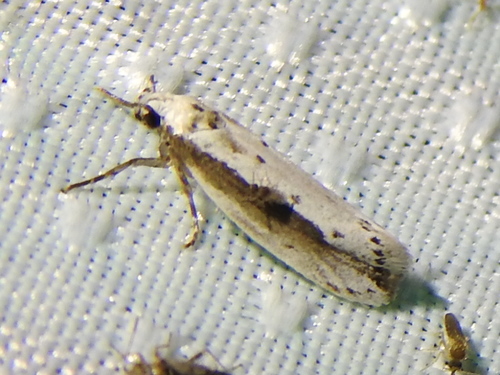
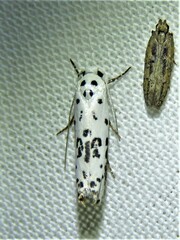
The forewings measure about 8 to 9 mm long. The wings are white with a straight longitudinal line dividing a dark-brown cell area from a mostly white costal area. Adults appear from March through September, producing two generations each year.
Source: Wikipedia
How to recognize it
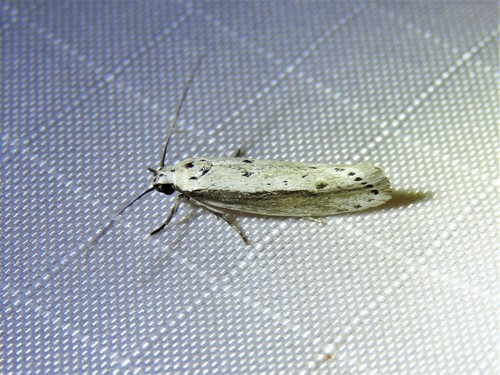
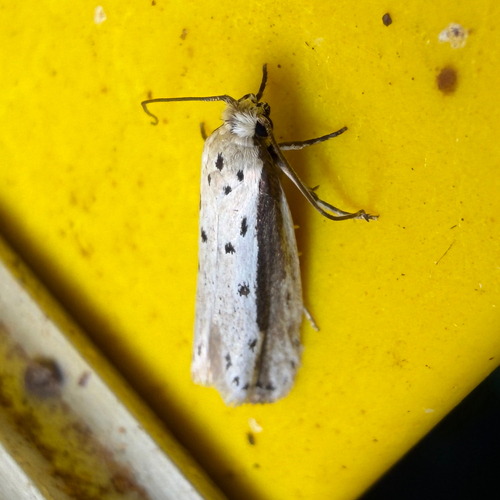
The forewing ground color is white, split by a straight line down the middle. Inside the cell, the area near the body is dark brown, fading to pale brown and white toward the leading edge, which is only brown at its base; beyond the cell the wing is mostly white.
Source: Wikipedia
Size
Forewing length ranges from 7.8 to 9.2 mm (about 0.31 to 0.36 in).
Source: Wikipedia
What it eats
The larvae feed on plants of the genus Lithospermum.
Source: Wikipedia
Life cycle
Adults are on the wing in March and again from May to September, producing two generations per year.
Source: Wikipedia
When you see it
Flight periods cover March and the span from May through September.
Source: Wikipedia
Where it comes from
Its range includes Kansas, Oklahoma, and central to western Texas in the United States.
Source: Wikipedia
Where it is found in the US
Recorded in 10 of 51 states and DC. Most records: Texas, Oklahoma, Kansas, Montana, Idaho, Louisiana, Nebraska, Arizona.
Darker = more records. Counts are museum and citizen-science records, not population size.
Source: GBIF
Months it is reported in the US
Source: GBIF
More photos
Questions people ask
When are Ethmia mirusella adults active?
Adults fly in March and then from May through September, with two generations each year.
Source: Wikipedia
Same family (Ethmiidae)

Sources
- Wikipedia: https://en.wikipedia.org/wiki/Ethmia_mirusella
Look it up elsewhere: GBIF · iNaturalist · BugGuide · Wikipedia
Text written 2026-10-26 from the sources above and checked sentence by sentence against them. Data fetched 2026-10-26.