 Bug FAQ
Ethmia marmorea
Ethmia marmorea · Order: Lepidoptera · Family: Ethmiidae
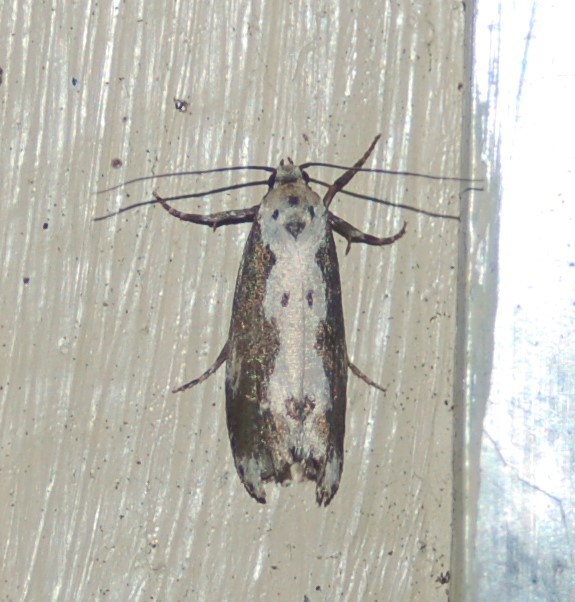
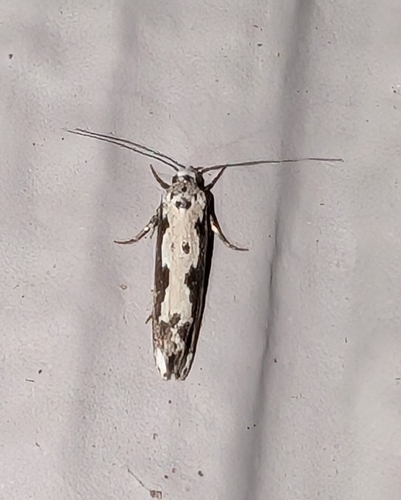
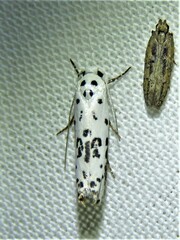
The forewings are 8.4 to 11.7 mm long and show a white dorsal area separated by a dark brown line with triangular spurs. Adults fly from May through August, likely producing one generation each year.
Source: Wikipedia
How to recognize it
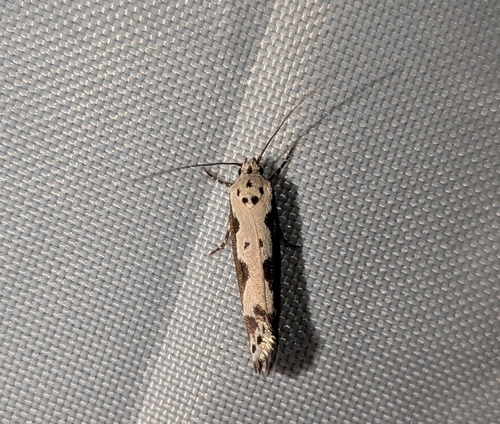
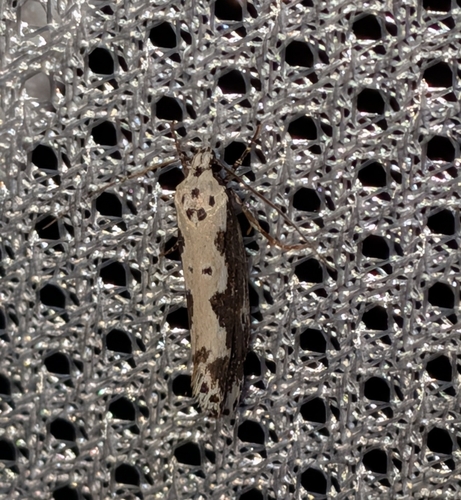
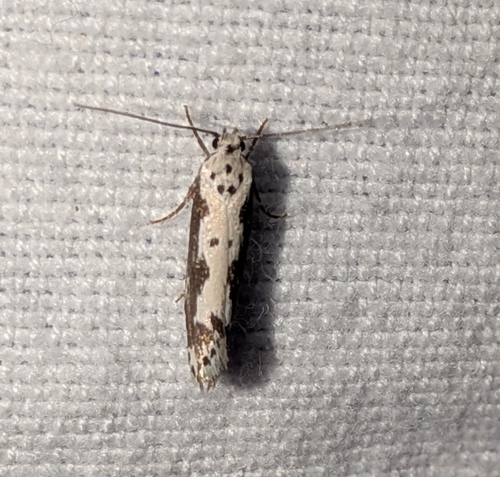
A longitudinal line runs along the Cu fold of the forewing, extending below as blunt triangular spurs at the basal quarter, middle, and terminal area. The wing area above the line is white, while the area toward the costa is dark brown with one or more vague whitish spots.
Source: Wikipedia
Size
Forewing length ranges from 8.4 to 11.7 mm (about 0.33 to 0.46 in).
Source: Wikipedia
Where it lives
It is found in North America’s lower Great Basin and Rocky Mountain mountain ranges.
Source: Wikipedia
Life cycle
Adults are on the wing from May to August. There is probably one generation per year.
Source: Wikipedia
When you see it
Adults are active from May through August.
Source: Wikipedia
Where it comes from
Its range includes southeastern British Columbia, the eastern Pacific states, central Colorado, and central Chihuahua.
Source: Wikipedia
Where it is found in the US
Recorded in 10 of 51 states and DC. Most records: Oregon, Colorado, Washington, Arizona, Montana, California, New Mexico, Idaho.
Darker = more records. Counts are museum and citizen-science records, not population size.
Source: GBIF
Status: native in North America; native in Canada; native in United States. Source: iNaturalist
Months it is reported in the US
Source: GBIF
More photos
Questions people ask
How many generations does Ethmia marmorea have each year?
It likely has one generation per year.
Source: Wikipedia
Same family (Ethmiidae)

Sources
- Wikipedia: https://en.wikipedia.org/wiki/Ethmia_marmorea
Look it up elsewhere: GBIF · iNaturalist · BugGuide · Wikipedia
Text written 2026-10-27 from the sources above and checked sentence by sentence against them. Data fetched 2026-10-27.