 Bug FAQ
Ethmia arctostaphylella
Ethmia arctostaphylella · Order: Lepidoptera · Family: Ethmiidae
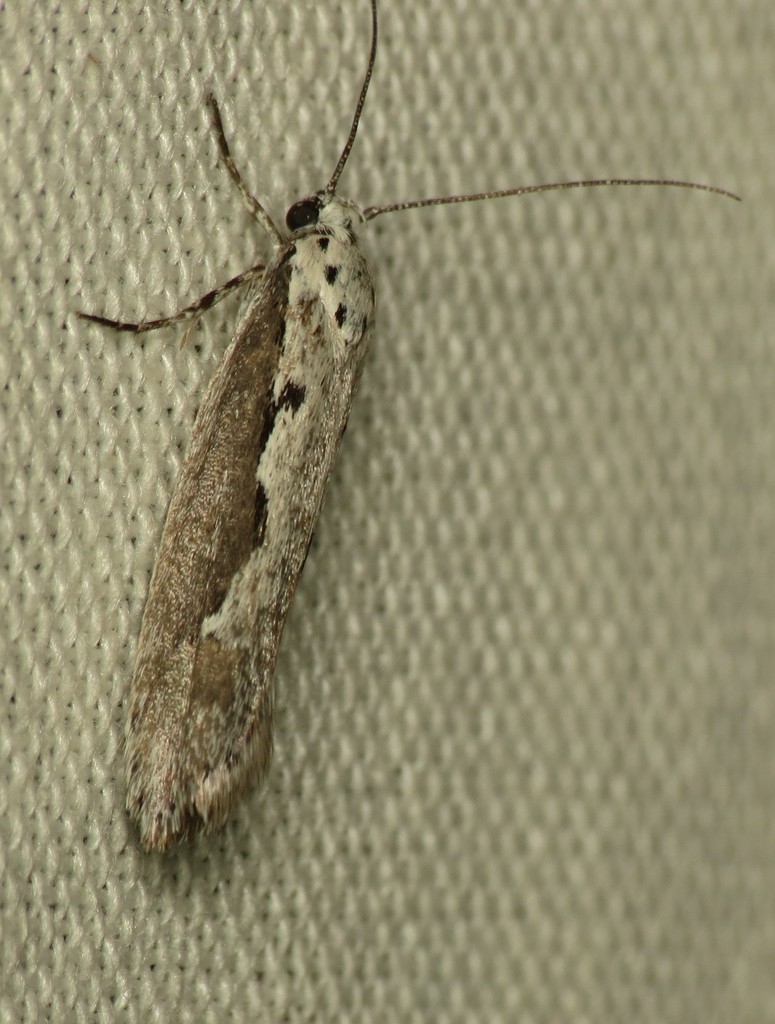
The moth’s forewings measure about 8 to 12 mm long (0.33 to 0.46 in). Adults fly from February through October. Larvae feed on several species of Eriodictyon (including E. californicum, E. tomentosum, E. trichocalyx and possibly E. angustifolium).
Source: Wikipedia
How to recognize it
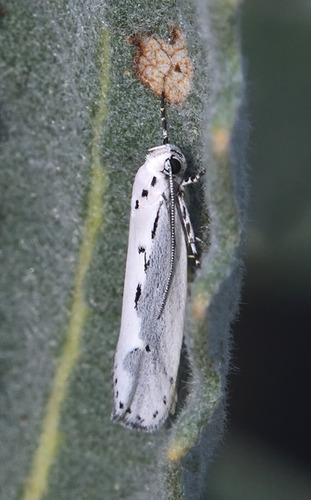
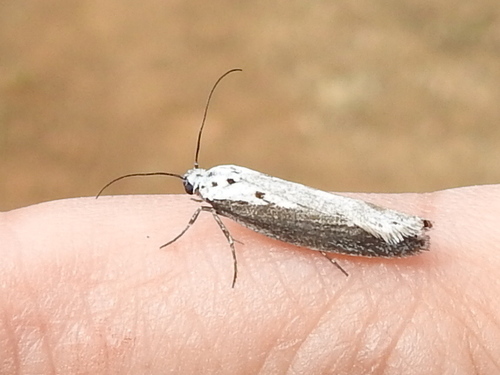
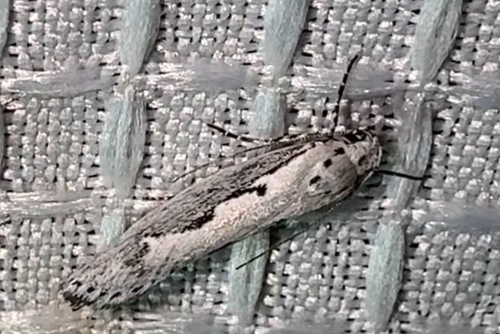
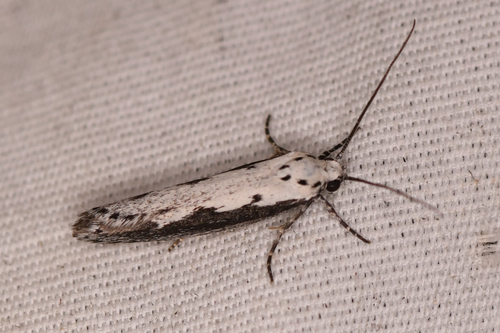
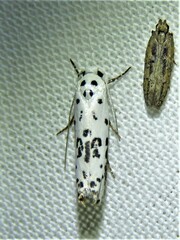
The forewings have a longitudinal line dividing a dark gray costal half from a whitish-gray dorsal half, with several black spots; hindwings range from pale to dark gray.
Source: Wikipedia
What it eats
Larvae feed on Eriodictyon species such as E. californicum, E. tomentosum, E. trichocalyx and possibly E. angustifolium.
Source: Wikipedia
Life cycle
Adults are on the wing from February to October.
Source: Wikipedia
When you see it
Adults can be seen from early winter through fall (February to October).
Source: Wikipedia
Where it comes from
Its range includes the United States and Mexico, spanning southern Oregon, northern California, Baja California, southern Nevada and Arizona.
Source: Wikipedia
Where it is found in the US
Recorded in 1 of 51 states and DC. Most records: California.
Darker = more records. Counts are museum and citizen-science records, not population size.
Source: GBIF
Months it is reported in the US
Source: GBIF
More photos
Questions people ask
How large is Ethmia arctostaphylella?
The forewings are about 8.4 to 11.7 mm long (0.33 to 0.46 in).
Source: Wikipedia
What do the larvae eat?
The larvae feed on several Eriodictyon species, including E. californicum, E. tomentosum, E. trichocalyx and possibly E. angustifolium.
Source: Wikipedia
Same family (Ethmiidae)

Sources
- Wikipedia: https://en.wikipedia.org/wiki/Ethmia_arctostaphylella
Look it up elsewhere: GBIF · iNaturalist · BugGuide · Wikipedia
Text written 2026-10-27 from the sources above and checked sentence by sentence against them. Data fetched 2026-10-27.