 Bug FAQ
Eneoptera surinamensis
Eneoptera surinamensis · Order: Orthoptera · Family: Gryllidae
Source: Wikipedia
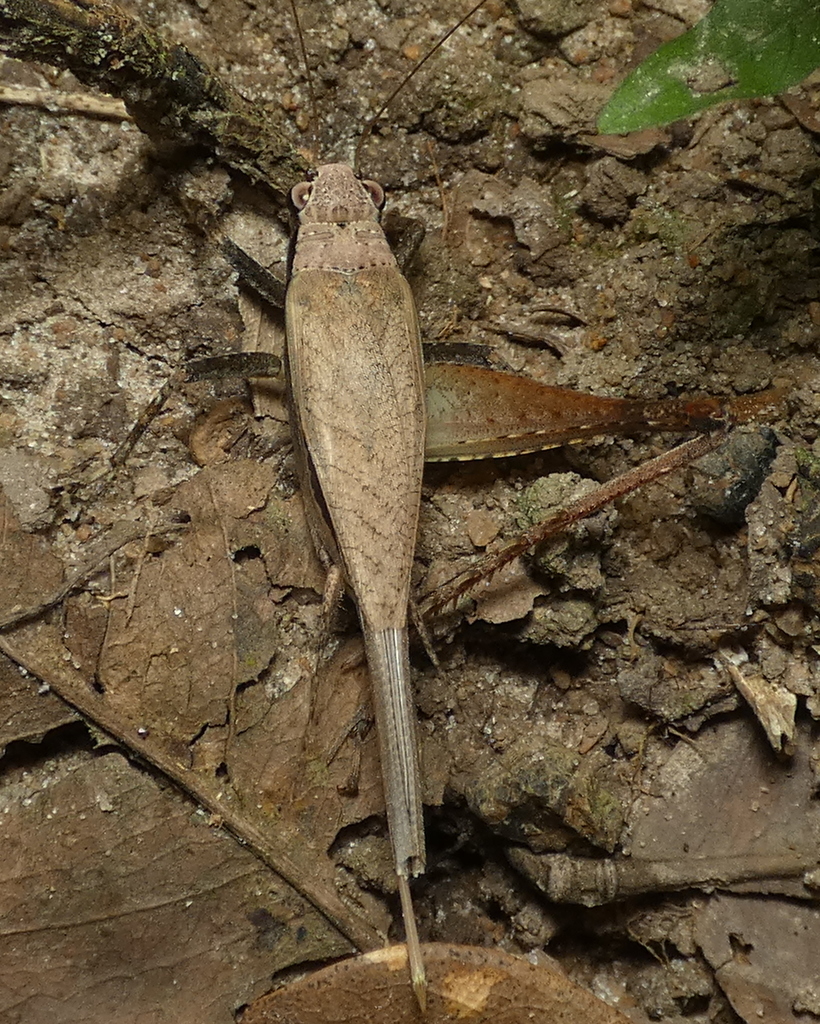
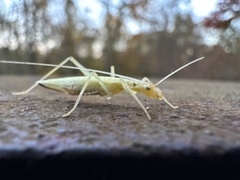
Eneoptera surinamensis is a tropical forest cricket that lives in open areas of rain forest.
Source: Wikipedia
How to recognize it
It eats leaves, flowers and fruits of living plants.
Source: Wikipedia
Size
It is a tropical forest cricket.
Source: Wikipedia
Is it a pest in the house?
Because it feeds on plant parts, it can occasionally damage plants valued by humans.
Source: Wikipedia
Where it lives
It lives in open areas of rain forest.
Source: Wikipedia
What it eats
Its diet consists of leaves, flowers and fruits of living plants.
Source: Wikipedia
Where it comes from
The species was first described by Charles De Geer in 1773.
Source: Wikipedia
Lookalikes
It resembles other members of the subfamily Eneopterinae.
Source: Wikipedia
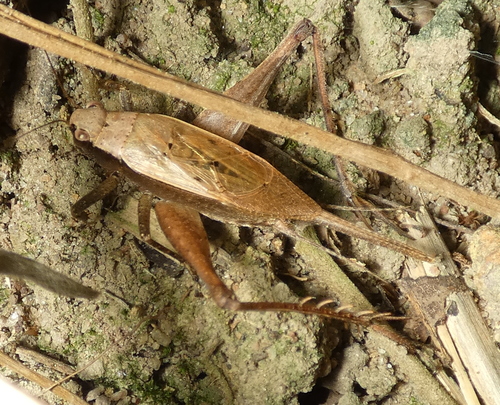
More photos

Questions people ask
What plants can Eneoptera surinamensis damage?
It may chew leaves, flowers and fruits of garden or crop plants, causing occasional damage.
Source: Wikipedia
Same family (Gryllidae)


Sources
- Wikipedia: https://en.wikipedia.org/wiki/Eneoptera_surinamensis
Look it up elsewhere: GBIF · iNaturalist · BugGuide · Wikipedia
Text written 2026-10-23 from the sources above and checked sentence by sentence against them. Data fetched 2026-10-23.