 Bug FAQ
Elegant Tailed Slug Moth
Packardia elegans · Order: Lepidoptera · Family: Limacodidae
Source: Wikipedia
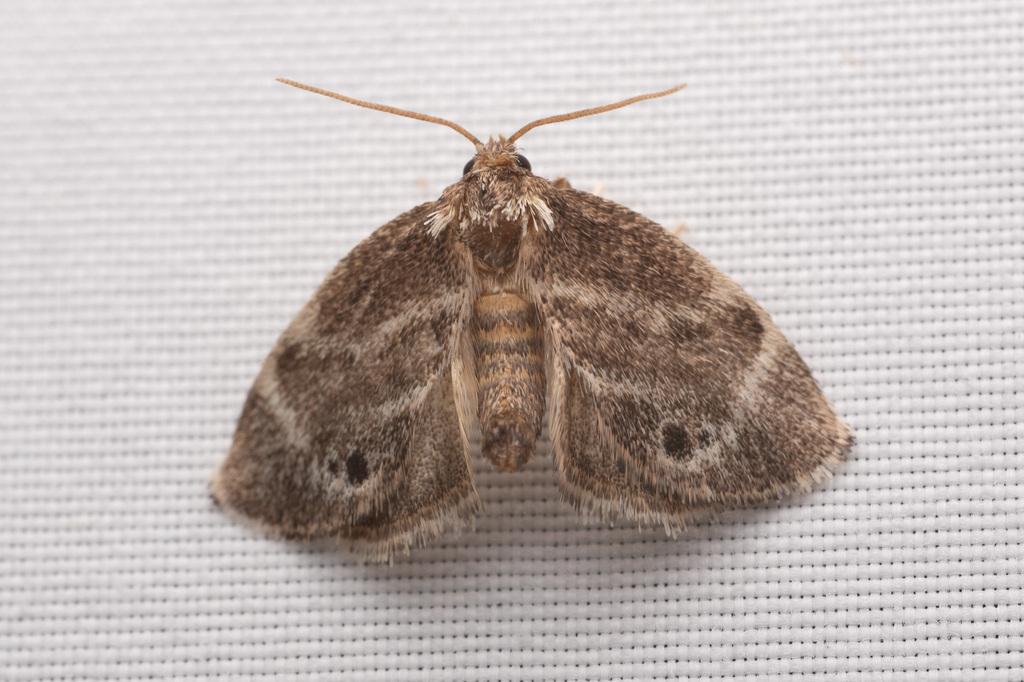
The forewings measure about 10 to 12 mm long. It lives in woodlands and forests across Canada and the United States. The caterpillars eat the leaves of beech, cherry and oak trees.
Source: Wikipedia
Size
Forewing length is 10 to 12 mm.
Source: Wikipedia
Where it lives
Found in woodlands and forests.
Source: Wikipedia
What it eats
Larvae feed on various woody plants such as beech, cherry and oak.
Source: Wikipedia
Where it comes from
Occurs in Canada and the United States.
Source: Wikipedia
Where it is found in the US
Recorded in 23 of 51 states and DC. Most records: Massachusetts, Pennsylvania, New York, Ohio, Vermont, West Virginia, Connecticut, Michigan.
Darker = more records. Counts are museum and citizen-science records, not population size.
Source: GBIF
Status: native in North America; native in Canada. Source: iNaturalist
Months it is reported in the US
Source: GBIF
More photos
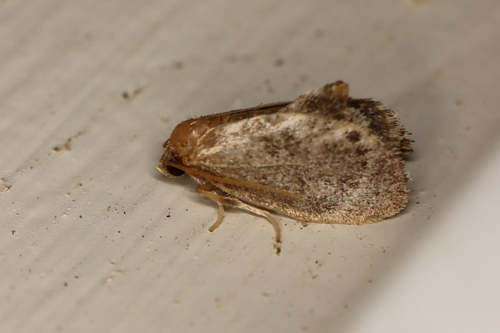
Questions people ask
Where does the Elegant Tailed Slug Moth live?
It is found in woodlands and forests throughout Canada and the United States.
Source: Wikipedia
Same family (Limacodidae)
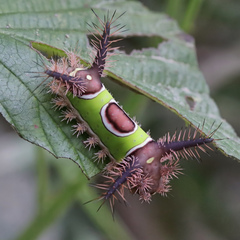 Saddleback Caterpillar MothAcharia stimuleaCan sting
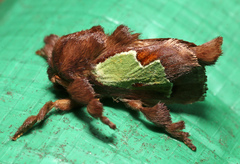 Spiny Oak-slug MothEuclea delphiniiVenomous
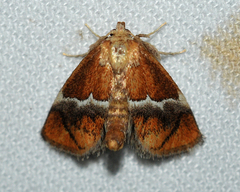 Yellow-shouldered Slug MothLithacodes fasciolaDamages trees, gardens or crops
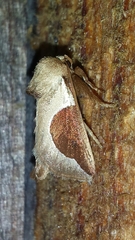 Skiff MothProlimacodes badiaDamages trees, gardens or crops
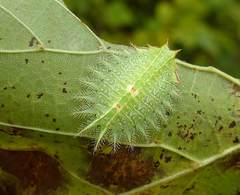 Crowned Slug MothIsa textulaDamages trees, gardens or crops
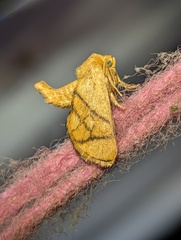 Yellow-collared Slug MothApoda y-inversaDamages trees, gardens or crops
Sources
- Wikipedia: https://en.wikipedia.org/wiki/Packardia_elegans
Look it up elsewhere: GBIF · iNaturalist · BugGuide · Wikipedia
Text written 2026-10-25 from the sources above and checked sentence by sentence against them. Data fetched 2026-10-25.