 Bug FAQ
Edwards's Skipperling
Oarisma edwardsii · Order: Lepidoptera · Family: Hesperiidae
Also called: Edwards' Skipperling
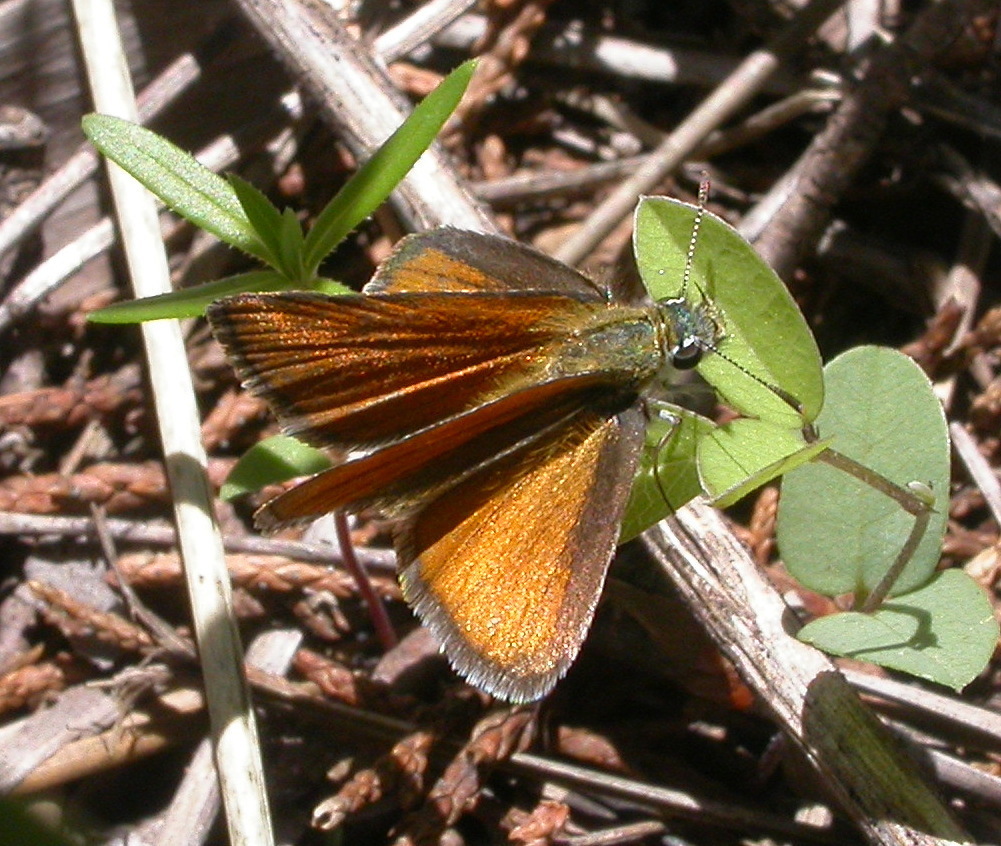
The Edwards's Skipperling has a wingspan of about 2.2 to 2.9 cm. Its wings show white tips on the fringe and a brown-orange upper side with a brighter forewing cell. It lives in Central and North America.
Source: Wikipedia
How to recognize it
The wing fringes end in white tips.
Source: Wikipedia
Size
Its wingspan ranges from roughly 7/8 to 1 1/8 inches (2.2 to 2.9 cm).
Source: Wikipedia
Where it comes from
It is found across Central and North America.
Source: Wikipedia
Where it is found in the US
Recorded in 5 of 51 states and DC. Most records: New Mexico, Texas, Arizona, Colorado, California.
Darker = more records. Counts are museum and citizen-science records, not population size.
Source: GBIF
Status: native in United States. Source: iNaturalist
Months it is reported in the US
Source: GBIF
More photos
Questions people ask
What are the key markings of Edwards's Skipperling?
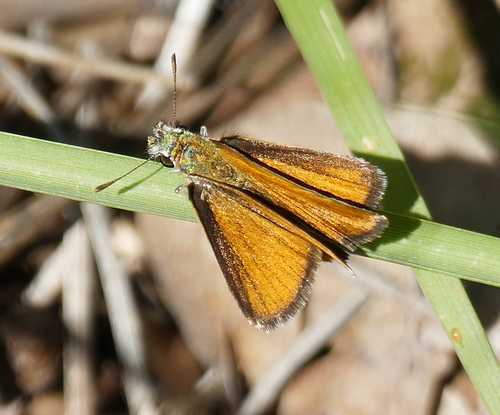
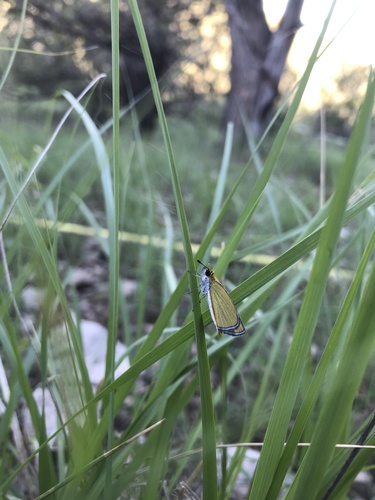
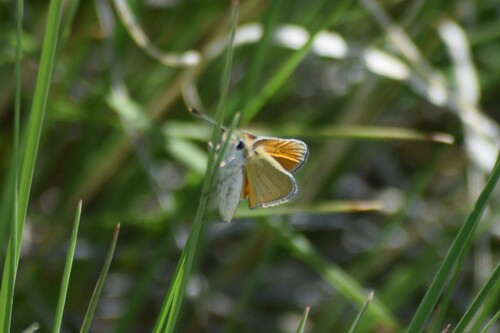
The wing edges have white tips, the upper side is brown-orange with a brighter forewing cell, the forewing underside is brown-orange with black at the lower edge, and the hindwing underside is yellowish with orange along the lower margin.
Source: Wikipedia
Same family (Hesperiidae)




Sources
- Wikipedia: https://en.wikipedia.org/wiki/Oarisma_edwardsii
Look it up elsewhere: GBIF · iNaturalist · BugGuide · ITIS · Wikipedia
Text written 2026-10-26 from the sources above and checked sentence by sentence against them. Data fetched 2026-10-26.