 Bug FAQ
Ectoedemia rubifoliella
Ectoedemia rubifoliella · Order: Lepidoptera · Family: Nepticulidae
Source: Wikipedia
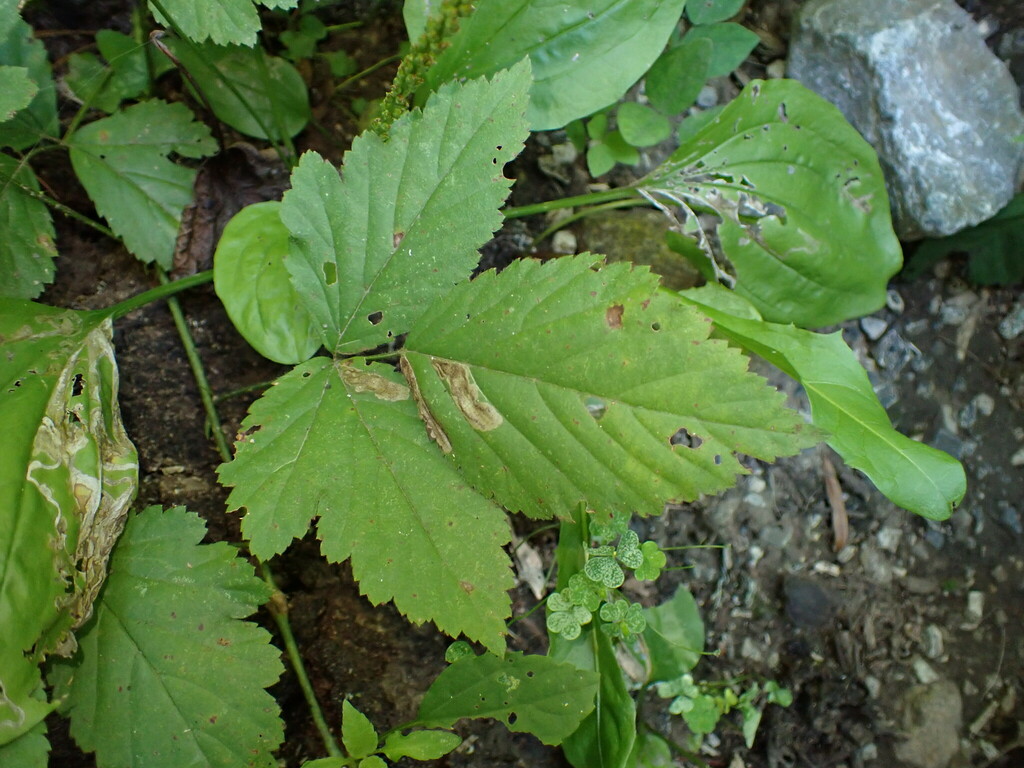
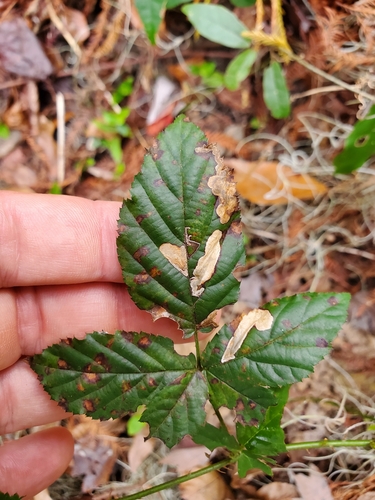
The adult moth is tiny, with a wingspan of about 4 mm. The larvae mine the leaves of blackberry bushes, which can harm the plants.
Source: Wikipedia
How to recognize it
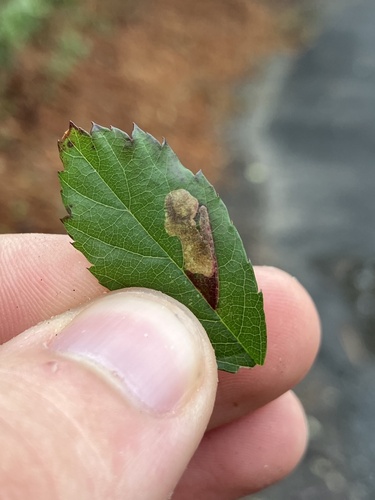
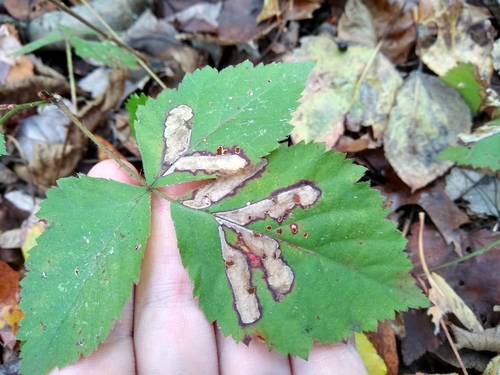
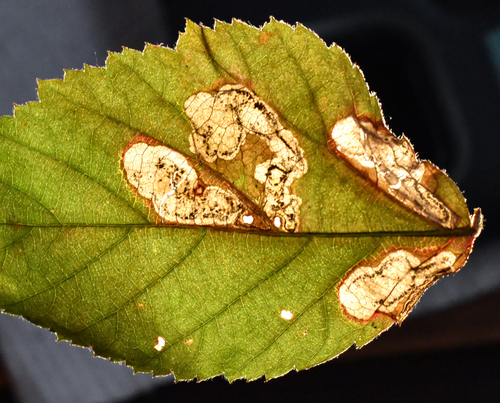
The larvae are pale green and they spin a dark brown cocoon.
Source: Wikipedia
Size
The moth’s wingspan measures roughly 4 mm.
Source: Wikipedia
Where it lives
It is found in southeastern Canada and in Ohio, Kentucky, Pennsylvania, and North Carolina.
Source: Wikipedia
Life cycle
Mines that contain larvae can be collected in July and September.
Source: Wikipedia
When you see it
Larval mines are present in July and again in September.
Source: Wikipedia
Where it comes from
Its native range includes southeastern Canada and the listed U.S. states.
Source: Wikipedia
Where it is found in the US
Recorded in 24 of 51 states and DC. Most records: Massachusetts, Maryland, Louisiana, New York, North Carolina, Georgia, Pennsylvania, Vermont.
Darker = more records. Counts are museum and citizen-science records, not population size.
Source: GBIF
Status: native in North America; native in Canada. Source: iNaturalist
Months it is reported in the US
Source: GBIF
More photos
Questions people ask
When can I find the larvae?
You can collect mines with larvae in July and September.
Source: Wikipedia
What do the larvae look like?
The larvae are pale green and they make a dark brown cocoon.
Source: Wikipedia
Same family (Nepticulidae)
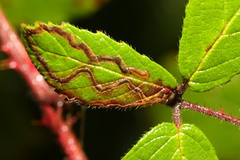 Golden PigmyStigmella aurellaDamages trees, gardens or crops
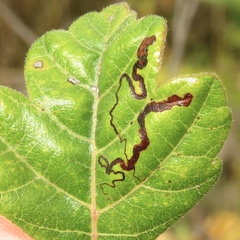 Stigmella prunifoliella groupStigmella prunifoliellaDamages trees, gardens or crops
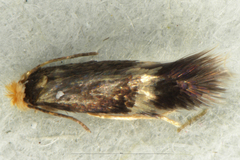 Hazel Leafminer MothStigmella microtheriellaDamages trees, gardens or crops
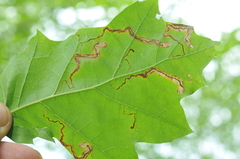 Stigmella quercipulchella groupStigmella quercipulchella
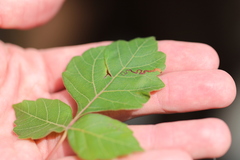 Stigmella intermedia
 Stigmella rhoifoliella
Sources
- Wikipedia: https://en.wikipedia.org/wiki/Ectoedemia_rubifoliella
Look it up elsewhere: GBIF · iNaturalist · BugGuide · Wikipedia
Text written 2026-10-29 from the sources above and checked sentence by sentence against them. Data fetched 2026-10-29.