 Bug FAQ
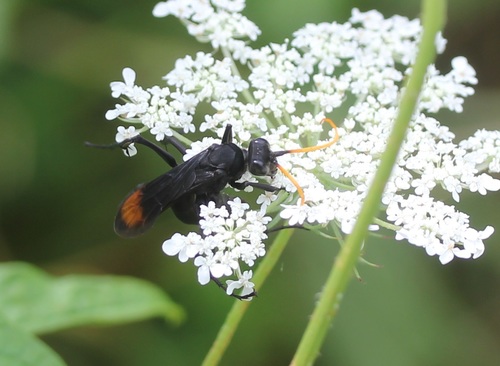
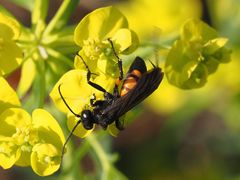
Eastern Tawny-horned Spider Wasp
Entypus unifasciatus · Order: Hymenoptera · Family: Pompilidae
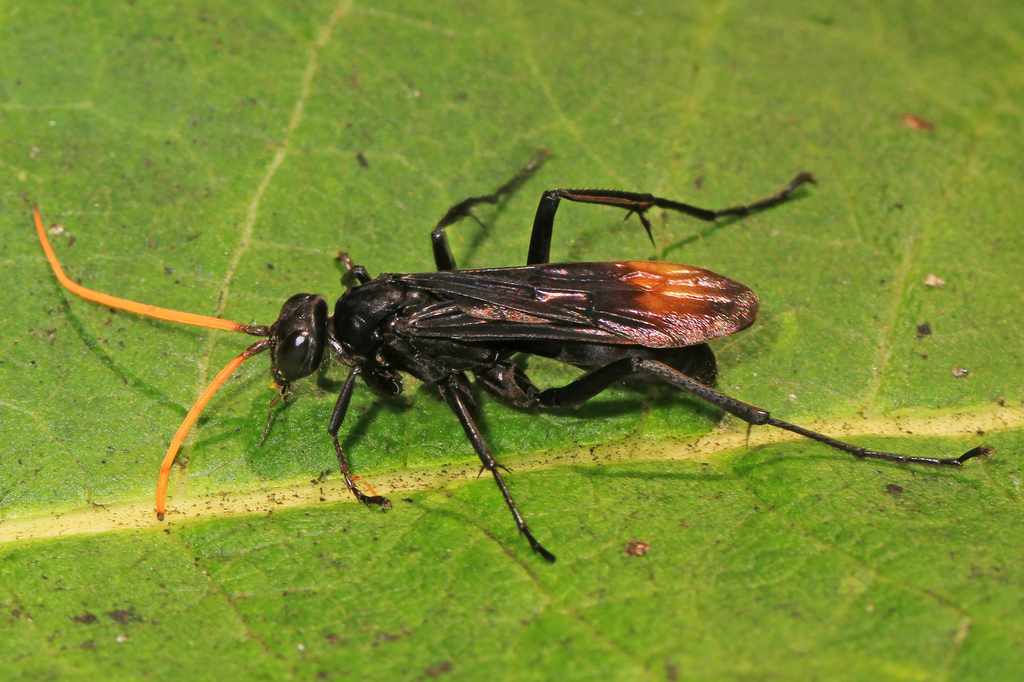
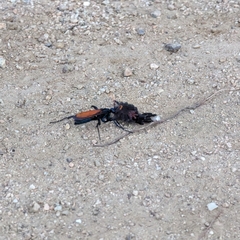
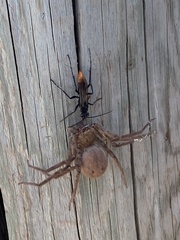
It occurs across most of North America (except the northwest) and extends into South America. Females paralyze large spiders, lay an egg on them, and the developing larva feeds on the still-alive spider before pupating and overwintering.
Source: Wikipedia
Where it lives
They live across most of North America, except the northwest, and into South America.
Source: Wikipedia
What it eats
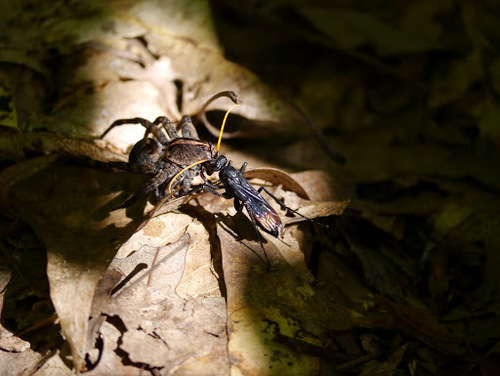
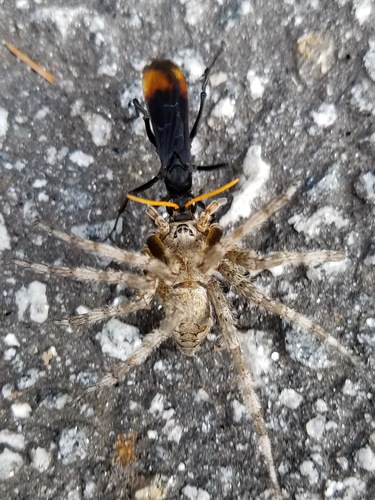
Female wasps hunt large spiders, paralyze them, and deposit an egg on the spider; the larva then feeds on the living but immobilized spider.
Source: Wikipedia
Life cycle
After hatching, the larva feeds on the spider, later pupates, overwinters, and emerges as a winged adult the next summer.
Source: Wikipedia
Where it comes from
Their range includes transcontinental North America (excluding the northwest) down to South America.
Source: Wikipedia
Where it is found in the US
Recorded in 36 of 51 states and DC. Most records: Virginia, Missouri, Texas, North Carolina, Illinois, Pennsylvania, Ohio, California.
Darker = more records. Counts are museum and citizen-science records, not population size.
Source: GBIF
Status: native in North America; native in United States. Source: iNaturalist
Months it is reported in the US
Source: GBIF
More photos
Questions people ask
What do Entypus unifasciatus wasps do to spiders?
Females paralyze large spiders, lay an egg on them, and the larva feeds on the still-alive spider until it pupates.
Source: Wikipedia
Where can I find Entypus unifasciatus?
They are found across most of North America (except the northwest) and throughout South America.
Source: Wikipedia
Same family (Pompilidae)
Sources
- Wikipedia: https://en.wikipedia.org/wiki/Entypus_unifasciatus
Look it up elsewhere: GBIF · iNaturalist · BugGuide · Wikipedia
Text written 2026-10-24 from the sources above and checked sentence by sentence against them. Data fetched 2026-10-24.