 Bug FAQ
Eastern Bee Assassin
Apiomerus crassipes · Order: Hemiptera · Family: Reduviidae
Also called: Bee Assassin

It is about three-quarters of an inch long and lives throughout North America, hunting on flowering plants. It feeds on bees and ants.
Source: Wikipedia
How to recognize it
It has dark body coloration with yellow or red side markings on the abdomen.
Source: Wikipedia
Size
Adults are roughly three-quarters of an inch long.
Source: Wikipedia
Where it lives
It flies and stalks flowering plants that attract bees, flies, and other pollinators.
Source: Wikipedia
What it eats
It preys on bees and ants.
Source: Wikipedia
Where it comes from
It is found across North America.
Source: Wikipedia
Where it is found in the US
Recorded in 34 of 51 states and DC. Most records: South Carolina, Virginia, Georgia, North Carolina, Florida, Alabama, Mississippi, Oklahoma.
Darker = more records. Counts are museum and citizen-science records, not population size.
Source: GBIF
Status: native in North America; native in Canada; native in United States. Source: iNaturalist
Months it is reported in the US
Source: GBIF
More photos
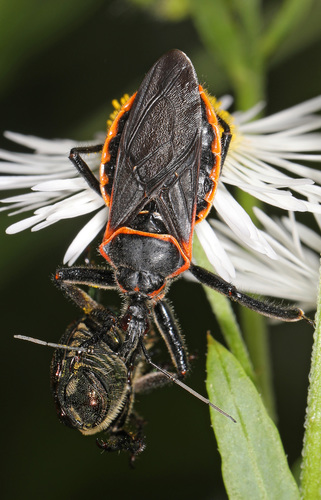
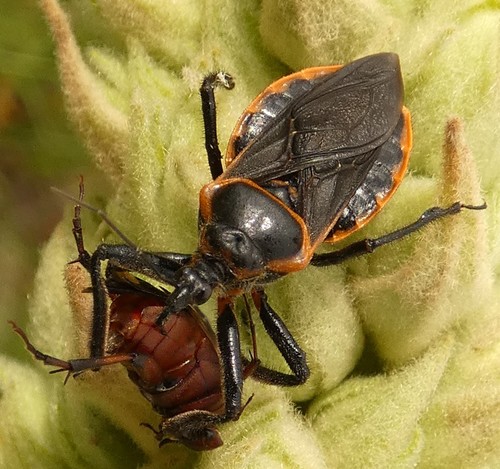
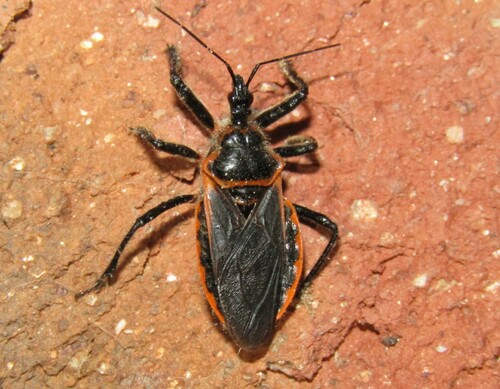
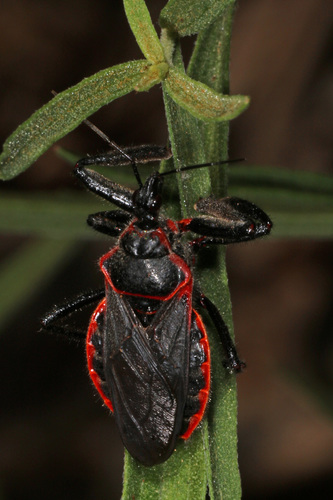
Questions people ask
Where is the Eastern Bee Assassin found?
It occurs throughout North America, often on flowering plants.
Source: Wikipedia
Same family (Reduviidae)
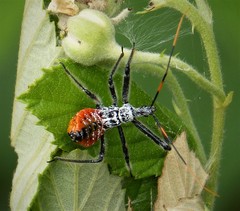 North American Wheel BugArilus cristatusCan bite
 Leafhopper Assassin BugZelus renardiiCan bite
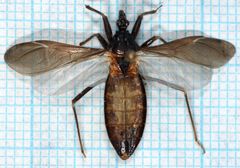 Masked HunterReduvius personatusCan bite
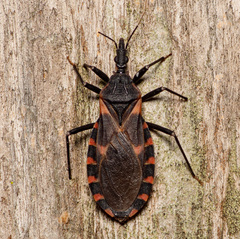 Eastern Bloodsucking ConenoseTriatoma sanguisugaCan spread germs or disease
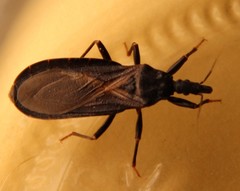 Western Bloodsucking ConenoseTriatoma protractaCan spread germs or disease
 Pale Green Assassin BugZelus luridusCan bite
Sources
- Wikipedia: https://en.wikipedia.org/wiki/Apiomerus_crassipes
Look it up elsewhere: GBIF · iNaturalist · BugGuide · ITIS · Wikipedia
Text written 2026-10-23 from the sources above and checked sentence by sentence against them. Data fetched 2026-10-22.