 Bug FAQ
Eastern Bat Bug
Cimex adjunctus · Order: Hemiptera · Family: Cimicidae
Source: entomology.ca.uky.edu
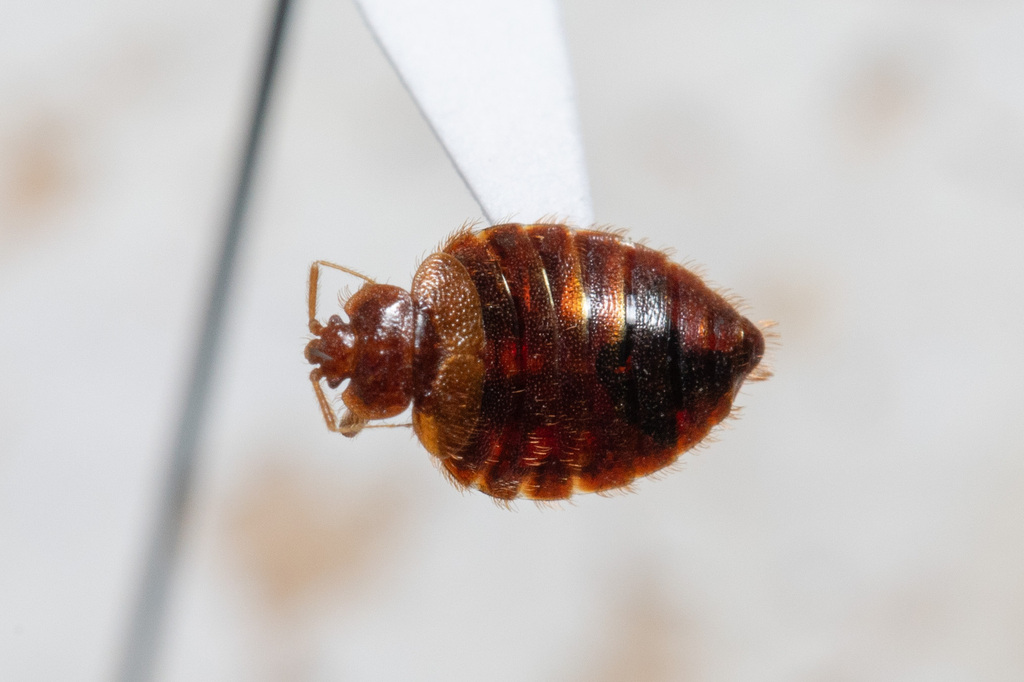
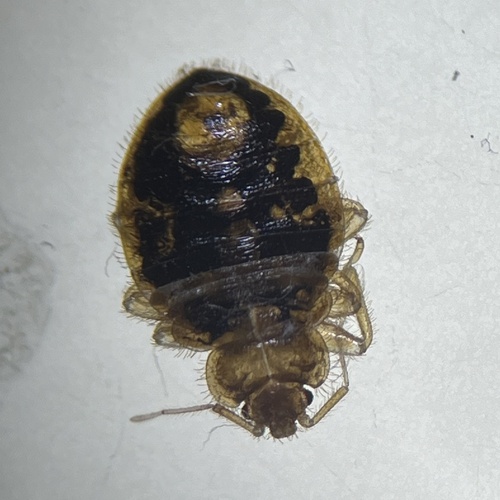
Adult Eastern Bat Bugs are about 3/16 inch long, reddish-brown, and have a flattened oval shape. They are found across North America and feed on the blood of many insect-eating bat species.
Source: entomology.ca.uky.edu, Wikipedia
How to recognize it
Adults are roughly 3/16 inch long, reddish-brown, and have a flattened oval body. Younger nymphs look like smaller, lighter-colored versions of the adults.
Source: entomology.ca.uky.edu
Does it bite or sting?
Some bat-feeding bed bugs may bite people, especially when their wild hosts are absent.
Source: entomology.ca.uky.edu
How to get rid of it
Most household bed-bug sprays lose effectiveness once they dry. A silica-gel powder like CimeXa can be very effective when applied correctly.
Source: entomology.ca.uky.edu
Where it lives
The Eastern Bat Bug lives as an ectoparasite throughout a wide area of North America.
Source: Wikipedia
Where it comes from
It is native to North America.
Source: Wikipedia
Lookalikes
Species that normally feed on bats or birds can be told apart from those that prefer humans.
Source: entomology.ca.uky.edu
Where it is found in the US
Recorded in 26 of 51 states and DC. Most records: Iowa, Kentucky, Kansas, Indiana, Ohio, Colorado, New York, Illinois.
Darker = more records. Counts are museum and citizen-science records, not population size.
Source: GBIF
Status: native in North America; native in Canada. Source: iNaturalist
Months it is reported in the US
Source: GBIF
More photos
Questions people ask
Do they bite?
They may bite people, especially if their usual bat hosts are not present.
Source: entomology.ca.uky.edu
How can I control them?
Standard bed-bug sprays often lose effect after drying, but a silica-gel powder such as CimeXa works well when used properly.
Source: entomology.ca.uky.edu
What do they look like?
Adults are about 3/16 inch long, reddish-brown, and have a flattened oval body; nymphs are smaller and lighter in color.
Source: entomology.ca.uky.edu
Same family (Cimicidae)


Sources
- entomology.ca.uky.edu: https://entomology.ca.uky.edu/ef636
- Wikipedia: https://en.wikipedia.org/wiki/Cimex_adjunctus
Look it up elsewhere: GBIF · iNaturalist · BugGuide · ITIS · Wikipedia
Text written 2026-10-23 from the sources above and checked sentence by sentence against them. Data fetched 2026-10-23.