 Bug FAQ
Common Bed Bug
Cimex lectularius · Order: Hemiptera · Family: Cimicidae
Also called: Bed bug, True Bed Bug

Bed bugs are small, wingless insects that feed on human blood, usually at night while people sleep, and their bites can cause itchy, red welts. They are a worldwide nuisance pest found in homes, hotels, hospitals and transport, and they are hard to control because some populations resist insecticides.
How to recognize it
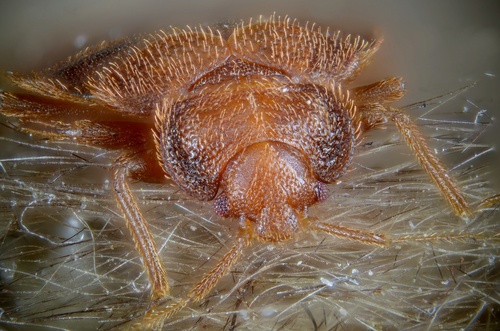
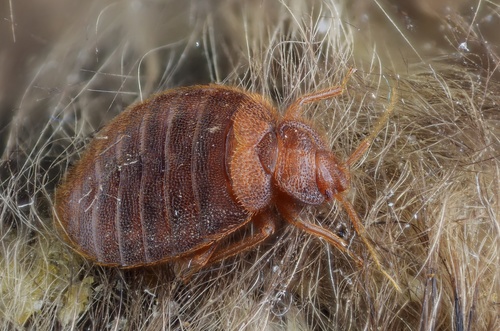
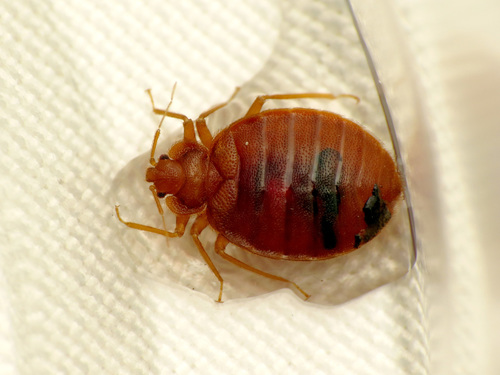
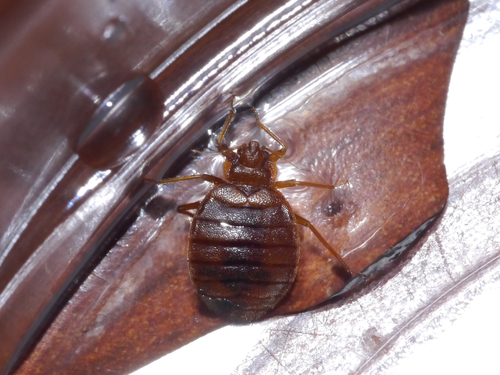
The eggs are tiny (under 1 mm), yellowish-white and vase-shaped. Adults are reddish-brown, wingless and range from about 1 mm to 7 mm in length.
Size
Adults measure roughly the size of a Lincoln cent’s head, about 1 to 7 mm long.
Source: CDC
Is it a pest in the house?
Bed bugs are a major nuisance pest in homes and many public places. They do not transmit diseases, but their bites cause irritation, itching and loss of sleep.
Does it bite or sting?
Bites appear as small, red, swollen spots that may itch or develop into blisters. They bite people and animals while they sleep, feeding on blood.
How to get rid of it
Some bed-bug populations have become resistant to common insecticides. Resistance to deltamethrin is linked to a specific sodium-channel mutation (L925I). If you suspect an infestation, call a professional pest-control service experienced with bed bugs. Professionals usually treat the area with insecticide sprays.
Where it lives
They most often hitch rides in luggage, but can also spread via furniture, belongings, or to neighboring units.
Source: Wikipedia
What it eats
Their primary hosts are humans, and they feed exclusively on human blood.
Source: Wikipedia
Life cycle
They pass through five immature stages, each requiring a blood meal to develop. After hatching, each nymph must feed once a week to complete its molts.
Source: Wikipedia
When you see it
They feed on sleeping hosts, typically at night.
Source: Wikipedia
Where it comes from
Cimex lectularius is found worldwide wherever humans live.
Source: Wikipedia
Where it is found in the US
Recorded in 49 of 51 states and DC. Most records: California, Mississippi, Illinois, Texas, Ohio, Pennsylvania, Indiana, Colorado.
Darker = more records. Counts are museum and citizen-science records, not population size.
Source: GBIF
Status: native in North America; native in Canada. Source: iNaturalist
Months it is reported in the US
Source: GBIF
More photos
Questions people ask
Why do bed bug bites itch?
The bite site becomes a small, red, swollen area that can itch and sometimes develop blisters.
Source: Wikipedia
How can I get rid of bed bugs?
Contact a professional pest-control company that specializes in bed-bug treatment; they will typically apply insecticide sprays.
Source: CDC
Where do bed bugs usually hide?
They travel in luggage and can spread via furniture, belongings, or to adjoining rooms and properties.
Source: Wikipedia
Same family (Cimicidae)

Sources
- CDC: https://www.cdc.gov/bed-bugs/about/index.html
- Wikipedia: https://en.wikipedia.org/wiki/Cimex_lectularius
Look it up elsewhere: GBIF · iNaturalist · BugGuide · ITIS · Wikipedia
Text written 2026-10-22 from the sources above and checked sentence by sentence against them. Data fetched 2026-10-22.